Sets
234 Inhalte
- Seite 1 von 20
cool pieces
Name that can easily go onto 2 lines
Author that can easily go onto 2 lines as well
- Titel
- cool pieces
- Titel (en)
- cool pieces
- Untertitel
- a democratic cooling collection
- Autor/in
- Beschreibung (de)
- „cool pieces” beschäftigt sich mit den Auswirkungen des Klimawandels auf den menschlichen Körper und deren Hitzeanpassung. Mit einem Open-Source Gedanken präsentiert das Projekt ein Ensemble von drei tragbaren Objekten, deren Design vielfältige Facetten eines simplen Fächers aufgreift, welcher einer der zugänglichsten Methoden zur Kühlung des Körpers darstellt. Das Set umfasst einen Sonnenponcho, eine entfaltbare Kopfbedeckung sowie einen Handfächer, um eine wirksame Kühlung zu gewährleisten. Ein zentraler Gedanke bei der Entwicklung der Objekte war die Überwindung finanzieller Barrieren, um eine breite Teilhabe zu ermöglichen. Aus diesem Grund werden sämtliche Anleitungen zur unentgeltlichen Nutzung auf der Website zur Verfügung gestellt, um eine nahezu kostenfreie Herstellung zu gewährleisten. Besonderes Augenmerk wurde dabei auf die Verwendung handelsüblicher Nähmaschinen gelegt, da sie flächendeckend verfügbar sind und somit für eine breite Bevölkerungsschicht zugänglich ist.
- „cool pieces” beschäftigt sich mit den Auswirkungen des Klimawandels auf den menschlichen Körper und deren Hitzeanpassung. Mit einem Open-Source Gedanken präsentiert das Projekt ein Ensemble von drei tragbaren Objekten, deren Design vielfältige Facetten eines simplen Fächers aufgreift, welcher einer der zugänglichsten Methoden zur Kühlung des Körpers darstellt. Das Set umfasst einen Sonnenponcho, eine entfaltbare Kopfbedeckung sowie einen Handfächer, um eine wirksame Kühlung zu gewährleisten. Ein zentraler Gedanke bei der Entwicklung der Objekte war die Überwindung finanzieller Barrieren, um eine breite Teilhabe zu ermöglichen. Aus diesem Grund werden sämtliche Anleitungen zur unentgeltlichen Nutzung auf der Website zur Verfügung gestellt, um eine nahezu kostenfreie Herstellung zu gewährleisten. Besonderes Augenmerk wurde dabei auf die Verwendung handelsüblicher Nähmaschinen gelegt, da sie flächendeckend verfügbar sind und somit für eine breite Bevölkerungsschicht zugänglich ist.
- Beschreibung (en)
- ‘cool pieces’ deals with the effects of climate change on the human body and its adaptation to heat. With an open source mindset, the project presents an ensemble of three wearable objects whose design takes on multiple facets of a simple fan, one of the most accessible ways to cool the body. The set includes a sun poncho, a deployable headgear and a hand fan for effective cooling. A central idea in the development of the items was to overcome financial barriers to enable widespread participation. For this reason, all instructions are available for free on the website to ensure that production is virtually cost-free. Special attention was paid to the use of commercially available sewing machines, as they are widely available and therefore accessible to a wide range of people.
- ‘cool pieces’ deals with the effects of climate change on the human body and its adaptation to heat. With an open source mindset, the project presents an ensemble of three wearable objects whose design takes on multiple facets of a simple fan, one of the most accessible ways to cool the body. The set includes a sun poncho, a deployable headgear and a hand fan for effective cooling. A central idea in the development of the items was to overcome financial barriers to enable widespread participation. For this reason, all instructions are available for free on the website to ensure that production is virtually cost-free. Special attention was paid to the use of commercially available sewing machines, as they are widely available and therefore accessible to a wide range of people.
- Kategorie
- Schlagworte
- Datierung
- 14.12.2023
- Material
- Abmessungen
- Fächer (30x30cm), Poncho (45x100cm), Hut (Durchmesser 50cm)
- Internetlinks
- Bemerkungen
- Youtube Link zum Video der Performance:
https://www.youtube.com/watch?v=8HIEUG2vebg
- Youtube Link zum Video der Performance:
- Titel
- cool pieces
- Projektleiter/in
- Semester
- Studiengang
- Typ der Abschlussarbeit
- Importiert am
- 30.01.2024
- Übergeordnete Sets
- 2
- Set enthält
- 0 16
Cooking Care
- Titel
- Cooking Care
- Autor/in
- Beschreibung (de)
- Welche Art von unbezahlter Sorgearbeit leistest du?
Fühlst du dich dafür wertgeschätzt?
Würdest du dir mehr Hilfe von Familienmitgliedern oder Freund*innen wünschen?
Die szenische Installation „Cooking Care“ zeigt eine pflanzen gefärbte Patchwork-Tischdecke, die die Geschichten von Valeria, Susanne, Anna, Heike und Anne und deren unbezahlten Sorgearbeit über eine Woche hinweg in sich aufgesogen hat. Sie möchte die unsichtbare Arbeit sichtbar machen, investierte Zeit würdigen und sie feiern. Sie bietet eine Bühne, um ihre Stimmen zu hören, Verbindungen zu knüpfen und sich gegenseitig zu unterstützen.
Ausgangspunkt dieses Projekts war ein Abendessen mit fünf Frauen, die in verschiedenen Bereichen der unbezahlten Sorgearbeit tätig sind. An diesem Abend war das Kochen eine gemeinsame Aufgabe, die es allen ermöglichte, nicht nur den Prozess und das gemeinsame Essen zu genießen, sondern auch sich umeinder zu sorgen. Es wurde eine Reihe von vorbereiteten Fragen gestellt, um einen Raum für den Austausch von Geschichten, Zweifeln und Erfahrungen zu schaffen.
Darüber hinaus wurden die Teilnehmer ermutigt, die Stunden unbezahlter Sorgearbeit, die sie in den nächsten sieben Tagen leisteten, zu dokumentieren; sie sollten konkrete Zahlen auf Papier bringen, um die Stunden sowohl für sich selbst als auch für andere sichtbar zu machen. Sie wurden auch gebeten, die psychische Belastung zu dokumentieren, die sie in dieser Zeit erfahren haben. Anschließend wurden die dokumentierten Stunden unterschiedlicher Sorgearbeit und die entsprechende psychische Belastung in eine abstrakte Infografik – in Form einer Tischdecke – übersetzt.
Die Tischdecke besteht aus mehreren gleich großen Quadraten, die jeweils eine Stunde unbezahlter Pflegearbeit repräsentieren, die von diesen fünf Frauen im Laufe der sieben Tagen dokumentiert wurde. Die einzelnen Stoffstücke wurden mit essbaren, saisonalen und lokal beschafften Pflanzen gefärbt, von denen viele selbst gesammelt wurden. Sie wurden vorbehandelt und 24 bis 48 Stunden lang im Färbebad gekocht. Da es sich bei den Stoffen um gebrauchte Haushaltstextilien handelt, hat jedes Stück seine eigene Geschichte und variiert in seiner Fähigkeit, Farbe zu absorbieren. Daher war der Färbeprozess experimentell und variierte, was jedes Mal zu einem einzigartigen Ergebnis führte. Außerdem trug der unterschiedliche Wuchs der zum Färben verwendeten Pflanzen zur Vielfalt der Ergebnisse bei.
Jede gefärbte Farbnuance steht für eine andere Art von Pflegearbeit. Bei hoher psychischer Belastung wurden die Quadrate mit zusätzlichem Stoff durch die Quilting Technik verdickt. Die so entstandene Tischdecke dient somit als künstlerische Abstraktion der unbezahlten Sorgearbeit, die ihre Sichtbarkeit erhöhen soll.
- Welche Art von unbezahlter Sorgearbeit leistest du?
- Beschreibung (en)
- What kind of unpaid care work are you doing?
Do you feel appreciated for it?
Would you like to have more help from family members or friends?
The spatial installation 'Cooking Care' shows a plant-dyed patchwork tablecloth soaked in the stories of Valeria, Susanne, Anna, Heike und Anne and their unpaid care-workload of one week. It aims to reach visibility, to celebrate, and appreciate the time and effort put into that work, and to give their voices a stage to be heard, connected and empowered.
The starting point of this project was a dinner with five women who engage in different fields of unpaid care work. That evening, cooking was a shared task, allowing everyone to not only enjoy the process and feasting together but also to care for each other. A set of premeditated question was asked to create a space to share stories, doubts, and experiences.
Furthermore, the participants were encouraged to document the hours of unpaid care work they performed over the next seven days; to provide actual numbers on paper, making it visible both to themselves and to others. They were also asked to document the mental load they experienced during this time. Then, the documented hours of different care work and the according mental load were translated into an abstract infographic in the form of a tablecloth.
The tablecloth consists of multiple squares of identical size each representing one hour of unpaid care work as documented by these five women over the course of seven days. The individual fabric pieces have been dyed using edible, seasonal, and locally-sourced plants, many of which were self-collected. They were pre-treated and cooked in the dye bath for 24 to 48 hours. Since the fabric consists of second hand household textiles, each piece carries its own history and varies in its ability to absorb dye. Thus, the dyeing process was experimental and varied with each batch, resulting in a unique outcome every time. The different growth of the plants used for dyeing added to the variety.
Each dyed color shade stands for a different type of care work. When there was a high mental load reported, squares were also thickened with additional fabric by the quilting technique. The resulting tablecloth thus serves as an artistic abstraction of the unpaid care work that aims to increase its visibility.
- What kind of unpaid care work are you doing?
- Kategorie
- Typ des Projekts/Werks
- Schlagworte
- Datierung
- 14.01.2025 - 21.01.2025
- Mitwirkende
- Dank an
- Eike Buff
- Jaya Demmer
- Lina Determann
- Nele Faust
- Miki Feller
- Ricarda Fischer
- Severin Geißler
- Laura Haak
- Laurine Haller
- Noa Haller
- Line-Gry Hørup
- Anne Duk Hee Jordan
- Leonie Junker
- Florian Knöbl
- Hanne König
- Susanne Kriemann
- Jannik Lang
- James Langdon
- Helene Lauppe
- Yun-Wen Liu
- Nini Lue
- Mona Mayer
- Leonie Mühlen
- Kamilla Murtazina
- Kamilla Murtazina
- Kathrin Rüll
- Tereza Ruller
- Jette Schwabe
- Isabel Seiffert
- Merve Şimşek
- Leia Morgana Walz
- Judith Wolff
- Feminist Hiking Collective
- Sprache
- Abmessungen
- 180cm x 66cm x 400cm
- Dauer
- 23:18
- Ort: Institution
- Ort
- Im Innenhof und Garten der Schützenstraße 37, zwischen tv-Hifi, Ateliergemeinschaft und Wohnungen
- Stadt
- Land
- Titel
- Cooking Care
- Importiert am
- 14.11.2024
- Übergeordnete Sets
- 0
- Set enthält
- 0 0
Bunte Nacht der Digitalisierung 2024
Name that can easily go onto 2 lines
Author that can easily go onto 2 lines as well
- Titel
- Bunte Nacht der Digitalisierung 2024
- Titel (en)
- Colourful Night of Digitalization 2024
- Beschreibung (de)
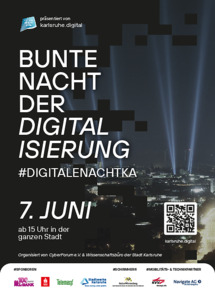
- Am 7. Juni findet die Bunte Nacht der Digitalisierung statt, ein Festival, das die Vielfalt der Perspektiven und Herausforderungen der Digitalisierung in Karlsruhe feiert. Diese Initiative öffnet den Karlsruher Bürgern die Türen von mehr als 60 Institutionen (Bibliotheken, Museen, Universitäten, Unternehmen, Bürgerinitiativen), um verschiedene Themen und Ansätze zur Digitalisierung zu zeigen und zu diskutieren.
- Beschreibung (en)
- On June 7th, the Colourful Night of Digitization, a festival to celebrate the diversity of perspectives and challenges on digitization that exists in Karlsruhe, will take place. This initiative opens the doors of more than 60 institutions (libraries, museums, universities, enterprises, civil initiatives) to the citizens of Karlsruhe to show and discuss diverse topics and approaches to digitality.
- Typ des Projekts/Werks
- Schlagworte
- Datierung
- 07.06.2024
- Mitwirkende
- Ort: Institution
- Ort
- Hochschule für Gestaltung: 112
Kronenplatz;
Werkstatt und Studio von Triangel
- Hochschule für Gestaltung: 112
- Stadt
- Land
- Beteiligte Institution(en)
- Internetlinks
- Titel
- Bunte Nacht der Digitalisierung 2024
- Importiert am
- 05.06.2024
- Übergeordnete Sets
- 0
- Set enthält
- 3 1
Brunnen Geschichten
- Titel
- Brunnen Geschichten
- Titel (en)
- Fountain Stories
- Autor/in
- Beschreibung (de)
- Die Foto-Installation wurde im Rahmen eines Seminars „A Photo Book in Two Parts“ im Bereich Kommunikationsdesign im Wintersemester 2023/2024 erarbeitet und von dem Grafik- und Fotodesignstudio „Europium“ betreut. Die Gastdozierenden Ghazaal Vojdani und Julia Andréone hat die Studierenden dazu angeleitet, Mikro-Ereignisse, die spezifisch in der Stadt Karlsruhe auftreten, zu entdecken. Diese Narrative werden in Verbindung mit gefundenen Fotografien erzählt.
Karlsruhe verfügt über bis zu 300 offizielle Brunnen. In den urbanen Räumen, in denen diese Brunnen installiert sind, wachsen unbemerkt Flechten in unterschiedlichen Farben und Formen. Während sich diese Flechten langsam ausbreiten, bilden sich gleichzeitig informelle Gemeinschaften von Menschen, die sich rund um diese Brunnen versammeln. Alle diese Begegnungen entstehen auf Grundlage der zirkulären Wasserquelle, die die Brunnen darstellen.
Die Geschichte wird anhand von Archivfotografien erzählt. Die Fotografien der Installation wurden bearbeitet und anschließend im RISO-Druckverfahren sowie durch Laserdruck reproduziert. Auf der Rückseite der Fotografien befinden sich Textfragmente, die sich mit den Themen Brunnen, Flechten, Gemeinschaften und Wasser auseinandersetzen. Diese Texte helfen den Betrachtern, eine Erzählung zu den abgebildeten Fotografien zu entwickeln.
Die Fotografien befinden sich in Plastiktaschen, die einen fünf Meter langen Vorhang bilden. Dieser hängt an einem Stahlträger und fällt flach zu Boden. Der Vorhang symbolisiert das Narrativ des Wasserstrahls, entlang dessen sich die Mikro-Phänomene ereignen, wie die Bildung von Gemeinschaften rund um Brunnen und das Wachsen von Flechten auf Gestein. Am Fuße des Vorhangs befinden sich gefüllte Wassergläser und eine Karaffe, die zum Trinken einladen. Diese Elemente fördern neue Begegnungen und Gespräche zwischen den Betrachtern.
Die Installation wurde einmalig am 14. Februar 2024 zusammen mit den anderen Projekten des Seminars „A Photo Book in Two Parts“ im Lichthof Eins während des Präsentationstags des Fachbereichs Kommunikationsdesign ausgestellt.
- Die Foto-Installation wurde im Rahmen eines Seminars „A Photo Book in Two Parts“ im Bereich Kommunikationsdesign im Wintersemester 2023/2024 erarbeitet und von dem Grafik- und Fotodesignstudio „Europium“ betreut. Die Gastdozierenden Ghazaal Vojdani und Julia Andréone hat die Studierenden dazu angeleitet, Mikro-Ereignisse, die spezifisch in der Stadt Karlsruhe auftreten, zu entdecken. Diese Narrative werden in Verbindung mit gefundenen Fotografien erzählt.
- Beschreibung (en)
- The photo installation was developed as part of a seminar "A Photo Book in Two Parts" in communication design in the winter semester 2023/2024 and supervised by the graphic and photo design studio Europium. Guest lecturers Ghazaal Vojdani and Julia Andréone guided the students to discover micro-events that occur specifically in the city of Karlsruhe. These narratives are told in conjunction with found images.
Karlsruhe has up to 300 official fountains. In the urban spaces where these fountains are installed, lichens of different colors and shapes grow unnoticed. As these lichens slowly spread, informal communities of people gather around these fountains. All these encounters are based on the circular water source that the fountains represent.
The story is told through archival photographs. The photographs of the installation were edited and then reproduced using the RISO printing process and laser printing. On the back of the photographs are text fragments that deal with the themes of fountains, lichen, communities and water. These texts help the viewer to develop a narrative about the photographs depicted.
The photographs are in plastic bags that form a five-meter-long curtain. This hangs from a steel girder and falls flat to the floor. The curtain symbolizes the narrative of the water stream along which the micro-phenomena take place, such as the formation of communities around fountains and the growth of lichen on rock. At the foot of the curtain are filled glasses of water and a carafe that invite people to drink. These elements encourage new encounters and conversations between viewers.
The installation was only exhibited on February 14, 2024 during the Communication Design department's presentation day together with the other projects that were made in the seminar "A Photo Book in Two Parts" .
- The photo installation was developed as part of a seminar "A Photo Book in Two Parts" in communication design in the winter semester 2023/2024 and supervised by the graphic and photo design studio Europium. Guest lecturers Ghazaal Vojdani and Julia Andréone guided the students to discover micro-events that occur specifically in the city of Karlsruhe. These narratives are told in conjunction with found images.
- Kategorie
- Typ des Projekts/Werks
- Schlagworte
- Datierung
- 14.02.2024
- Sprache
- Material
- Abmessungen
- 5m x 2m x 3m
- Ort: Institution
- Ort
- Lichthof 1
- Stadt
- Land
- Beteiligte Institution(en)
- Titel
- Brunnen Geschichten
- Projektleiter/in
- Semester
- Studiengang
- Lehrveranstaltung
- Importiert am
- 04.02.2025
- Übergeordnete Sets
- 0
- Set enthält
- 0 0
Broschüren
Name that can easily go onto 2 lines
Author that can easily go onto 2 lines as well
- Titel
- Broschüren
- Autor/in
- Kategorie
- Typ des Projekts/Werks
- Titel
- Broschüren
- Importiert am
- 10.07.2024
- Übergeordnete Sets
- 2
- Set enthält
- 0 3
block to blob - videos
Name that can easily go onto 2 lines
Author that can easily go onto 2 lines as well
- Titel
- block to blob - videos
- Titel (en)
- block to blob - videos
- Autor/in
- Kategorie
- Typ des Projekts/Werks
- Titel
- block to blob - videos
- Projektleiter/in
- Studiengang
- Typ der Abschlussarbeit
- Importiert am
- 19.11.2024
- Übergeordnete Sets
- 1
- Set enthält
- 0 6
block to blob - publication
Name that can easily go onto 2 lines
Author that can easily go onto 2 lines as well
- Titel
- block to blob - publication
- Titel (en)
- block to blob - publication
- Autor/in
- Kategorie
- Titel
- block to blob - publication
- Projektleiter/in
- Studiengang
- Typ der Abschlussarbeit
- Importiert am
- 19.11.2024
- Übergeordnete Sets
- 1
- Set enthält
- 0 2
block to blob - objects
Name that can easily go onto 2 lines
Author that can easily go onto 2 lines as well
- Titel
- block to blob - objects
- Titel (en)
- block to blob - objects
- Autor/in
- Kategorie
- Titel
- block to blob - objects
- Projektleiter/in
- Studiengang
- Typ der Abschlussarbeit
- Importiert am
- 19.11.2024
- Übergeordnete Sets
- 1
- Set enthält
- 0 4
block to blob - exhibition
Name that can easily go onto 2 lines
Author that can easily go onto 2 lines as well
- Titel
- block to blob - exhibition
- Titel (en)
- block to blob - exhibition
- Autor/in
- Kategorie
- Titel
- block to blob - exhibition
- Projektleiter/in
- Studiengang
- Typ der Abschlussarbeit
- Importiert am
- 19.11.2024
- Übergeordnete Sets
- 1
- Set enthält
- 0 7
block to blob
Name that can easily go onto 2 lines
Author that can easily go onto 2 lines as well
- Titel
- block to blob
- Titel (en)
- block to blob
- Untertitel
- tracing back materiality
- Untertitel des Projekts/Werks (en)
- tracing back materiality
- Autor/in
- Beschreibung (de)
- block to blob
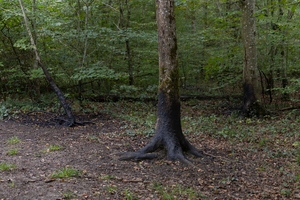
This diploma project details the material stream of synthetic plastics through a reverse chronological approach. It combines field research, visual documentation, and material experimentation to retrace the journey of plastics from their final products back to their origins in petroleum.
‘block to blob’ includes visits to various sites in the production chain, such as manufacturing facilities, oil refineries, pipelines, and extraction sites, concluding in a forest ecosystem, where crude oil naturally seeps to the earth's surface. These experiences are compiled into a research publication that follows this reverse narrative.
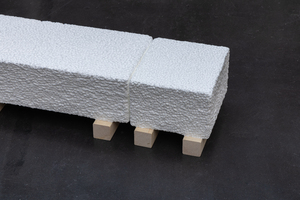
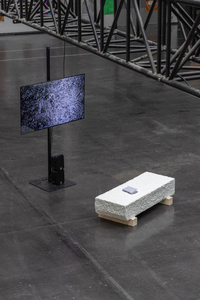
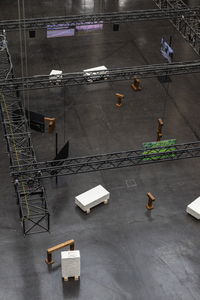
A video installation documents the visited locations, providing visual context for the industrial processes, hidden infrastructure and the natural substance in the forest. Additionally, a series of objects made from petroleum-coated wood and polystyrene grounds the project in tangible materials.
- block to blob
- Beschreibung (en)
- This diploma project details the material stream of synthetic plastics through a reverse chronological approach. It combines field research, visual documentation, and material experimentation to retrace the journey of plastics from their final products back to their origins in petroleum.
‘block to blob’ includes visits to various sites in the production chain, such as manufacturing facilities, oil refineries, pipelines, and extraction sites, concluding in a forest ecosystem, where crude oil naturally seeps to the earth's surface. These experiences are compiled into a research publication that follows this reverse narrative.
A video installation documents the visited locations, providing visual context for the industrial processes, hidden infrastructure and the natural substance in the forest. Additionally, a series of objects made from petroleum-coated wood and polystyrene grounds the project in tangible materials.
- This diploma project details the material stream of synthetic plastics through a reverse chronological approach. It combines field research, visual documentation, and material experimentation to retrace the journey of plastics from their final products back to their origins in petroleum.
- Kategorie
- Typ des Projekts/Werks
- Schlagworte
- Datierung
- 2024
- Sprache
- Untertitel (Film)
- Material
- Technik/Verfahren/Formate
- Pine wood coated with petroleum, Wood soaked in gasoline and pressed/bonded with polystyrene
- Abmessungen
- L x B x H mm, Petroleum-coated wooden objects: Bench: 800 x 200 x 450, 2x T-Stool: 350 x 200 x 450, Stool (3-legged): 450 x 270 x 450, Stool (wide): 600 x 450 x 450, TV stand: - Polystyrene Objekts: Counter: 500 x 370 x 1100, 2x Bench1: 1000 x 570 x 400, Bench2: 1300 x 570 x 350, Stool: 500 x 370 x 570
- Dauer
- 1.: upstream 0 - oil seeping naturally to the surface - Alsace - 2:55min, 2.: upstream 1 - prospect drilling for oil reservoirs - Weingarten - 2:17min, 3.: upstream 2 - horse head pumps extracting oil - Landau - 3:50min, 4.: midstream - transalpine pipeline - Triest-Karlsruhe - 10:40min, 5.: downstream 1 - germany biggest oil refinery - Karlsruhe - 3:13min, 6.: downstream 2 - world biggest chemical plant - Ludwigshafen - 2:19min
- Ort: Institution
- Ort
- Lichthof 3
- Stadt
- Land
- Titel
- block to blob
- Projektleiter/in
- Semester
- Studiengang
- Typ der Abschlussarbeit
- Lehrveranstaltung
- Importiert am
- 03.11.2024
- Übergeordnete Sets
- 1
- Set enthält
- 4 17
Bio Design Lab
Name that can easily go onto 2 lines
Author that can easily go onto 2 lines as well
- Titel
- Bio Design Lab
- Beschreibung (de)
- Das Bio Design Lab ist ein hybrider und evolutiver Ort, der sowohl im digitalen als auch im physischen Raum existiert. Konzipiert als wachsende Plattform, die die Fachbereiche der Staatlichen Hochschule für Gestaltung miteinander verbindet, wird das Labor als Raum für Präsentation, Bildung und Wissensvermittlung genutzt.
Das Bio Design Lab konzentriert sich auf die lokale Region, ihre Ressourcen und Möglichkeiten und zielt aktiv darauf ab, die Produktionsweisen in Karlsruhe und Süddeutschland umzugestalten und neu zu überdenken. Zur Interaktion mit diesen Themen und Materialien, sowohl im digitalen als auch im physischen Raum, lädt das Labor lokale ExpertInnen und BesucherInnen gleichermaßen ein an gemeinsamen Projekten zu arbeiten.
Spuren dieser Aktivitäten komplementieren ein ständig wachsenden Netzwerk.Das Wissen über diese Ressourcen wird durch die Erstellung eines Know-how-Glossars und einer Materialbibliothek destilliert, durch virtuelle und physische Workshops vermittelt, sowie durch die Präsentationen herausragender Projekte, die sich mit nachhaltigen Materialien befassen, kommuniziert.
Das Labor fungiert als Inkubator und Modell für Zusammenarbeit und Produktion, das im Einklang mit dem aktuellen Wandel der Staatlichen Hochschule für Gestaltung Karlsruhe steht.
- Das Bio Design Lab ist ein hybrider und evolutiver Ort, der sowohl im digitalen als auch im physischen Raum existiert. Konzipiert als wachsende Plattform, die die Fachbereiche der Staatlichen Hochschule für Gestaltung miteinander verbindet, wird das Labor als Raum für Präsentation, Bildung und Wissensvermittlung genutzt.
- Beschreibung (en)
- The Bio Design Lab is a hybrid and evolutive environment that exists in both the digital and physical space. Conceived as a platform for connection and collaboration with local partners and using local resources, the Lab hosts the presentation, education and transmission of knowledge. As students and experts are invited to work on bio-design related projects, visitors can explore and interact with the Lab’s production and lines of inquiry.
Projects within the Lab focus on the local region, its materials and possibilities, and actively aim to reshuffle and rethink modes of production in Karlsruhe and the south of Germany. Topics under exploration include Algae, Soil, Plants, Body, and Agriculture. To interact with these themes and related materials, both within the digital and physical space, the Lab invites local experts and visitors alike.
Within the Bio Design Lab, regional resources are collected by connecting with local partners; they are then distilled through the making of a know-how glossary and a material library, aiming to develop local materials. The knowledge around these resources is disseminated through virtual workshops and multimedia presentations of outstanding projects dealing with sustainable materials. Ultimately, traces of these activities will remain in a constantly growing network, both in the digital platform and in physical displays of existing and future objects.
The Lab works as an incubator and a model for collaboration and production that is in line with the current transformation of the Karlsruhe University of the Arts and Design Karlsruhe. It was first presented to the public in the context of Critical Zones, an exhibition at ZKM | Center for Art and Media.
- The Bio Design Lab is a hybrid and evolutive environment that exists in both the digital and physical space. Conceived as a platform for connection and collaboration with local partners and using local resources, the Lab hosts the presentation, education and transmission of knowledge. As students and experts are invited to work on bio-design related projects, visitors can explore and interact with the Lab’s production and lines of inquiry.
- Schlagworte
- Ort: Institution
- Ort
- Bio Design Lab
- Stadt
- Land
- Internetlinks
- Titel
- Bio Design Lab
- Projektleiter/in
- Importiert am
- 23.10.2023
- Übergeordnete Sets
- 1
- Set enthält
- 1 2
Berge versetzen
Name that can easily go onto 2 lines
Author that can easily go onto 2 lines as well
- Titel
- Berge versetzen
- Titel (en)
- Moving mountains
- Autor/in
- Beschreibung (de)
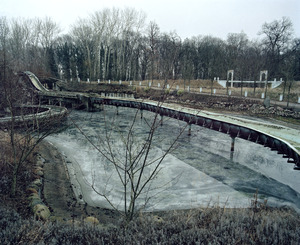
- Bei den ausgestellten Arbeiten handelt es sich ausschließlich um Arbeiten neueren Datums. Bis auf die Arbeit „Treptow“ aus dem Jahr 2002 sind alle Arbeiten in den letzten 10 Monaten entstanden.
In meinen Arbeiten setze ich mich mit dem „Modellieren von Landschaft“ auseinander. Die Skulpturalität oder auch die Landschaftsmodellierung bilden den Mittelpunkt meiner Arbeiten. Die Form und deren illusionistisches Spiel treten dabei immer mehr in den Vordergrund. Ungewöhnliche Blickwinkel lassen den Standpunkt des Betrachters unklar und schaffen eine Unsicherheit über das Abgebildete. Durch eine bestimmte Art der Abbildung der Landschaftsskulpturen verlieren sie ihre ursprüngliche Bedeutung und zeigen oftmals die Absurdität der Handlungsweise des Menschen.
Alle Bilder sind in einem analogen Aufnahmeverfahren mit einer Großbildkamera entstanden. Nur unwesentliche digitale Eingriffe sind nötig, um dem abgebildeten Bildcharakter zu verleihen. Das bewusste Aufsuchen von ungewöhnlichen Orten und Blickwinkeln lässt oftmals die Vermutung einer digitalen Montage zu. „Berge versetzen“ ist eine Metapher sowohl für den plastischen als auch den skulpturalen Umgang mit Landschaft. Das Wegnehmen und Hinzufügen ganzer Berge oder Bergteile stehen stellvertretend für die Mächtigkeit des Eingriffs des Menschen in die Natur.
- Bei den ausgestellten Arbeiten handelt es sich ausschließlich um Arbeiten neueren Datums. Bis auf die Arbeit „Treptow“ aus dem Jahr 2002 sind alle Arbeiten in den letzten 10 Monaten entstanden.
- Beschreibung (en)
- The exhibited works are all recent. With the exception of the work “Treptow” from 2002, all the works were created in the last 10 months.
In my works I deal with the “modeling of landscape”. Sculpturality or landscape modeling is the focus of my work. The form and its illusionistic play increasingly come to the fore. Unusual perspectives leave the viewer's point of view unclear and create uncertainty about what is depicted. By depicting the landscape sculptures in a certain way, they lose their original meaning and often show the absurdity of human behavior.
All of the pictures were taken using analog photography with a large-format camera. Only insignificant digital interventions are necessary to lend the depicted image character. The deliberate search for unusual locations and angles often leads to the assumption of a digital montage. “Moving mountains” is a metaphor for both the plastic and sculptural treatment of landscape. The removal and addition of entire mountains or parts of mountains are representative of the power of human intervention in nature.
- The exhibited works are all recent. With the exception of the work “Treptow” from 2002, all the works were created in the last 10 months.
- Kategorie
- Schlagworte
- Technik/Verfahren/Formate
- Großbildkamera
- Internetlinks
- Titel
- Berge versetzen
- Projektleiter/in
- Semester
- Studiengang
- Typ der Abschlussarbeit
- Importiert am
- 08.11.2024
- Übergeordnete Sets
- 2
- Set enthält
- 0 6