Sets
234 Inhalte
- Seite 1 von 20
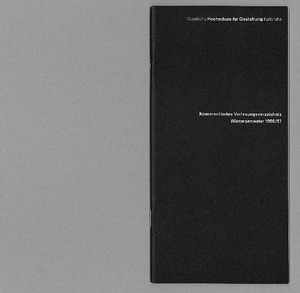
Kommentierte Vorlesungsverzeichnisse
Name that can easily go onto 2 lines
Author that can easily go onto 2 lines as well
- Titel
- Kommentierte Vorlesungsverzeichnisse
- Autor/in
- Kategorie
- Typ des Projekts/Werks
- Titel
- Kommentierte Vorlesungsverzeichnisse
- Importiert am
- 10.07.2024
- Übergeordnete Sets
- 1
- Set enthält
- 0 21
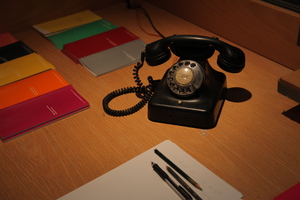
Klotz am Apparat
Name that can easily go onto 2 lines
Author that can easily go onto 2 lines as well
- Titel
- Klotz am Apparat
- Titel (en)
- The Klotz calling
- Autor/in
- Beschreibung (de)
- Die Forschungsgruppe Klotz-Archiv sammelt Audio-, Video- und Textdokumente aus den Jahren der Gründung der HfG mit dem Ziel der Einrichtung einer Archivplattform sowie der Produktion von Archivinstallationen, Archivperformances sowie Filmessays über die Reformhochschule HfG, ihre Gründungsidee und ihren Gründer Heinrich Klotz (1935-1999).
- Schlagworte
- Datierung
- 13.07.2016 - 17.07.2016
- Stadt
- Land
- Titel
- Klotz am Apparat
- Projektleiter/in
- Importiert am
- 22.02.2018
- Übergeordnete Sets
- 1
- Set enthält
- 0 44
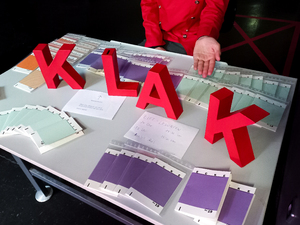
KLAK
Name that can easily go onto 2 lines
Author that can easily go onto 2 lines as well
- Titel
- KLAK
- Titel
- KLAK
- Importiert am
- 20.10.2024
- Übergeordnete Sets
- 0
- Set enthält
- 0 19
kkaarrlls revisited
Name that can easily go onto 2 lines
Author that can easily go onto 2 lines as well
- Titel
- kkaarrlls revisited
- Autor/in
- Beschreibung (de)
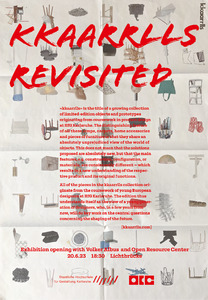
- Das HfG OPEN RESOURCE CENTER lädt Sie herzlich ein zur Eröffnung der Ausstellung kkaarrlls Revisited
Dienstag
20. Juni
18:30
Lichtbrücke
Volker Albus, einer der dienstältesten Professoren des Fachbereichs Produktdesign und ehemaliger Prorektor der HfG, eröffnet die Ausstellung ausgewählter Objekte der Designmarke kkaarrlls, die von HfG-Studierenden entworfen und entwickelt wurden.
kkaarrlls ist ein Projekt, das innerhalb des Fachbereichs PD initiiert wurde und sich zu einer hauseigenen Marke der HFG Design entwickelt hat. Sie repräsentiert eine erlesene Auswahl an Arbeiten von PD-Studierenden aus dem Zeitraum von 2009 bis 2017.
kkaarrlls wurde regelmäßig auf dem Salone Internazionale del Mobile in Mailand präsentiert und hat internationale Aufmerksamkeit in Zeitungen wie Le Monde oder New York Times erlangt.
- Das HfG OPEN RESOURCE CENTER lädt Sie herzlich ein zur Eröffnung der Ausstellung kkaarrlls Revisited
- Beschreibung (en)
- The HfG OPEN RESOURCE CENTER cordially invites you to the opening of the kkaarrlls Revisited exhibition
Tuesday
20th of June
18:30
Lichtbrücke
Volker Albus, one of the longest serving professors of the Product Design department and former HfG prorektor, will open the exhibition of selected items of the kkaarrlls design brand, created and developed by HfG students.
kkaarrlls is a project initiated inside the PD department and has evolved into an in-house brand of HFG design, representing a distinguished selection of PD student's works from the period of 2009 to 2017.
kkaarrlls has been perdiodically presented at the salone internazionale del mobile in Milan and has gained international attention in newspapers like Le Monde or New York Times.
- The HfG OPEN RESOURCE CENTER cordially invites you to the opening of the kkaarrlls Revisited exhibition
- Typ des Projekts/Werks
- Schlagworte
- Datierung
- 20.06.2023
- Ort: Institution
- Ort
- Lichthof 3
- Stadt
- Land
- Internetlinks
- Titel
- kkaarrlls revisited
- Importiert am
- 26.07.2023
- Übergeordnete Sets
- 2
- Set enthält
- 0 5
KD Vordiplomspräsentation SS 2024
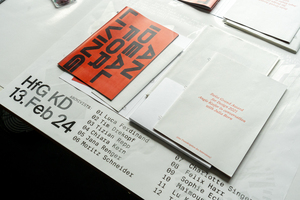
Name that can easily go onto 2 lines
Author that can easily go onto 2 lines as well
- Titel
- KD Vordiplomspräsentation SS 2024
- Kategorie
- Datierung
- 04.07.2024
- Ort: Institution
- Stadt
- Land
- Titel
- KD Vordiplomspräsentation SS 2024
- Urheberrechtshinweis
- © Staatliche Hochschule für Gestaltung Karlsruhe
- Semester
- Studiengang
- Typ der Abschlussarbeit
- Importiert am
- 22.08.2024
- Übergeordnete Sets
- 0
- Set enthält
- 0 11
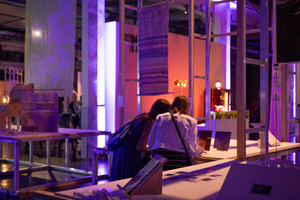
KAMUNA 2024
Name that can easily go onto 2 lines
Author that can easily go onto 2 lines as well
- Titel
- KAMUNA 2024
- Untertitel
- Karlsruhe Museumsnacht
- Beschreibung (de)
- Die HfG ist in diesem Jahr zum zweiten Mal als offizieller Partner Teil der Karlsruher Museumsnacht KAMUNA mit einem eigenen Programm in den Lichthöfen.
Am 3. August 2024 öffnen wir ab 18.00 Uhr die Türen mit folgenden Highlights:
Ausstellung: Aktuelle Arbeiten von Studierenden und Projekte aus den Studiengängen Ausstellungsdesign und Szenografie, Kommunikationsdesign, Kunstwissenschaft und Medienphilosophie, Medienkunst sowie Produktdesign der HfG in Lichthof 3+4.
Ausstellung: Ausgewählte Ergebnisse des HfG-Schnupperstudiums, die Schülerinnen und Schüler zwischen 16 und 20 Jahren in Workshops 5 Tage lang kreativ erarbeitet haben in Lichthof 3+4.
Robotic Soundscape: Interactive Robotic Sound Art Performance mit dem Maschinenkunst-Pionier und Medienkünstler Kal Spelletich - Eine Gruppenperformance von Nachwuchskünstlerinnen und -künstlern der HfG mit einem Maschinenorchester aus interaktiven Klangrobotern, elektromechanischen Klangerzeugern und automatischen Instrumenten exklusiv für die KAMUNA. Beeinflusst von der Arbeit von Terry Riley, Kraftwerk, David Tudor, John Cage, den Einstürzenden Neubauten und Pauline Oliveros wird eine einzigartige Soundscapekomposition erschaffen. Dies ist die seltene Gelegenheit, eine von Kal Spelletichs Performances zu erleben. Aufführungen um 20 Uhr und um 21 Uhr im großen Studio
Illuminating Nature: Interaktiver Workshop über (biolumineszente) Pilze - Das Bio Design Lab an der HfG und das Hertzlab am ZKM weihen in diesem praktischen Crossover-Projekt in die wilde Welt der organischen Netzwerke der Pilze ein. Praktische Hands-on Performance mit dem biolumineszierenden Myzelium des Herben Zwergknäuelings (Panellus stipticus) plus Wissenswertes über Pilze als Nutzorganismen und warum sie sich so gut für Medienkunst eignen. 21:00 - 0:00 im Bio Design Lab in Lichthof 4.
Gemeinsame Ausstellung von HfG und ZKM: Antennae: Frequencies from the Archive - Entwickelt von einer Seminargruppe des Studiengangs Ausstellungsdesign und Szenografie der HfG und kuratiert von Nick Aikens, Céline Condorelli im Dialog mit Felix Mittelberger.
Gemeinsame Studio-Ausstellung von HfG und Städtischer Galerie Karlsruhe: „Hydromedia. Seeing with Water“ - Erarbeitet im Frühjahr 2024 an der HfG Karlsruhe im Rahmen des EU-geförderten künstlerischen Forschungsprojekts „Hydromedia“
- Die HfG ist in diesem Jahr zum zweiten Mal als offizieller Partner Teil der Karlsruher Museumsnacht KAMUNA mit einem eigenen Programm in den Lichthöfen.
- Beschreibung (en)
- This year, the HfG is part of the Karlsruhe Museum Night KAMUNA for the second time as an official partner with its own program in the atriums.
On August 3, 2024, we will open the doors from 6 p.m. with the following highlights
Exhibition: Current works by students and projects from the exhibition design and scenography, communication design, art studies and media philosophy, media art and product design courses at the HfG in Lichthof 3+4
Exhibition: Selected results of the HfG taster course, which students between the ages of 16 and 20 worked on creatively in workshops over 5 days in Lichthof 3+4
Robotic Soundscape: Interactive Robotic Sound Art Performance with machine art pioneer and media artist Kal Spelletich - A group performance by young artists from the HfG with a machine orchestra of interactive sound robots, electromechanical sound generators and automatic instruments exclusively for KAMUNA. Influenced by the work of Terry Riley, Kraftwerk, David Tudor, John Cage, Einstürzende Neubauten and Pauline Oliveros, a unique soundscape composition will be created. This is a rare opportunity to experience one of Kal Spelletich's performances. **Performances at 8 pm and 9 pm in the Studio.
Illuminating Nature: An Interactive Workshop on (Bioluminescent) Fungi - The Bio Design Lab at the HfG and the Hertzlab at the ZKM will introduce you to the wild world of organic fungal networks in this practical crossover project. In a practical hands-on performance, we will bring the bioluminescent mycelium of the Panellus stipticus into your living room. Along the way you will learn interesting facts about fungi as useful organisms and why fungi are so well suited for media art. Time: 21:00 - 0:00 at the Bio Design Lab in Lichthof 4.
Joint exhibition by HfG and ZKM: Antennae: Frequencies from the Archive - Developed by a seminar group from the exhibition design and scenography course at HfG and curated by Nick Aikens, Céline Condorelli in dialog with Felix Mittelberger.
Joint studio exhibition by HfG and Städtische Galerie Karlsruhe: “Hydromedia. Seeing with Water” - Developed in spring 2024 at the HfG Karlsruhe as part of the EU-funded artistic research project ”Hydromedia”
- This year, the HfG is part of the Karlsruhe Museum Night KAMUNA for the second time as an official partner with its own program in the atriums.
- Datierung
- 03.08.2024
- Ort: Institution
- Internetlinks
- Titel
- KAMUNA 2024
- Importiert am
- 30.08.2024
- Übergeordnete Sets
- 1
- Set enthält
- 0 23
KaMuNa
Name that can easily go onto 2 lines
Author that can easily go onto 2 lines as well
- Titel
- KaMuNa
- Titel
- KaMuNa
- Importiert am
- 15.01.2025
- Übergeordnete Sets
- 1
- Set enthält
- 1 0
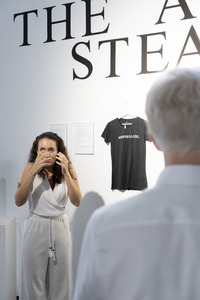
Jury2024
Name that can easily go onto 2 lines
Author that can easily go onto 2 lines as well
- Titel
- Jury2024
- Kategorie
- Schlagworte
- Datierung
- 18.07.2024
- Stadt
- Land
- Auftrag durch
- Presse HFG
- Titel
- Jury2024
- Importiert am
- 22.07.2024
- Übergeordnete Sets
- 1
- Set enthält
- 0 41
Jahresberichte

Name that can easily go onto 2 lines
Author that can easily go onto 2 lines as well
- Titel
- Jahresberichte
- Autor/in
- Beschreibung (de)
- Ab 2016/17 finden Sie die Projekte, die ehemals im Jahresbericht zusammengefasst wurden, in digitaler Form auf der Webseite.
Mit dem Jahresbericht möchte die HfG Karlsruhe einer breiten Fachöffentlichkeit einen Einblick in die Aktivitäten und Entwicklungen der Hochschule bieten. Bei der Durchsicht der umfangreichen Bände kann man sich sowohl von der Dynamik der HfG, als auch von den Erfolgen der Hochschule überzeugen, die sich in einer eindrucksvollen Liste von Veranstaltungen, Ausstellungen, Preisen und Stipendien niederschlagen.
- Ab 2016/17 finden Sie die Projekte, die ehemals im Jahresbericht zusammengefasst wurden, in digitaler Form auf der Webseite.
- Kategorie
- Typ des Projekts/Werks
- Internetlinks
- Titel
- Jahresberichte
- Importiert am
- 10.07.2024
- Übergeordnete Sets
- 1
- Set enthält
- 0 9
I used to think that I was made of Stone
Name that can easily go onto 2 lines
Author that can easily go onto 2 lines as well
- Titel
- I used to think that I was made of Stone
- Titel (en)
- I used to think that I was made of Stone
- Autor/in
- Beschreibung (de)
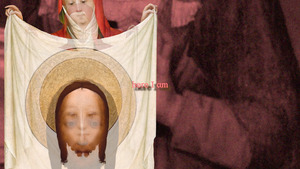
- In der multimedialen Installation „I used to think that I was made of Stone“ werden die Besuchenden Zeug*innen eines nächtlichen Treffens von vier Personen, die nur durch ihre Stimmen präsent sind. Sie unterhalten sich über merkwürdige Objekte in ihrer greifbaren Nähe, führen nebensächliche Gespräche und verbringen einen Abend damit, Musik zu hören und zu tanzen. Ihre Körper bleiben in der Installation unsichtbar, die Objekte im Raum werden zu Spuren.
Durch das Sammeln, neu Arrangieren und Kombinieren von religiösen, (pop-)kulturellen und selbst produzierten Fragmenten im Raum verhandelt „I used to think that I was made of Stone”, wie Lücken und Ausschmückungen unsere Realitäten in der Gegenwart formen und welche Geschichten und Nacherzählungen sie produzieren. Dabei fragt es nach Autor*innenschaft und den Übersetzer*innen, die das Produzierte wortwörtlich über-setzen, weiter-tragen und fort-spinnen und somit stetig weiter produzieren. Sie bestimmen die Stofflichkeit der Geschichte, knoten die Fäden der Ausschmückungen, brennen Löcher und Lücken in das Gewebe und geben es weiter.
- In der multimedialen Installation „I used to think that I was made of Stone“ werden die Besuchenden Zeug*innen eines nächtlichen Treffens von vier Personen, die nur durch ihre Stimmen präsent sind. Sie unterhalten sich über merkwürdige Objekte in ihrer greifbaren Nähe, führen nebensächliche Gespräche und verbringen einen Abend damit, Musik zu hören und zu tanzen. Ihre Körper bleiben in der Installation unsichtbar, die Objekte im Raum werden zu Spuren.
- Beschreibung (en)
- In the multimedia installation “I used to think that I was made of Stone”, visitors witness a nighttime meeting of four people who are only present through their voices. They talk about strange objects within reach, have trivial conversations, and spend an evening listening to music and dancing. Their bodies remain invisible in the installation, while the objects in the room become traces of their presence.
By collecting, rearranging and combining religious, (pop) cultural and self-produced fragments in the space, “I used to think that I was made of Stone” explores how gaps and embellishments shape our realities in the present, and what stories they generate or retell. In doing so, it questions authorship and the role of translators, who literally translate, carry forward, and elaborate on what has already been produced, thus continuing the production process. They determine the material nature of the story, tie the threads of embellishment, burn holes and gaps into the fabric and pass it on.
- In the multimedia installation “I used to think that I was made of Stone”, visitors witness a nighttime meeting of four people who are only present through their voices. They talk about strange objects within reach, have trivial conversations, and spend an evening listening to music and dancing. Their bodies remain invisible in the installation, while the objects in the room become traces of their presence.
- Kategorie
- Typ des Projekts/Werks
- Schlagworte
- Datierung
- Februar 2023
- Mitwirkende
- Sprache
- Abmessungen
- „face imprint” (Textil, Wachs, 63 x 54 cm); „about veronica” (Textil, Stickerei, 84 x 67 cm); „about the cloth” (Projektion, 12 Seiten); „I used to think” (HD-video, Audio, 13:46 min); „toad” (Ton, Wachs, 11 x 13 cm); „wax and stones” (Wachs, Schwelle TV HIFI, 20 x 6 cm); „wax and stone” (Wachs, Stein, 40 x 40 x 10 cm); „everyone” (Reader, 9,5 x 15,2 cm, 36 Seiten); „glasses” (4 Kristallgläser, 5 x 7 cm, Wachs); „jumping rope” (Seil, 2 m); „gestalt mit großem hut” (Keramik, 6 x 7 cm); „fabric n°1” (Textil, Wachs, 57 x 41cm); „fabric n°2” (Textil, Wachs, 60 x 45 cm); „y” (Textil, Wachs, 25 x 15 cm); „woven temple, hidden cocoon #3” (Playlist, 43 Tracks); „wine fountain” (Glas, Pumpe, Wein, 20 x 20 x 110 cm); „cushion” (Textil, Watte, Stickerei, 15 x 15 cm)
- Ort: Institution
- Stadt
- Land
- Titel
- I used to think that I was made of Stone
- Projektleiter/in
- Semester
- Studiengang
- Typ der Abschlussarbeit
- Importiert am
- 25.06.2024
- Übergeordnete Sets
- 3
- Set enthält
- 0 14
“I see” “with my voice”
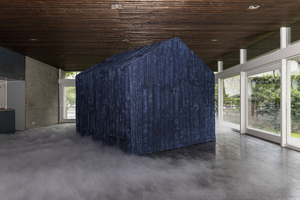
Name that can easily go onto 2 lines
Author that can easily go onto 2 lines as well
- Titel
- “I see” “with my voice”
- Autor/in
- Beschreibung (de)
- „I see“ „with my voice“ beschäftigt sich mit Themen wie Transformation, Gestaltwandel und Materialität durch ein Zusammenspiel von literarischen Fragmenten und entliehenen Stimmen. Das Ergebnis ist eine nicht-lineare, fluide Erzählung, die die flüchtige Natur von Visionen, Träumen und Metamorphosen einfängt.
- Beschreibung (en)
- “I see” “with my voice” engages with themes of transformation,
shapeshifting, and materiality through an interplay of literary
fragments and borrowed voices, resulting in a non-linear, fluid
narrative that encapsulates the ephemeral nature of visions,
dreams, and metamorphoses.
This project draws substantial inspiration from Alice Notley's
The Descent of Alette, a transformative odyssey that employs
rhythmic spoken language to explore continuous change.
Alongside Notley’s influence, the works of Hildegard von Bingen,
a 12th-century mystic, and the visionary narratives from the
biblical book of Ezekiel, serve as foundational texts that inform
the thematic and structural framework of this piece.
The text is presented as an audio recording, whispered as a 20 minute loop.
Visitors can listen to the piece when pressing their ear against the tents walls.
My objects are performers, maybe even imposters: frozen in a state of change or mimicry. My objects are performers, maybe even imposters: frozen in a state of change or mimicry.
They are skillfull imitators, but you can tell something is off.
Moving along this crack between the believable and the not quite right, I like to engage
with different realities and states of being. The artificial, almost real-life fakeness of their with different realities and states of being. The artificial, almost real-life fakeness of their
surfaces set the stage for my narrative of transformation, imitation and shapeshifting.
1. A wooden house crafted from smooth denim. Made by sanding the grain of wood
onto the denim fabric
2. Heavy fog covering the floor that could be perceived as dew, mixed with a light subtle
smoke of Incense burning.
The fragrance envokes sacred, holy feelings with its warm, resinous smell with peppery The fragrance envokes sacred, holy feelings with its warm, resinous smell with peppery
undertones.
3. 100 cherries made from a thick mixture of honey and almonds. The heavy sweetness
of the stoneless candy-imposter meant to linger in the visitors mouth as it is tasted. of the stoneless candy-imposter meant to linger in the visitors mouth as it is tasted.
A thin gelatine film – imitating the coolnes of cherry skin as it touches the lips A thin gelatine film – imitating the coolnes of cherry skin as it touches the lips
The installation is accompanied by a small reader containing the three part text to be taken The installation is accompanied by a small reader containing the three part text to be taken
home and serve as a keep sake or document of the fleeting spoken text.
The reader is bound with one simple staple. It does not have a beginning or end, but The reader is bound with one simple staple. It does not have a beginning or end, but
rather works like a gif. No cover or back. Just like wheels turning endlessly in a nonlinear rather works like a gif. No cover or back. Just like wheels turning endlessly in a nonlinear
storytelling.
- “I see” “with my voice” engages with themes of transformation,
- Kategorie
- Typ des Projekts/Werks
- Schlagworte
- Datierung
- 18.04.2024
- Sprache
- Ort: Institution
- Ort
- “I see” “with my voice” at ZKM Pavillon, Karlsruhe
- Stadt
- Land
- Titel
- “I see” “with my voice”
- Projektleiter/in
- Semester
- Studiengang
- Typ der Abschlussarbeit
- Importiert am
- 19.09.2024
- Übergeordnete Sets
- 0
- Set enthält
- 0 2
Interview (HfG Produktion)

Name that can easily go onto 2 lines
Author that can easily go onto 2 lines as well
- Titel
- Interview (HfG Produktion)
- Beschreibung (de)
- In diesem Interview stellt die Absolventin ihre Arbeit vor. Das Video ist Teil einer Serie von Interviews mit verschiedenen Absolvent*innen, die die HfG 2018 produzierte.
- In diesem Interview stellt die Absolventin ihre Arbeit vor. Das Video ist Teil einer Serie von Interviews mit verschiedenen Absolvent*innen, die die HfG 2018 produzierte.
- Beschreibung (en)
- In this interview, the graduate presents his work. The video is part of a series of interviews with various graduates that the HfG produced in 2018.
- Titel
- Interview (HfG Produktion)
- Importiert am
- 05.09.2024
- Übergeordnete Sets
- 1
- Set enthält
- 0 1