Sets
234 Inhalte
- Seite 1 von 20
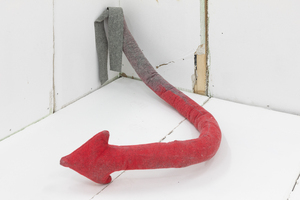
A staged performance at a place no longer quiet
Name that can easily go onto 2 lines
Author that can easily go onto 2 lines as well
- Titel
- A staged performance at a place no longer quiet
- Autor/in
- Beschreibung (de)
- In "a staged performance at a place no longer quiet" werden fünf klischeehafte Figuren durch Animation zum Leben erweckt und durch Requisiten in der physischen Welt mit Körpern ausgestattet. Anstatt eine Handlung zu entwickeln, bleiben sie in ihren Monologen stecken und reflektieren über ihre zugewiesenen Rollen. Die Figuren warten auf den Moment, in dem die Geschichte beginnen soll. Da das Stück jedoch nie beginnt und die klassische Struktur einer Aufführung auseinanderfällt, können die Figuren nicht in einen Dialog miteinander treten, sondern nur für sich selbst sprechen. Jeder verkörpert individuell seine Rolle und die vielen Geschichten, die mit ihm erzählt wurden. In den Rissen zwischen den Fragmenten, aus denen sie bestehen, geben alle fünf Figuren einen Einblick, wie wir Geschichten konstruieren und Zeichnungen zum Leben erwecken.
- Beschreibung (en)
- In "a staged performance at a place no longer quiet", five cliché characters are brought to life through animation and given bodies through props in the physical world. Instead of developing a plot, they remain stuck in their monologues and reflect on their assigned roles. The characters wait for the moment of a story to begin. However, as the play never begins and the classical structure of a performance falls apart, the characters cannot enter into a dialogue with each other, but only speak for themselves. Each one embodies their role individually and the many stories that have been told with them. In the cracks between the fragments of which they are made, all five characters provide an insight into how we construct stories and bring drawings to life.
- Kategorie
- Typ des Projekts/Werks
- Schlagworte
- Datierung
- 06.12.2023
- Titel
- A staged performance at a place no longer quiet
- Projektleiter/in
- Semester
- Studiengang
- Typ der Abschlussarbeit
- Importiert am
- 15.02.2024
- Übergeordnete Sets
- 3
- Set enthält
- 3 2
Audiodateien
- Titel
- Audiodateien
- Autor/in
- Titel
- Audiodateien
- Semester
- Studiengang
- Typ der Abschlussarbeit
- Importiert am
- 21.08.2023
- Übergeordnete Sets
- 1
- Set enthält
- 0 2
Ausstellung
Name that can easily go onto 2 lines
Author that can easily go onto 2 lines as well
- Titel
- Ausstellung
- Titel
- Ausstellung
- Importiert am
- 26.09.2024
- Übergeordnete Sets
- 1
- Set enthält
- 0 5
Ausstellung / Exhibition
Name that can easily go onto 2 lines
Author that can easily go onto 2 lines as well
- Titel
- Ausstellung / Exhibition
- Titel (en)
- About Fighting the Fear (of the World)
- Autor/in
- Beschreibung (de)
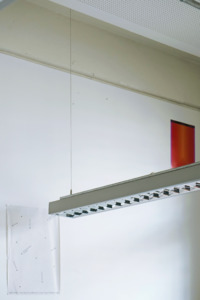
- "Über das Bekämpfen der Angst (vor der Welt)" ist eine spekulative Videoarbeit, die ein Spektrum von Phänomenen rund um Karten, Angst, Krieg, Reisen und den Körper abdeckt, wobei der Schwerpunkt auf der Praxis der Kartierung als Instrument zur Unterdrückung und Kontrolle von Land und Menschen liegt. Das Video versucht, einen Rahmen für das Thema zu schaffen, indem es viele verschiedene Geschichten zu einem Cluster zusammenführt, der vielleicht nicht repräsentativ ist, aber einige Teile des Themas beleuchtet. Ästhetisch und strukturell ist das Video von Rollenspielen, der Pre-Vis-Technik (die in Filmproduktionen verwendet wird) und Found Footage inspiriert. Das Szenario ist in einer fernen Zukunft angesiedelt, in der Klimawandel und Massenaussterben längst ihre Auswirkungen gezeigt haben und die Bestien, die vor der großen Kolonisierung über das Unbekannte wachten, zurückgekehrt sind. In der Rolle der Hauptfigur sucht der Zuschauer, angeleitet von einem Erzähler, nach Überresten der alten Welt, um zu verstehen, warum alles kartiert werden musste.
- Beschreibung (en)
- "About Fighting the Fear (of the World)" is a speculative video work that covers a spectrum of phenomena around maps, fear, war, traveling, and the body, with a focus on the practice of mapping as a tool to oppress and control land and people. The video attempts to frame the issue by bringing together many different stories to create a cluster that may not be representative but illuminates some parts of the issue. Aesthetically and structurally, the video is inspired by role-playing games, pre-vis technique (used in film productions), and found footage. The scenario is set in a distant future in which climate change and mass extinction have long since had an impact and beasts that used to watch over the unknown before the big colonization have returned. As the main character, the viewer searches for remnants of the old world, guided by a narrator, in order to understand why everything had to be mapped.
- Typ des Projekts/Werks
- Schlagworte
- Datierung
- 22.02.2024
- Mitwirkende
- Dank an
- Sprache
- Untertitel (Film)
- Material
- Technik/Verfahren/Formate
- MP4
- Abmessungen
- 2500 x 1080 px
- Dauer
- 26 min
- Ort: Institution
- Ort
- Werkschau und Diplominstallation in Raum 222, Video-Screening im Kino im Blauen Salon
- Stadt
- Land
- Titel
- Ausstellung / Exhibition
- Projektleiter/in
- Semester
- Studiengang
- Typ der Abschlussarbeit
- Importiert am
- 28.02.2024
- Übergeordnete Sets
- 1
- Set enthält
- 0 9
Automatie
Name that can easily go onto 2 lines
Author that can easily go onto 2 lines as well
- Titel
- Automatie
- Autor/in
- Beschreibung (de)
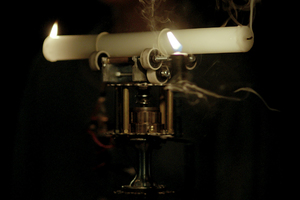
- „Automatie“ ist eine performative Installation, bestehend aus einem Drei-Kanal-Video, einem kinetischen Objekt und einer Performerin. Die gesamte Installation ist ein Loop, allerdings mit einem konkreten Anfang. Zu Beginn lässt die Performerin die ZuschauerInnen in den Raum hinein, der ca. 7-minütige Zyklus beginnt und wiederholt sich danach ständig.
Im Raum selbst steht ein Stuhl, der mit einer Apparatur verbunden ist, die ihn auf den Hinterbeinen vor und zurück kippeln lässt, bis er sich schließlich löst und auf allen vier Beinen zum Stillstand kommt.
Das Video wird auf drei Leinwänden abgespielt, die jeweils einen unterschiedlichen Blickwinkel auf das Geschehen zeigen. Zu sehen ist eine Apparatur, die sich um eine Kerze dreht, an deren beiden Enden der Docht freiliegt. Durch die Drehbewegung der Apparatur wird die Kerze an einer Seite angezündet und zeitgleich an der anderen gelöscht. Mit jedem Wechsel macht das Licht der Kerze eine Person sichtbar, bzw. verbirgt sie im Dunkeln. Die Stuhlapparatur und das one-take-video der Kerzenapparatur werden abwechselnd von der Performerin initiiert und beobachtet.
Beide Apparate verfolgen weder ein Ziel noch eine erkennbare Funktion, sind nicht produktiv im effizienten Sinne. Sie beschreiben vielmehr in sich geschlossene Prozesse, die aus sich selbst heraus enden und von der Performerin immer wieder aufs Neue in Gang gesetzt werden. Die Apparate und die Performerin sind ständig in Bewegung, doch keiner bewegt sich fort.
Die Spannung liegt in den Beziehungen, Übereinstimmungen und (scheinbaren) Aktionen und Reaktionen, die in diesem Raum stattfinden und entstehen.
Rana Karan schreibt über die Arbeit: „[Die Installation] Automatie produziert ein Gefühl der Vergänglichkeit, das sich als ein zentrales Motiv der Arbeit darstellt. In einer melancholischen Sehnsucht evoziert sie den Eindruck einer Erinnerung, die nicht mehr in einen gegenwärtigen Zustand zurück zu bringen ist. [...] Dieses Bild der Melancholie [eröffnet], ganz im Sinne der dichterischen Bilder Bachelards, einen Zugang zu den Bildern der Vergangenheit und verknüpft sie mit den eigenen Bildern: ‚[D]urch den Aufklang eines Bildes werden Echos in der fernen Vergangenheit geweckt, und es ist kaum abzusehen, bis zu welcher Tiefe diese Echos hinabreichen, ehe sie verhallen. In seiner Neuheit, in seiner Aktivität, besitzt das dichterische Bild ein eigenes Wesen, eine eigene Dynamik.’ (Bachelard, Gaston: Poetik des Raumes) Automatie ermöglicht den BetrachterInnen eine eigene, träumerische Dynamik zu entwickeln und bietet einen subjektiven Schutzraum der Deutungsmöglichkeiten. [...] Die BetrachterInnen selbst können diesen Ort zu jeder Zeit verlassen, doch er scheint nie zu verschwinden oder zu erstarren – er bildet einen Ort der Verbindlichkeit.“
- „Automatie“ ist eine performative Installation, bestehend aus einem Drei-Kanal-Video, einem kinetischen Objekt und einer Performerin. Die gesamte Installation ist ein Loop, allerdings mit einem konkreten Anfang. Zu Beginn lässt die Performerin die ZuschauerInnen in den Raum hinein, der ca. 7-minütige Zyklus beginnt und wiederholt sich danach ständig.
- Typ des Projekts/Werks
- Datierung
- SS 2017
- Internetlinks
- Titel
- Automatie
- Projektleiter/in
- Semester
- Importiert am
- 04.07.2018
- Übergeordnete Sets
- 0
- Set enthält
- 0 4
Bad Readings
Name that can easily go onto 2 lines
Author that can easily go onto 2 lines as well
- Titel
- Bad Readings
- Autor/in
- Beschreibung (de)
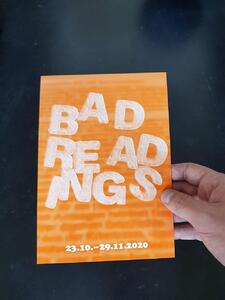
- "Bad Readings" zeigt Manifestationen affektiver und körperlicher Modi der Ausstellungserfahrung, die während eines im August 2020 von Diane Hillebrand einberufenen Workshops am Badischen Kunstverein entstanden. Abseits normierter und normalisierender Rezeptionsmuster näherte sich die "Bad Reading Group" der Ausstellung "If It’s For The People, It Needs To Be Beautiful, She Said" des Künstlers Jeremiah Day, die während der ersten Jahreshälfte im Kunstverein zu sehen war.
- Beschreibung (en)
- "Bad Readings" shows manifestations of affective and physical modes of exhibition experience that emerged during a workshop convened by Diane Hillebrand at Badischer Kunstverein in August 2020. Moving away from standardized and normalizing patterns of reception, the "Bad Reading Group" approached the exhibition "If It's For The People, It Needs To Be Beautiful, She Said" by artist Jeremiah Day, which was on view at the Kunstverein during the first half of the year.
- Kategorie
- Schlagworte
- Datierung
- 23.10.2020 - 29.11.2020
- Mitwirkende
- Ort: Institution
- Stadt
- Land
- Beteiligte Institution(en)
- Titel
- Bad Readings
- Semester
- Studiengang
- Typ der Abschlussarbeit
- Importiert am
- 19.06.2024
- Übergeordnete Sets
- 1
- Set enthält
- 0 15
Berge versetzen
Name that can easily go onto 2 lines
Author that can easily go onto 2 lines as well
- Titel
- Berge versetzen
- Titel (en)
- Moving mountains
- Autor/in
- Beschreibung (de)
- Bei den ausgestellten Arbeiten handelt es sich ausschließlich um Arbeiten neueren Datums. Bis auf die Arbeit „Treptow“ aus dem Jahr 2002 sind alle Arbeiten in den letzten 10 Monaten entstanden.
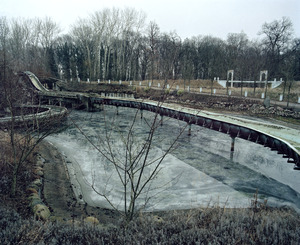
In meinen Arbeiten setze ich mich mit dem „Modellieren von Landschaft“ auseinander. Die Skulpturalität oder auch die Landschaftsmodellierung bilden den Mittelpunkt meiner Arbeiten. Die Form und deren illusionistisches Spiel treten dabei immer mehr in den Vordergrund. Ungewöhnliche Blickwinkel lassen den Standpunkt des Betrachters unklar und schaffen eine Unsicherheit über das Abgebildete. Durch eine bestimmte Art der Abbildung der Landschaftsskulpturen verlieren sie ihre ursprüngliche Bedeutung und zeigen oftmals die Absurdität der Handlungsweise des Menschen.
Alle Bilder sind in einem analogen Aufnahmeverfahren mit einer Großbildkamera entstanden. Nur unwesentliche digitale Eingriffe sind nötig, um dem abgebildeten Bildcharakter zu verleihen. Das bewusste Aufsuchen von ungewöhnlichen Orten und Blickwinkeln lässt oftmals die Vermutung einer digitalen Montage zu. „Berge versetzen“ ist eine Metapher sowohl für den plastischen als auch den skulpturalen Umgang mit Landschaft. Das Wegnehmen und Hinzufügen ganzer Berge oder Bergteile stehen stellvertretend für die Mächtigkeit des Eingriffs des Menschen in die Natur.
- Bei den ausgestellten Arbeiten handelt es sich ausschließlich um Arbeiten neueren Datums. Bis auf die Arbeit „Treptow“ aus dem Jahr 2002 sind alle Arbeiten in den letzten 10 Monaten entstanden.
- Beschreibung (en)
- The exhibited works are all recent. With the exception of the work “Treptow” from 2002, all the works were created in the last 10 months.
In my works I deal with the “modeling of landscape”. Sculpturality or landscape modeling is the focus of my work. The form and its illusionistic play increasingly come to the fore. Unusual perspectives leave the viewer's point of view unclear and create uncertainty about what is depicted. By depicting the landscape sculptures in a certain way, they lose their original meaning and often show the absurdity of human behavior.
All of the pictures were taken using analog photography with a large-format camera. Only insignificant digital interventions are necessary to lend the depicted image character. The deliberate search for unusual locations and angles often leads to the assumption of a digital montage. “Moving mountains” is a metaphor for both the plastic and sculptural treatment of landscape. The removal and addition of entire mountains or parts of mountains are representative of the power of human intervention in nature.
- The exhibited works are all recent. With the exception of the work “Treptow” from 2002, all the works were created in the last 10 months.
- Kategorie
- Schlagworte
- Technik/Verfahren/Formate
- Großbildkamera
- Internetlinks
- Titel
- Berge versetzen
- Projektleiter/in
- Semester
- Studiengang
- Typ der Abschlussarbeit
- Importiert am
- 08.11.2024
- Übergeordnete Sets
- 2
- Set enthält
- 0 6
Bio Design Lab
Name that can easily go onto 2 lines
Author that can easily go onto 2 lines as well
- Titel
- Bio Design Lab
- Beschreibung (de)
- Das Bio Design Lab ist ein hybrider und evolutiver Ort, der sowohl im digitalen als auch im physischen Raum existiert. Konzipiert als wachsende Plattform, die die Fachbereiche der Staatlichen Hochschule für Gestaltung miteinander verbindet, wird das Labor als Raum für Präsentation, Bildung und Wissensvermittlung genutzt.
Das Bio Design Lab konzentriert sich auf die lokale Region, ihre Ressourcen und Möglichkeiten und zielt aktiv darauf ab, die Produktionsweisen in Karlsruhe und Süddeutschland umzugestalten und neu zu überdenken. Zur Interaktion mit diesen Themen und Materialien, sowohl im digitalen als auch im physischen Raum, lädt das Labor lokale ExpertInnen und BesucherInnen gleichermaßen ein an gemeinsamen Projekten zu arbeiten.
Spuren dieser Aktivitäten komplementieren ein ständig wachsenden Netzwerk.Das Wissen über diese Ressourcen wird durch die Erstellung eines Know-how-Glossars und einer Materialbibliothek destilliert, durch virtuelle und physische Workshops vermittelt, sowie durch die Präsentationen herausragender Projekte, die sich mit nachhaltigen Materialien befassen, kommuniziert.
Das Labor fungiert als Inkubator und Modell für Zusammenarbeit und Produktion, das im Einklang mit dem aktuellen Wandel der Staatlichen Hochschule für Gestaltung Karlsruhe steht.
- Das Bio Design Lab ist ein hybrider und evolutiver Ort, der sowohl im digitalen als auch im physischen Raum existiert. Konzipiert als wachsende Plattform, die die Fachbereiche der Staatlichen Hochschule für Gestaltung miteinander verbindet, wird das Labor als Raum für Präsentation, Bildung und Wissensvermittlung genutzt.
- Beschreibung (en)
- The Bio Design Lab is a hybrid and evolutive environment that exists in both the digital and physical space. Conceived as a platform for connection and collaboration with local partners and using local resources, the Lab hosts the presentation, education and transmission of knowledge. As students and experts are invited to work on bio-design related projects, visitors can explore and interact with the Lab’s production and lines of inquiry.
Projects within the Lab focus on the local region, its materials and possibilities, and actively aim to reshuffle and rethink modes of production in Karlsruhe and the south of Germany. Topics under exploration include Algae, Soil, Plants, Body, and Agriculture. To interact with these themes and related materials, both within the digital and physical space, the Lab invites local experts and visitors alike.
Within the Bio Design Lab, regional resources are collected by connecting with local partners; they are then distilled through the making of a know-how glossary and a material library, aiming to develop local materials. The knowledge around these resources is disseminated through virtual workshops and multimedia presentations of outstanding projects dealing with sustainable materials. Ultimately, traces of these activities will remain in a constantly growing network, both in the digital platform and in physical displays of existing and future objects.
The Lab works as an incubator and a model for collaboration and production that is in line with the current transformation of the Karlsruhe University of the Arts and Design Karlsruhe. It was first presented to the public in the context of Critical Zones, an exhibition at ZKM | Center for Art and Media.
- The Bio Design Lab is a hybrid and evolutive environment that exists in both the digital and physical space. Conceived as a platform for connection and collaboration with local partners and using local resources, the Lab hosts the presentation, education and transmission of knowledge. As students and experts are invited to work on bio-design related projects, visitors can explore and interact with the Lab’s production and lines of inquiry.
- Schlagworte
- Ort: Institution
- Ort
- Bio Design Lab
- Stadt
- Land
- Internetlinks
- Titel
- Bio Design Lab
- Projektleiter/in
- Importiert am
- 23.10.2023
- Übergeordnete Sets
- 1
- Set enthält
- 1 2
block to blob
Name that can easily go onto 2 lines
Author that can easily go onto 2 lines as well
- Titel
- block to blob
- Titel (en)
- block to blob
- Untertitel
- tracing back materiality
- Untertitel des Projekts/Werks (en)
- tracing back materiality
- Autor/in
- Beschreibung (de)
- block to blob
This diploma project details the material stream of synthetic plastics through a reverse chronological approach. It combines field research, visual documentation, and material experimentation to retrace the journey of plastics from their final products back to their origins in petroleum.
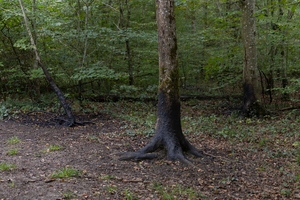
‘block to blob’ includes visits to various sites in the production chain, such as manufacturing facilities, oil refineries, pipelines, and extraction sites, concluding in a forest ecosystem, where crude oil naturally seeps to the earth's surface. These experiences are compiled into a research publication that follows this reverse narrative.
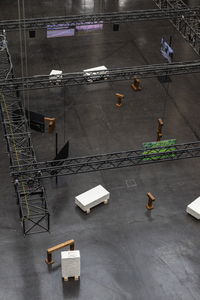
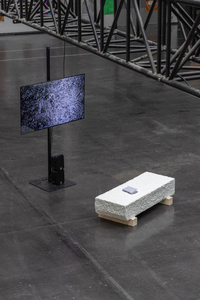
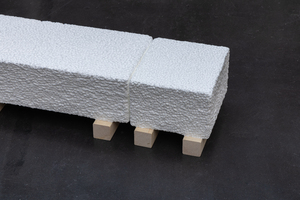
A video installation documents the visited locations, providing visual context for the industrial processes, hidden infrastructure and the natural substance in the forest. Additionally, a series of objects made from petroleum-coated wood and polystyrene grounds the project in tangible materials.
- block to blob
- Beschreibung (en)
- This diploma project details the material stream of synthetic plastics through a reverse chronological approach. It combines field research, visual documentation, and material experimentation to retrace the journey of plastics from their final products back to their origins in petroleum.
‘block to blob’ includes visits to various sites in the production chain, such as manufacturing facilities, oil refineries, pipelines, and extraction sites, concluding in a forest ecosystem, where crude oil naturally seeps to the earth's surface. These experiences are compiled into a research publication that follows this reverse narrative.
A video installation documents the visited locations, providing visual context for the industrial processes, hidden infrastructure and the natural substance in the forest. Additionally, a series of objects made from petroleum-coated wood and polystyrene grounds the project in tangible materials.
- This diploma project details the material stream of synthetic plastics through a reverse chronological approach. It combines field research, visual documentation, and material experimentation to retrace the journey of plastics from their final products back to their origins in petroleum.
- Kategorie
- Typ des Projekts/Werks
- Schlagworte
- Datierung
- 2024
- Sprache
- Untertitel (Film)
- Material
- Technik/Verfahren/Formate
- Pine wood coated with petroleum, Wood soaked in gasoline and pressed/bonded with polystyrene
- Abmessungen
- L x B x H mm, Petroleum-coated wooden objects: Bench: 800 x 200 x 450, 2x T-Stool: 350 x 200 x 450, Stool (3-legged): 450 x 270 x 450, Stool (wide): 600 x 450 x 450, TV stand: - Polystyrene Objekts: Counter: 500 x 370 x 1100, 2x Bench1: 1000 x 570 x 400, Bench2: 1300 x 570 x 350, Stool: 500 x 370 x 570
- Dauer
- 1.: upstream 0 - oil seeping naturally to the surface - Alsace - 2:55min, 2.: upstream 1 - prospect drilling for oil reservoirs - Weingarten - 2:17min, 3.: upstream 2 - horse head pumps extracting oil - Landau - 3:50min, 4.: midstream - transalpine pipeline - Triest-Karlsruhe - 10:40min, 5.: downstream 1 - germany biggest oil refinery - Karlsruhe - 3:13min, 6.: downstream 2 - world biggest chemical plant - Ludwigshafen - 2:19min
- Ort: Institution
- Ort
- Lichthof 3
- Stadt
- Land
- Titel
- block to blob
- Projektleiter/in
- Semester
- Studiengang
- Typ der Abschlussarbeit
- Lehrveranstaltung
- Importiert am
- 03.11.2024
- Übergeordnete Sets
- 1
- Set enthält
- 4 17
block to blob - exhibition
Name that can easily go onto 2 lines
Author that can easily go onto 2 lines as well
- Titel
- block to blob - exhibition
- Titel (en)
- block to blob - exhibition
- Autor/in
- Kategorie
- Titel
- block to blob - exhibition
- Projektleiter/in
- Studiengang
- Typ der Abschlussarbeit
- Importiert am
- 19.11.2024
- Übergeordnete Sets
- 1
- Set enthält
- 0 7
block to blob - objects
Name that can easily go onto 2 lines
Author that can easily go onto 2 lines as well
- Titel
- block to blob - objects
- Titel (en)
- block to blob - objects
- Autor/in
- Kategorie
- Titel
- block to blob - objects
- Projektleiter/in
- Studiengang
- Typ der Abschlussarbeit
- Importiert am
- 19.11.2024
- Übergeordnete Sets
- 1
- Set enthält
- 0 4
block to blob - publication
Name that can easily go onto 2 lines
Author that can easily go onto 2 lines as well
- Titel
- block to blob - publication
- Titel (en)
- block to blob - publication
- Autor/in
- Kategorie
- Titel
- block to blob - publication
- Projektleiter/in
- Studiengang
- Typ der Abschlussarbeit
- Importiert am
- 19.11.2024
- Übergeordnete Sets
- 1
- Set enthält
- 0 2