Sets
234 Inhalte
- Seite 1 von 20
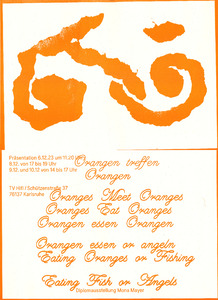
Eating Fish Or Angels
Name that can easily go onto 2 lines
Author that can easily go onto 2 lines as well
- Titel
- Eating Fish Or Angels
- Titel (en)
- Eating Fish Or Angels
- Autor/in
- Beschreibung (de)
- Eating Fish Or Angels umgreift Objekte, Aktionen, Performances
und Installationen, die in einem Prozess von 10 Monaten gesammelt und abschließend in einer Installation zusammengeführt wurden.
Inhalten, Medien und Ephemera aus dem Alltag in der Rolle als Kommunikationsdesignerin werden mit Abstand betrachtet, um sich mit neuem Blick und künstlerischen Mitteln wieder anzunähern. Die darin entstehenden inhärente Rituale, Logiken und Erzählstrukturen erkunden die Grenzen produktiver und unproduktiver, sinnvoller und sinnloser Tätigkeit, sowie verschiedener
Disziplinen, Identitäten und Strukturen.
- Eating Fish Or Angels umgreift Objekte, Aktionen, Performances
- Beschreibung (en)
- Eating Fish Or Angels encompasses objects, actions, performances
and installations that were collected over a period of 10 months and finally brought together in an installation.
Content, media and ephemera from everyday life in her role as a communication designer are viewed from a distance in order to approach them again with a new perspective and artistic means. The inherent rituals, logics and narrative structures that emerge explore the boundaries of productive and unproductive, meaningful and meaningless activity, as well as different disciplines, identities and structures.
- Eating Fish Or Angels encompasses objects, actions, performances
- Kategorie
- Mitwirkende
- Sprache
- Material
- Technik/Verfahren/Formate
- Multimediale Installation, Aktionen, Performances, Ausstellungen, Wortspiele, Sammeln, Archivieren
- Dauer
- Januar bis Oktober 2024 (Prozesszeitraum)
- Titel
- Eating Fish Or Angels
- Projektleiter/in
- Semester
- Studiengang
- Typ der Abschlussarbeit
- Importiert am
- 01.11.2024
- Übergeordnete Sets
- 1
- Set enthält
- 4 1
She and her, white and white
Name that can easily go onto 2 lines
Author that can easily go onto 2 lines as well
- Titel
- She and her, white and white
- Autor/in
- Beschreibung (de)
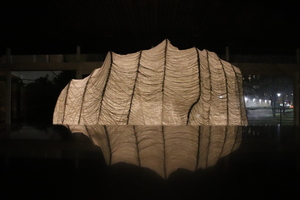
- Diese Ausstellung erzählt von mir, meiner Mutter und der Farbe Weiß, die für meine erste Erinnerung, Verzweiflung und letztlich Hoffnung steht. Weiß symbolisiert die Kraft, die mich immer wieder zum Ursprung zurückführt.
- Beschreibung (en)
- This exhibition is about me, my mother, and my connection to the world, exploring emotions through light, sound, and fog. White, my first memory from the womb, evolved from despair during personal crises to a symbol of hope and strength, guiding me back to life’s essence.
- Kategorie
- Typ des Projekts/Werks
- Schlagworte
- Datierung
- 04.12.2024
- Mitwirkende
- Dank an
- Sprache
- Material
- Abmessungen
- 2*3*4 M
- Dauer
- Die Gesamtlaufzeit des Audios beträgt zehn Minuten.
- Ort
- zkm Pavillon
- Stadt
- Land
- Titel
- She and her, white and white
- Projektleiter/in
- Semester
- Studiengang
- Typ der Abschlussarbeit
- Importiert am
- 12.12.2024
- Übergeordnete Sets
- 1
- Set enthält
- 0 10
Brunnen Geschichten
- Titel
- Brunnen Geschichten
- Titel (en)
- Fountain Stories
- Autor/in
- Beschreibung (de)
- Die Foto-Installation wurde im Rahmen eines Seminars „A Photo Book in Two Parts“ im Bereich Kommunikationsdesign im Wintersemester 2023/2024 erarbeitet und von dem Grafik- und Fotodesignstudio „Europium“ betreut. Die Gastdozierenden Ghazaal Vojdani und Julia Andréone hat die Studierenden dazu angeleitet, Mikro-Ereignisse, die spezifisch in der Stadt Karlsruhe auftreten, zu entdecken. Diese Narrative werden in Verbindung mit gefundenen Fotografien erzählt.
Karlsruhe verfügt über bis zu 300 offizielle Brunnen. In den urbanen Räumen, in denen diese Brunnen installiert sind, wachsen unbemerkt Flechten in unterschiedlichen Farben und Formen. Während sich diese Flechten langsam ausbreiten, bilden sich gleichzeitig informelle Gemeinschaften von Menschen, die sich rund um diese Brunnen versammeln. Alle diese Begegnungen entstehen auf Grundlage der zirkulären Wasserquelle, die die Brunnen darstellen.
Die Geschichte wird anhand von Archivfotografien erzählt. Die Fotografien der Installation wurden bearbeitet und anschließend im RISO-Druckverfahren sowie durch Laserdruck reproduziert. Auf der Rückseite der Fotografien befinden sich Textfragmente, die sich mit den Themen Brunnen, Flechten, Gemeinschaften und Wasser auseinandersetzen. Diese Texte helfen den Betrachtern, eine Erzählung zu den abgebildeten Fotografien zu entwickeln.
Die Fotografien befinden sich in Plastiktaschen, die einen fünf Meter langen Vorhang bilden. Dieser hängt an einem Stahlträger und fällt flach zu Boden. Der Vorhang symbolisiert das Narrativ des Wasserstrahls, entlang dessen sich die Mikro-Phänomene ereignen, wie die Bildung von Gemeinschaften rund um Brunnen und das Wachsen von Flechten auf Gestein. Am Fuße des Vorhangs befinden sich gefüllte Wassergläser und eine Karaffe, die zum Trinken einladen. Diese Elemente fördern neue Begegnungen und Gespräche zwischen den Betrachtern.
Die Installation wurde einmalig am 14. Februar 2024 zusammen mit den anderen Projekten des Seminars „A Photo Book in Two Parts“ im Lichthof Eins während des Präsentationstags des Fachbereichs Kommunikationsdesign ausgestellt.
- Die Foto-Installation wurde im Rahmen eines Seminars „A Photo Book in Two Parts“ im Bereich Kommunikationsdesign im Wintersemester 2023/2024 erarbeitet und von dem Grafik- und Fotodesignstudio „Europium“ betreut. Die Gastdozierenden Ghazaal Vojdani und Julia Andréone hat die Studierenden dazu angeleitet, Mikro-Ereignisse, die spezifisch in der Stadt Karlsruhe auftreten, zu entdecken. Diese Narrative werden in Verbindung mit gefundenen Fotografien erzählt.
- Beschreibung (en)
- The photo installation was developed as part of a seminar "A Photo Book in Two Parts" in communication design in the winter semester 2023/2024 and supervised by the graphic and photo design studio Europium. Guest lecturers Ghazaal Vojdani and Julia Andréone guided the students to discover micro-events that occur specifically in the city of Karlsruhe. These narratives are told in conjunction with found images.
Karlsruhe has up to 300 official fountains. In the urban spaces where these fountains are installed, lichens of different colors and shapes grow unnoticed. As these lichens slowly spread, informal communities of people gather around these fountains. All these encounters are based on the circular water source that the fountains represent.
The story is told through archival photographs. The photographs of the installation were edited and then reproduced using the RISO printing process and laser printing. On the back of the photographs are text fragments that deal with the themes of fountains, lichen, communities and water. These texts help the viewer to develop a narrative about the photographs depicted.
The photographs are in plastic bags that form a five-meter-long curtain. This hangs from a steel girder and falls flat to the floor. The curtain symbolizes the narrative of the water stream along which the micro-phenomena take place, such as the formation of communities around fountains and the growth of lichen on rock. At the foot of the curtain are filled glasses of water and a carafe that invite people to drink. These elements encourage new encounters and conversations between viewers.
The installation was only exhibited on February 14, 2024 during the Communication Design department's presentation day together with the other projects that were made in the seminar "A Photo Book in Two Parts" .
- The photo installation was developed as part of a seminar "A Photo Book in Two Parts" in communication design in the winter semester 2023/2024 and supervised by the graphic and photo design studio Europium. Guest lecturers Ghazaal Vojdani and Julia Andréone guided the students to discover micro-events that occur specifically in the city of Karlsruhe. These narratives are told in conjunction with found images.
- Kategorie
- Typ des Projekts/Werks
- Schlagworte
- Datierung
- 14.02.2024
- Sprache
- Material
- Abmessungen
- 5m x 2m x 3m
- Ort: Institution
- Ort
- Lichthof 1
- Stadt
- Land
- Beteiligte Institution(en)
- Titel
- Brunnen Geschichten
- Projektleiter/in
- Semester
- Studiengang
- Lehrveranstaltung
- Importiert am
- 04.02.2025
- Übergeordnete Sets
- 0
- Set enthält
- 0 0
Veranstaltungen
Name that can easily go onto 2 lines
Author that can easily go onto 2 lines as well
- Titel
- Veranstaltungen
- Titel (en)
- Events
- Beschreibung (de)
- Dieses Set enthält Dokumentationen verschiedener Veranstaltungen an der HfG.
- Titel
- Veranstaltungen
- Importiert am
- 15.01.2025
- Übergeordnete Sets
- 0
- Set enthält
- 16 0
Archive Talks
Name that can easily go onto 2 lines
Author that can easily go onto 2 lines as well
- Titel
- Archive Talks
- Titel (en)
- Archive Talks
- Autor/in
- Beschreibung (de)
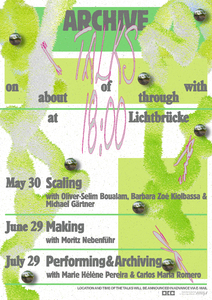
- Die Reihe Archive Talks widmet sich der Diskussion und Erarbeitung eines gemeinsamen Verständnisses von, über, mit und durch Archive(n) aus einer transdisziplinären Perspektive. Als Open Resource Center möchten wir zur Entwicklung von künstlerischen Forschungsmethoden in Bezug auf archivarische Studien und Praktiken an der HfG beitragen. Parallel zur Arbeit der studentischen Hilfskräfte, die bereits begonnen haben, die Diplom- und Projektsammlungen ihrer jeweiligen Disziplinen unter der Koordination des ORC zu digitalisieren und zu katalogisieren, wird jede Folge der Serie auf einen bestimmten Aspekt der Archivarbeit fokussieren.
ARCHIVE TALKS I: DIE HERAUSFORDERUNG SCHIERER MENGE
Oliver-Selim Boualam, Barbara Zoe Kiolbassa und Michael Gärtner
Der ORC eröffnet die Serie Archive Talks mit einem Beitrag von Oliver-Selim Boualam, Barbara Zoe Kiolbassa und Michael Gärtner, die gemeinsam an der Dokumentation der documenta fifteen gearbeitet haben, einem der größten Kunstereignisse der Welt, das ein 100-tägiges Programm von Kunstereignissen und Installationen bietet, die an vielen verschiedenen Orten in der Stadt stattfinden und verschieden Live- und zeitbasierte Formate beinhalten. Die Frage ist einfach, aber komplex: Wie geht man mit einer solchen Größenordnung um? Barbara, Michael und Oliver geben Einblicke in ihre Arbeitsmethoden und Erfahrungen und diskutieren verschiedene Strategien der Dokumentation eines extrem vielfältigen und umfangreichen Kunstprogramms.
ARCHIVE TALKS II: Machen: Strategien der Selbstarchivierung
Moritz Nebenführ
29.06.
18:00
Die vom HfG Open Resource Center präsentierte transdisziplinäre Gesprächsreihe Archive Talks widmet sich der Diskussion über die Herausforderungen der Archivforschung und -praxis. Wir setzen die Reihe am 29. Juni fort mit Moritz Nebenführ als Gast, der über Strategien künstlerischer Selbstarchivierung sprechen wird.
Ausgehend von seiner Magisterarbeit und mehrjährigen Forschung sowie Ausstellungsarbeit zu dem belgischen Künstler und Kunstlehrer Jef Geys (1934–2018) spricht HfG Alumnus Moritz Nebenführ über dessen Strategien der Selbstarchivierung. Entlang des Begriffs der
‚Information‘ in seiner diskursiven Prägung durch die Konzeptkunst werden diese Strategien anhand von ausgewählten Ausgaben des Kempens Informatieblad perspektiviert. Die Zeitung veröffentlichte der Künstler ab 1971 als Alternative zu konventionellen Katalogformaten im Selbstverlag.
ARCHIVE TALKS III: Performen & Archivieren
Marie Helen Perreira & Carlos Maria Romero alias Atabey
22.07.2023
15:00
Main Stage
Die Dokumentation und Archivierung von Aufführungspraktiken ist eine Herausforderung, da das Wesen dieser Disziplinen auf einer besonderen Zeitlichkeit und der Einzigartigkeit der Erfahrung beruht. Die Dokumentation und Archivierung von Aufführungen stehen im Konflikt mit dem Wesen dieser Praxis selbst. Das Geschehen der Performance und ihre unwiederholbare Natur stehen im Widerspruch zur fixen Identität archivierter Aufzeichnungen oder Dokumente.
Im Mittelpunkt des Gesprächs steht die ambivalente Beziehung zwischen Performance und ihrer Dokumentation und Archivierung. Das transitorische Ereignis der Performance widersetzt sich seiner dokumentarischen Identifizierung und wird dennoch von dem Versprechen des Archivs angezogen, die Erinnerung an das Transitorische zu bewahren und in die Zukunft zu transportieren.
Der dritte Teil von Archive Talks widmet sich im Rahmen der HfG-Sommerausstellung “Rundgang 2023” der Reflexion des Status und der Natur von Archiven mit Hinblick auf Performance-Praktiken. Marie Helen Perreira & Carlos Maria Romero alias Atabey kommen aus einem engagierten und situierten Umfeld, in dem Archivierungsprozesse mit komplexen Zerbrechlichkeiten konfrontiert sind. Zusammen werden sie ihren Umgang mit archivarischen Herausforderungen in Bezug auf Performance-Praktiken vorstellen.
ARCHIVE TALKS IV: A Grin Without Marker
Filipa César
02.11.2023
18:00
Lichtbrücke
Zum Antritt ihrer Professur für Zeitbasierte Medien und Performance in der Fachgruppe Medienkunst an der HfG ist Filipa César zu Gast bei Archive Talks IV. César hat sich in ihrer künstlerischen Forschung und Praxis mehr als zehn Jahre lang mit den postkolonialen Filmarchiven in Guinea-Bissau beschäftigt.
Luta ca caba inda ist ein kreolischer Ausdruck und bedeutet "Der Kampf ist noch nicht vorbei". Dies ist auch der Titel eines unvollendeten Films im Filmarchiv von Guinea, der die Fertigstellung des Films, des Kampfes und schließlich auch ihres Projekts wie mit einem Fluch belegt. Sie eigneten sich den Titel und seinen Fluch für eine Reihe von Vorführungen und diskursiven Veranstaltungen an, die dazu dienten, die Inhalte des fragmentarischen Korpus zu kanalisieren und die darin enthaltenen Konflikte aufzuspüren. Mit "sie" sind hier die guineischen Filmemacher und das Publikum gemeint, die von der ersten Katalogisierung des Materials in Bissau über die Digitalisierung in Berlin bis hin zur Teilnahme an zahlreichen Vorführungen und Diskussionen an Dutzenden von Orten in den letzten vier Jahren eine Allianz bildeten. Luta ca caba inda hat sich als eine irrelevant-respektlose Kraft gezeigt, die sagt: Ich bin nicht von gestern.
César und die guineischen Filmemacher*innen wollen die Bilder der Bevölkerung zurückgeben, der sie gehören und an die sie gerichtet sind, und zwar in einem bescheidenen Prozess der Wiederherstellung der Bilder und ihrer Archivierung. Anstelle von kultureller Aneignung oder Vermarktung geht es ihnen um die Wiederbelebung der Archive, um den Aufbau eine Kine-Verwandtschaft, wie sie der guineische Revolutionär Amílcar Cabral im Sinne hatte, als er die Filme in Auftrag gab. Archive Talks lädt die HfG-Community ein, Filipa César willkommen zu heißen und darüber zu diskutieren, wie wir von der Vergangenheit lernen und verlernen können.
ARCHIVE TALKS V: Momente der Dringlichkeit und des Überschwangs
Özge Çelikaslan
26.11.2024
18:00
Lichtbrücke
Archive werden nicht immer mit staatlichen Mitteln und institutioneller Politik aufgebaut. Sie können auch aus Bewegungen oder aus der Initiative von Einzelpersonen hervorgehen. Der fragile und oftmals nomadische Zustand dieser Archive wirft viele Fragen auf, die in Momenten der Dringlichkeit und des Überschwangs behandelt werden müssen. Können ein autonomer Akt der Archivierung oder die Übernahme der Archive als Gemeingut eine Antwort auf diesen Moment sein?
An diesem Abend haben wir Dr. Özge Çelikaslan mit ihrem neu erschienenen Buch „Archiving the Commons: Looking Through the Lens of bak.ma“ (dpr-barcelona, 2024) zu Gast, die ihre gleichnamige Dissertation an der HfG Karlsruhe begonnen und an der HBK Braunschweig abgeschlossen hat. Im Mittelpunkt des Vortrags steht ihre intensive Feldforschung zu bak.ma, einem webbasierten nomadischen Videoarchiv, das in der Türkei nach den berühmten Gezi-Protesten von 2013 initiiert wurde.
„Geschichten von Archiven sind immer Geschichten von Phantomen, vom Tod, vom Verschwinden oder von der Auslöschung von etwas, von der Bewahrung dessen, was übrig bleibt, und seinem möglichen Wiederauftauchen – von den einen gefürchtet, von den anderen ersehnt“, schreibt Thomas Keenan in seinem Vorwort zu diesem Buch.
ARCHIVE TALKS VI: E-flux Index: Archiving the Present and Indexing the Arts
George MacBeth
12.02.2025 ab 17:30 Uhr
Lichtbrücke
Seit Ende der 1990er Jahre bestimmt das Internet zunehmend unseren Alltag und verändert unsere Kommunikation, die ohne Internet kaum noch zu denken ist. Der Eintritt von e-flux in die Kunstwelt geht auf diesen Moment des „coming online“ in den späten 1990er Jahren zurück, zunächst als Plattform für die Verbreitung von Pressemitteilungen einer kuratierten Liste von Institutionen, Museen und Galerien, später als eigener Verlag - mit e-flux Journal (gegründet 2004) und e-flux Books.
Die kuratorischen und publizistischen Aktivitäten von e-flux.com haben sich seither in unzählige Richtungen verzweigt, vermitteln Diskussionen sowohl on- als auch offline und helfen, kritische Trends in Kunst und Theorie zu verfolgen und sogar zu etablieren. Inzwischen gibt es sechs regelmäßig erscheinende Publikationsreihen: e-flux journal, e-flux Architecture, e-flux Notes, e-flux Film Notes, e-flux Criticism und e-flux Education.
Beim digitalen Publizieren in diesem Umfang stellt sich die Frage, wie mit einer solchen Masse an Informationen umzugehen ist. Wie kann man die Publikationen strukturieren und dabei Parallelen zwischen den aktuellen Diskussionen in den Bereichen Kunstkritik, Architektur und Design sowie Philosophie aufzeigen?
e-flux Index ist ein Versuch, diese Frage zu beantworten. Beim Index handelt sich um eine neue vierteljährlich erscheinende Printpublikation mit dem Auftrag, die chaotischen Ströme der gegenwärtigen Diskurse zu entwirren. In jeder Ausgabe werden in Auftrag gegebene Essays, Rezensionen und Artikel aus den fünf verschiedenen e-flux-Rubriken unter neuen Fragestellungen kombiniert. Die gedruckte Ausgabe des Index erscheint nun in ihrer fünften Ausgabe und ist in ausgewählten Kunst- und Designbuchhandlungen sowie in Museen in Kanada, Ostasien, Europa, Nordamerika und dem Vereinigten Königreich erhältlich.
In dieser Veranstaltung wird der Herausgeber des e-flux Index, George MacBeth (HfG), die redaktionelle und archivarische Logik hinter diesem neuen Publikationsprojekt darstellen und aufzeigen, wie es sich in einen breiteren Kontext archivarischer Aktivitäten im Kunstbereich einfügt.
- Die Reihe Archive Talks widmet sich der Diskussion und Erarbeitung eines gemeinsamen Verständnisses von, über, mit und durch Archive(n) aus einer transdisziplinären Perspektive. Als Open Resource Center möchten wir zur Entwicklung von künstlerischen Forschungsmethoden in Bezug auf archivarische Studien und Praktiken an der HfG beitragen. Parallel zur Arbeit der studentischen Hilfskräfte, die bereits begonnen haben, die Diplom- und Projektsammlungen ihrer jeweiligen Disziplinen unter der Koordination des ORC zu digitalisieren und zu katalogisieren, wird jede Folge der Serie auf einen bestimmten Aspekt der Archivarbeit fokussieren.
- Beschreibung (en)
- Archive Talks is a series dedicated to discussing, unlearning and envisioning common understanding on, about, with and through archives from a transdisciplinary perspective. As Open Resource Center we aim to contribute to the development of artistic research methodologies in relation to archival studies and practices at HfG. Running parallel to the work of the student assistants who already started to digitize and catalog the diploma and project collections of their corresponding departments under ORC coordination, every session will focus on a particular aspect of archival work.
ARCHIVE TALKS I: THE CHALLENGE OF SCALE
Oliver-Selim Boualam, Barbara Zoé Kiolbassa and Michael Gärtner
ORC kicks off Archive Talks with Oliver-Selim Boualam, Barbara Zoé Kiolbassa and Michael Gärtner who worked together on the documentation of documenta fifteen, one of the biggest art events of the world, offering a 100-day art events and installations program taking place in many different locations throughout the city and including many live and time-based formats. The question is simple but complex: how to deal with such a scale? Barbara, Michael and Oliver will give insight into their working methods and experiences and discuss various strategies for documenting such an extremely diverse and extensive art program.
ARCHIVE TALKS II: Making: Strategies of Self-Archiving
Moritz Nebenführ
Presented by the HfG Open Resource Center, the Archive Talks series is dedicated to discussing, unlearning and envisioning common understanding on, about, with and through archives from a transdisciplinary perspective. We continue the series on June 29 with guest Moritz Nebenführ, who will talk about artistic strategies of self-archiving.
Drawing on his master thesis and several years of research and curatorial work on the Belgian artist and art educator Jef Geys (1934-2018), HfG alumnus Moritz Nebenführ will discuss Geys' strategies of self-archiving and present close readings of selected issues of the Kempens Informatieblad, a newspaper the artist self-published beginning in 1971 as an alternative to conventional catalogue formats.
ARCHIVE TALKS III: Performing & Archiving
Marie Helen Perreira & Carlos Maria Romero aka Atabey
Documenting and archiving performance practices is a challenge since the essence of these disciplines is based on a particular temporality and the uniqueness of the experience itself. Documenting and archiving performance enters in conflict with the very nature of this practice. The happening of the performance and its unrepeatable nature oppose the fixed identity of the archival record or document.
The conversation will focus on the ambivalent relationship between performance and its documentation and archiving. The transitory event of performance resists its documentary identification and yet is attracted by the archive's promise to preserve the memory of the transitory and transport it into the future.
In its third edition on the occasion of HfG’s summer exhibition “Rundgang 2023”, Archive Talks is dedicated to reflecting the state and nature of archives with regard to performance practices. Coming from engaged and situated backgrounds, where archiving occurs in complex fragilities, Marie Helen Perreira & Carlos Maria Romero aka Atabey will present their approach to dealing with archival challenges around performance practices.
ARCHIVE TALKS IV: A Grin Without Marker
Filipa César
Welcoming her professorship of Time Based Media and Performance at HfG’s Media Art department, Archive Talks IV hosts Filipa César, focusing on her decade long artistic research and practice on the post-colonial film archives at Guinea-Bissau.
Luta ca caba inda is a Creole expression which means “The struggle is not over yet”. It is also the title of an unfinished film in a Guinean film archive, thus cursing the accomplishment of the film, of the struggle for decolonisation, and eventually of their project, too. They appropriated the title and its curse for a series of screenings and dialogues aiming at channelling the contents of the fragmentary corpus and welcoming its conflicts. “They” here means the Guinean filmmakers and the crowd that built an alliance from the first cataloguing of the materials in Bissau, through the digitisation in Berlin, up to the participation in multiple screenings and discussions in dozens of locations during the past four years. Luta ca caba inda has shown itself as an irrelevant irreverent force that claims: I am not from yesterday.
In a humble process of restitution of the images and their archiving, César and the Guinean filmmakers aim to give the images back to their people. Instead of cultural appropriation or commodification through the art market, they are dedicated to the revitalization of the archives in order to build cine-kinship, as Guinean revolutionary Amílcar Cabral had in prospect when he commissioned these films. Archive Talks invites the HfG community to welcome Filipa Cesar and to discuss together how to learn and unlearn from the past.
ARCHIVE TALKS V: Moments of Urgency and Euphory
Özge Çelikaslan
Archives are not always established with state funding and institutional policy. They can also emerge from movements or from the initiative of individuals. The fragile and often nomadic state of these archives raises many questions that need to be addressed in moments of urgency and euphory. Can an autonomous act of archiving or the adoption of the archives as commons be an answer to this moment?
On this evening we have Dr. Özge Çelikaslan as our guest with her newly published book "Archiving the Commons: Looking Through the Lens of bak.ma" (dpr-barcelona, 2024), who began her dissertation of the same title at the HfG Karlsruhe and completed it at the HBK Braunschweig. The lecture will focus on her intensive field research on bak.ma, a web-based nomadic video archive that was initiated in Turkey after the famous Gezi protests of 2013.
“Stories of archives are always stories of phantoms, of the death or disappearances or erasure of something, the preservation of what remains, and its possible reappearance—feared by some, desired by others,” writes Thomas Keenan in his foreword to the book.
ARCHIVE TALKS VI: E-flux Index: Archiving the Present and Indexing the Arts
George MacBeth
Since the late 1990s, the Internet has increasingly dominated our everyday lives and restructured how we communicate with one another. Today it’s almost impossible to think without it. The entrance of e-flux to the art world also dates back to this moment of “coming online” in the late 1990s, first as a platform for distributing press releases from a curated list of institutions, museums, and galleries, and later as a publisher in its own right—through the e-flux Journal (established in 2004) and e-flux Books.
The curatorial and publishing activities of e-flux.com have since branched out in innumerable directions, mediating discussions both on- and offline and helping to track and even establish critical trends in art and theory. It now has 6 regular commissioned publishing strands: e-flux journal, e-flux Architecture, e-flux Notes, e-flux Film Notes, e-flux Criticism, and e-flux Education.
One question raised by digital publishing at this sheer volume is how to deal with such a mass of information? How to structure it and help draw out parallels across current discussants in art criticism, architecture and design, and philosophy?
The e-flux Index is one attempt at answering these questions. It is a new quarterly print publication that sets itself the task of untangling the mess of the contemporary. Now in its fifth issue, Each issue of the Index recombines commissioned essays, reviews, and articles drawn from the five separate e-flux sections to draw out new strains of inquiry. The printed edition of the Index is available in select art and design bookstores, as well as museums, throughout Canada, East Asia, Europe, North America, and the United Kingdom.
In this event the editor of the e-flux Index, George MacBeth (HfG), will share the editorial and archival logic behind this new publishing venture, and how it fits into a broader constellation of archival activities in the arts.
- Archive Talks is a series dedicated to discussing, unlearning and envisioning common understanding on, about, with and through archives from a transdisciplinary perspective. As Open Resource Center we aim to contribute to the development of artistic research methodologies in relation to archival studies and practices at HfG. Running parallel to the work of the student assistants who already started to digitize and catalog the diploma and project collections of their corresponding departments under ORC coordination, every session will focus on a particular aspect of archival work.
- Ort: Institution
- Titel
- Archive Talks
- Importiert am
- 17.04.2024
- Übergeordnete Sets
- 1
- Set enthält
- 1 1
Archive Talks V
Name that can easily go onto 2 lines
Author that can easily go onto 2 lines as well
- Titel
- Archive Talks V
- Titel (en)
- Archive Talks V
- Untertitel des Projekts/Werks (en)
- Moments of Urgency & Euphory
- Autor/in
- Beschreibung (de)
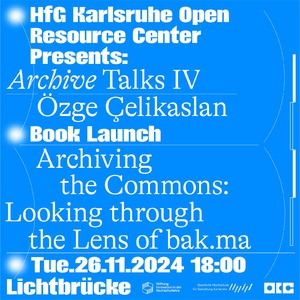
- Archive werden nicht immer mit staatlichen Mitteln und institutioneller Politik aufgebaut. Sie können auch aus Bewegungen oder aus der Initiative von Einzelpersonen hervorgehen. Der fragile und oftmals nomadische Zustand dieser Archive wirft viele Fragen auf, die in Momenten der Dringlichkeit und des Überschwangs behandelt werden müssen. Können ein autonomer Akt der Archivierung oder die Übernahme der Archive als Gemeingut eine Antwort auf diesen Moment sein?
An diesem Abend haben wir Dr. Özge Çelikaslan mit ihrem neu erschienenen Buch „Archiving the Commons: Looking Through the Lens of bak.ma“ (dpr-barcelona, 2024) zu Gast, die ihre gleichnamige Dissertation an der HfG Karlsruhe begonnen und an der HBK Braunschweig abgeschlossen hat. Im Mittelpunkt des Vortrags steht ihre intensive Feldforschung zu bak.ma, einem webbasierten nomadischen Videoarchiv, das in der Türkei nach den berühmten Gezi-Protesten von 2013 initiiert wurde.
„Geschichten von Archiven sind immer Geschichten von Phantomen, vom Tod, vom Verschwinden oder von der Auslöschung von etwas, von der Bewahrung dessen, was übrig bleibt, und seinem möglichen Wiederauftauchen – von den einen gefürchtet, von den anderen ersehnt“, schreibt Thomas Keenan in seinem Vorwort zu diesem Buch.
Özge Çelikaslans visuelle und wissenschaftliche Arbeit konzentriert sich auf die Zusammenstellung von Gegenmedien-Narrativen sozialer Kämpfe, die Erforschung übersehener Bewegtbild-Artefakte und die Kartierung historischer und archivarischer Abwesenheiten durch verwaiste Bilder. Sie schloss ihre Promotion in Medienwissenschaften an der Kunsthochschule Braunschweig ab, wo sie umfangreiche Forschungen zu Archiven als Gemeingut durchführte, die in ihrer 2024 erschienenen Publikation Archiving the Commons: Looking through the Lens of bak.ma von dpr-barcelona.
Im Laufe der Jahre hat sie Testimonial-Videos, Dokumentar- und Experimentalfilme produziert, die auf verschiedenen Plattformen und Veranstaltungen gezeigt wurden, darunter die 3. Canakkale Biennale, die Transmediale 2016, die 14. und 17. Istanbul Biennale, die Seager Gallery und nGbK. Sie ist Mitbegründerin des digitalen Medienarchivs für soziale Bewegungen bak.ma und bleibt ein aktives Mitglied. Derzeit lehrt sie an der Fakultät für Gestaltung der Hochschule Mannheim und ist wissenschaftliche Mitarbeiterin am Zentrum für Kunst, Design und Sozialforschung. Außerdem ist sie Stipendiatin des Digitalstipendiums der Akademie Schloss Solitude (2024-2026), das gemeinsam mit dem Bakma Collective vergeben wird.
- Archive werden nicht immer mit staatlichen Mitteln und institutioneller Politik aufgebaut. Sie können auch aus Bewegungen oder aus der Initiative von Einzelpersonen hervorgehen. Der fragile und oftmals nomadische Zustand dieser Archive wirft viele Fragen auf, die in Momenten der Dringlichkeit und des Überschwangs behandelt werden müssen. Können ein autonomer Akt der Archivierung oder die Übernahme der Archive als Gemeingut eine Antwort auf diesen Moment sein?
- Beschreibung (en)
- Archives are not always established with state funding and institutional policy. They can also emerge from movements or from the initiative of individuals. The fragile and often nomadic state of these archives raises many questions that need to be addressed in moments of urgency and euphory. Can an autonomous act of archiving or the adoption of the archives as commons be an answer to this moment?
On this evening we have Dr. Özge Çelikaslan as our guest with her newly published book "Archiving the Commons: Looking Through the Lens of bak.ma" (dpr-barcelona, 2024), who began her dissertation of the same title at the HfG Karlsruhe and completed it at the HBK Braunschweig. The lecture will focus on her intensive field research on bak.ma, a web-based nomadic video archive that was initiated in Turkey after the famous Gezi protests of 2013.
“Stories of archives are always stories of phantoms, of the death or disappearances or erasure of something, the preservation of what remains, and its possible reappearance—feared by some, desired by others,” writes Thomas Keenan in his foreword to the book.
Özge Çelikaslan’s visual and scholarly work focuses on assembling counter-media narratives of social struggles, exploring overlooked moving image artifacts and mapping historical and archival absences through orphan images. She completed her PhD in media studies at the Braunschweig University of Art, where she conducted extensive research on archives as commons, resulting in her 2024 publication Archiving the Commons: Looking through the Lens of bak.ma by dpr-barcelona.
Over the years, she has produced testimonial videos, documentaries, and experimental films, showcased across various platforms and events including the 3rd Canakkale Biennial, Transmediale 2016, 14th and 17th Istanbul Biennials, Seager Gallery, and nGbK. Co-founder of the bak.ma digital media archive of social movements, she remains an active member. Currently, she teaches at the Hochschule Mannheim Faculty of Design and serves as a research fellow at the Center for Arts, Design and Social Research. She is also a recipient of the digital fellowship at Akademie Schloss Solitude (2024–2026), awarded together with the Bakma Collective.
- Archives are not always established with state funding and institutional policy. They can also emerge from movements or from the initiative of individuals. The fragile and often nomadic state of these archives raises many questions that need to be addressed in moments of urgency and euphory. Can an autonomous act of archiving or the adoption of the archives as commons be an answer to this moment?
- Kategorie
- Typ des Projekts/Werks
- Schlagworte
- Datierung
- 26.11.2024
- Mitwirkende
- Ort: Institution
- Bemerkungen
- Die Serie Archive Talks wird vom Open Research Center (ORC) der HfG Karlsruhe organisiert und von der Stiftung Innovation in der Hochschullehre gefördert.
- Die Serie Archive Talks wird vom Open Research Center (ORC) der HfG Karlsruhe organisiert und von der Stiftung Innovation in der Hochschullehre gefördert.
- Titel
- Archive Talks V
- Importiert am
- 22.11.2024
- Übergeordnete Sets
- 1
- Set enthält
- 0 4
Studieninformationstag 2024
Name that can easily go onto 2 lines
Author that can easily go onto 2 lines as well
- Titel
- Studieninformationstag 2024
- Beschreibung (de)
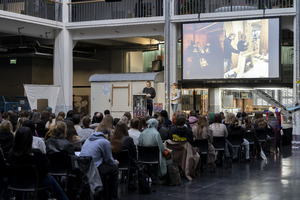
- Beim landesweiten Studieninformationstag können sich Schüler:innen und Studieninteressierte über die Studienmöglichkeit an der Staatlichen Hochschule für Gestaltung (HfG) Karlsruhe informieren.
Hier eine Übersicht der Studiengänge, die sich am 20.11.24 vorstellen werden:
Medienkunst
Produktdesign
Kommunikationsdesign
Ausstellungsdesign und Szenografie
Kunstwissenschaft und Medienphilosophie
Programm
10 Uhr Präsentation aller Fachbereiche plus Zeit für Fragen
12 Uhr Führungen durch die Werkstätten und Studios
Ab 14 Uhr Mappenberatungen für die einzelnen Studiengänge
14 - 15.30 Uhr Mappenberatung für den Studiengang Kommunikationsdesign (Reling auf der Lichtbrücke)
14 - 15.30 Uhr Mappenberatung für den Studiengang Ausstellungsdesign und Szenografie (Raum 321)
14 - 15.30 Uhr Mappenberatung für den Studiengang Produktdesign (im Glaskubus)
14.30 - 15.30 Uhr Fragen und Antworten zum Theorie-Studium Kunstwissenschaft und Medienphilosophie (Raum 112)
14:30 - 15:30 Uhr Mappenberatung für den Studiengang Medienkunst (Raum 101)
- Beim landesweiten Studieninformationstag können sich Schüler:innen und Studieninteressierte über die Studienmöglichkeit an der Staatlichen Hochschule für Gestaltung (HfG) Karlsruhe informieren.
- Beschreibung (en)
- At the state-wide study information day, pupils and prospective students can find out about study opportunities at the Karlsruhe University of Arts and Design (HfG).
Here is an overview of the degree programs that will be presented on 20.11.24:
Media Art
Product Design
Communication Design
Exhibition Design and Scenography
Art Science and Media Philosophy
Program
10 am Presentation of all departments plus time for questions
12 am Guided tour of the workshops and studios
From 2 pm Portfolio consultation for our degree programs
2 - 3.30 pm Portfolio consultation for the Communication Design degree program (Reling on the Lichtbrücke)
2 - 3.30 pm Portfolio consultation for the Exhibition Design und Szenography degree program (Room 321)
2 - 3.30 pm Portfolio consultation for the Product Design degree program (Glaskubus)
2.30 - 3.30 pm Q&A to theory studies in Art Research and Media Philosophy (Room 112)
2:30 - 3:30 pm Portfolio consultation for the Media Arts program (room 101)
- At the state-wide study information day, pupils and prospective students can find out about study opportunities at the Karlsruhe University of Arts and Design (HfG).
- Datierung
- 20.11.2024
- Ort: Institution
- Stadt
- Land
- Titel
- Studieninformationstag 2024
- Importiert am
- 27.11.2024
- Übergeordnete Sets
- 1
- Set enthält
- 0 6
Gulaschprogrammiernacht 2024
Name that can easily go onto 2 lines
Author that can easily go onto 2 lines as well
- Titel
- Gulaschprogrammiernacht 2024
- Beschreibung (de)
- 22. Gulaschprogrammiernacht des Entropia e.V. in HfG und ZKM
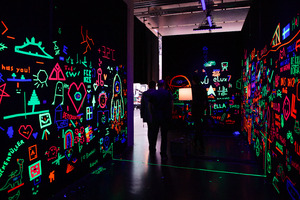
Die Gulaschprogrammiernacht (GPN) des Entropia e.V. ist wieder bei uns zu Gast! In diesem Jahr steht sie unter dem Motto Common Code <> Different Roots. Die GPN ist eine offene, spendenfinanzierte Communityveranstaltung mit Vorträgen, Workshops, einer Demoshow, Musik und dem traditionellen Gulasch als Verpflegung.
30. Mai - 02. Juni 2024 in den Lichthöfen der HfG
"Gulaschprogrammiernacht" klingt fast wie ein Kochmarathon für schlaflose Informatikstudierende. Was 2002 in einem Karlsruher Kellerraum mit ein paar Technikbegeisterten angefangen hat, ist inzwischen zu einer der größten Veranstaltungen des Chaos Computer Clubs gewachsen. Die Themen sind breit gefächert: Den Kern bilden Hard- und Softwareentwicklung, sowie Datensicherheit. Daneben kommen aber auch Datenschutz, Netzpolitik und viele andere faszinierende Themen zum Zug: Wie kocht man das perfekte Gulasch? Kann man aus Hardwareschrott noch schönen Schmuck basteln? Wie funktioniert eigentlich eine Nähmaschine? Wie fliegt man Raumschiffe?
Die Gulaschprogrammiernacht wird vom Entropia e. V. des lokalen Chaos Computer Club in Karlsruhe veranstaltet. In den Lichthöfen der Hochschule für Gestaltung (HfG) und den Vortragssälen des Zentrum für Kunst und Medien (ZKM) werden mehr als 1.500 Besucherinnen und Besucher erwartet. Trotz der inhaltlichen Tiefe, in die manche Vortragende eintauchen, richtet sich die Gulaschprogrammiernacht nicht nur an die »Digital Natives« oder Nerds. Alle sind willkommen und können etwas lernen.
Das Programmieren steht im Zentrum der GPN. In den Lichthöfen der HfG stehen dazu im »Hackcenter« Tische mit Strom- und Netzwerkanschluss bereit, an denen die Gäste ihre Zelte aufschlagen können. Ein großer Teil reist mit einem Projekt an, um auf der Gulaschprogrammiernacht ein paar fokussierte Tage und gegebenenfalls auch Nächte damit zu verbringen. Das heißt nicht, dass kein Austausch stattfindet. Im Gegenteil: Die meisten Hackenden, wenn sie nicht gerade in tiefster Programmiermeditation versunken sind, geben gerne Auskunft über ihr Steckenpferd. Auch gerade Fertiggewordenes wird gerne vorgeführt, und so wimmelt es auf der Gulaschprogrammiernacht von selbstgebauten Lichtinstallationen und Gerätschaften.
Der zweite Hauptbestandteil einer Gulaschprogrammiernacht - neben den Aktivitäten im Hackcenter - ist das Workshop- und Vortragsprogramm. Von tief in die Materie gehenden Vorträgen aus Hard- und Softwareentwicklung über lehrreiche (und humorvolle) Anekdoten aus dem alltäglichen Programmierwahnsinn bis zu netzpolitischen Debatten ist alles vertreten. Bei Löt- und Bastelworkshops können Elektronik-Skills verbessert werden, Lightning Talks bieten eine offene Bühne für spontane Kurzvorträge, und auch die Demoszene erfreut sich stets großer Beliebtheit.
Das diesjährige Motto ist "Common Code <> Different Roots". Es gibt viel "Common Code", den wir jeden Tag in unserem digitalen und analogen Leben nutzen. Wo liegen die Wurzeln dieser Codes? Wie arbeiten sie zusammen? Wie wächst daraus ein Baum? Was ist mit der Community hinter dem Code? Wie sieht die Zukunft unseres Baumes aus?
Die Gulaschprogrammiernacht ist eine offene Veranstaltung für alle. Eine vorherige Anmeldung ist erwünscht, eine Spende wird erbeten.
- 22. Gulaschprogrammiernacht des Entropia e.V. in HfG und ZKM
- Beschreibung (en)
- 22. Gulaschprogrammiernacht of Entropia e.V. in HfG and ZKM
The Goulash Programming Night (GPN) of Entropia e.V. is back with us! This year's motto is Common Code <> Different Roots. The GPN is an open, donation-financed community event with talks, workshops, a demo show, music and the traditional goulash for refreshments.
May 30 - June 02, 2024 in the atriums of the HfG
“Goulash programming night” almost sounds like a cooking marathon for sleepless computer science students. What started in 2002 in a basement room in Karlsruhe with a few technology enthusiasts has now grown into one of the Chaos Computer Club's biggest events. The topics are wide-ranging: The core is hardware and software development, as well as data security. However, data protection, network policy and many other fascinating topics are also covered: How do you cook the perfect goulash? Can you make beautiful jewelry out of hardware scrap? How does a sewing machine actually work? How do you fly spaceships?
The Goulash Programming Night is organized by Entropia e. V. of the local Chaos Computer Club in Karlsruhe. More than 1,500 visitors are expected in the atriums of the University of Arts and Design (HfG) and the lecture halls of the Center for Art and Media (ZKM). Despite the depth of content that some of the speakers will delve into, the Goulash Programming Night is not just aimed at “digital natives” or nerds. Everyone is welcome and can learn something.
Programming is at the heart of the GPN. Tables with power and network connections are set up in the “Hackcenter” in the atriums of the HfG, where guests can pitch their tents. A large number of people travel to the Goulash Programming Night with a project to spend a few focused days and even nights working on it. This does not mean that there is no exchange. On the contrary: most hackers, when they are not immersed in deepest programming meditation, are happy to provide information about their hobbyhorse. They also like to show off what they have just finished, and so the Goulash Programming Night is teeming with self-built light installations and devices.
The second main component of a Goulash Programming Night - in addition to the activities in the Hackcenter - is the workshop and lecture program. From in-depth lectures on hardware and software development to instructive (and humorous) anecdotes from everyday programming madness and debates on net politics, everything is represented. Electronics skills can be improved at soldering and tinkering workshops, lightning talks offer an open stage for spontaneous short presentations, and the demo scene is always very popular.
This year's motto is “Common Code <> Different Roots”. There is a lot of “common code” that we use every day in our digital and analog lives. Where are the roots of these codes? How do they work together? How does a tree grow from it? What about the community behind the code? What does the future of our tree look like?
The Goulash Programming Night is an open event for everyone. Prior registration is required, a donation is requested.
- 22. Gulaschprogrammiernacht of Entropia e.V. in HfG and ZKM
- Datierung
- 30.05.2024 - 02.06.2024
- Ort: Institution
- Internetlinks
- Titel
- Gulaschprogrammiernacht 2024
- Importiert am
- 30.08.2024
- Übergeordnete Sets
- 1
- Set enthält
- 0 12
KAMUNA 2024
Name that can easily go onto 2 lines
Author that can easily go onto 2 lines as well
- Titel
- KAMUNA 2024
- Untertitel
- Karlsruhe Museumsnacht
- Beschreibung (de)
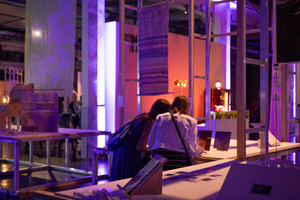
- Die HfG ist in diesem Jahr zum zweiten Mal als offizieller Partner Teil der Karlsruher Museumsnacht KAMUNA mit einem eigenen Programm in den Lichthöfen.
Am 3. August 2024 öffnen wir ab 18.00 Uhr die Türen mit folgenden Highlights:
Ausstellung: Aktuelle Arbeiten von Studierenden und Projekte aus den Studiengängen Ausstellungsdesign und Szenografie, Kommunikationsdesign, Kunstwissenschaft und Medienphilosophie, Medienkunst sowie Produktdesign der HfG in Lichthof 3+4.
Ausstellung: Ausgewählte Ergebnisse des HfG-Schnupperstudiums, die Schülerinnen und Schüler zwischen 16 und 20 Jahren in Workshops 5 Tage lang kreativ erarbeitet haben in Lichthof 3+4.
Robotic Soundscape: Interactive Robotic Sound Art Performance mit dem Maschinenkunst-Pionier und Medienkünstler Kal Spelletich - Eine Gruppenperformance von Nachwuchskünstlerinnen und -künstlern der HfG mit einem Maschinenorchester aus interaktiven Klangrobotern, elektromechanischen Klangerzeugern und automatischen Instrumenten exklusiv für die KAMUNA. Beeinflusst von der Arbeit von Terry Riley, Kraftwerk, David Tudor, John Cage, den Einstürzenden Neubauten und Pauline Oliveros wird eine einzigartige Soundscapekomposition erschaffen. Dies ist die seltene Gelegenheit, eine von Kal Spelletichs Performances zu erleben. Aufführungen um 20 Uhr und um 21 Uhr im großen Studio
Illuminating Nature: Interaktiver Workshop über (biolumineszente) Pilze - Das Bio Design Lab an der HfG und das Hertzlab am ZKM weihen in diesem praktischen Crossover-Projekt in die wilde Welt der organischen Netzwerke der Pilze ein. Praktische Hands-on Performance mit dem biolumineszierenden Myzelium des Herben Zwergknäuelings (Panellus stipticus) plus Wissenswertes über Pilze als Nutzorganismen und warum sie sich so gut für Medienkunst eignen. 21:00 - 0:00 im Bio Design Lab in Lichthof 4.
Gemeinsame Ausstellung von HfG und ZKM: Antennae: Frequencies from the Archive - Entwickelt von einer Seminargruppe des Studiengangs Ausstellungsdesign und Szenografie der HfG und kuratiert von Nick Aikens, Céline Condorelli im Dialog mit Felix Mittelberger.
Gemeinsame Studio-Ausstellung von HfG und Städtischer Galerie Karlsruhe: „Hydromedia. Seeing with Water“ - Erarbeitet im Frühjahr 2024 an der HfG Karlsruhe im Rahmen des EU-geförderten künstlerischen Forschungsprojekts „Hydromedia“
- Die HfG ist in diesem Jahr zum zweiten Mal als offizieller Partner Teil der Karlsruher Museumsnacht KAMUNA mit einem eigenen Programm in den Lichthöfen.
- Beschreibung (en)
- This year, the HfG is part of the Karlsruhe Museum Night KAMUNA for the second time as an official partner with its own program in the atriums.
On August 3, 2024, we will open the doors from 6 p.m. with the following highlights
Exhibition: Current works by students and projects from the exhibition design and scenography, communication design, art studies and media philosophy, media art and product design courses at the HfG in Lichthof 3+4
Exhibition: Selected results of the HfG taster course, which students between the ages of 16 and 20 worked on creatively in workshops over 5 days in Lichthof 3+4
Robotic Soundscape: Interactive Robotic Sound Art Performance with machine art pioneer and media artist Kal Spelletich - A group performance by young artists from the HfG with a machine orchestra of interactive sound robots, electromechanical sound generators and automatic instruments exclusively for KAMUNA. Influenced by the work of Terry Riley, Kraftwerk, David Tudor, John Cage, Einstürzende Neubauten and Pauline Oliveros, a unique soundscape composition will be created. This is a rare opportunity to experience one of Kal Spelletich's performances. **Performances at 8 pm and 9 pm in the Studio.
Illuminating Nature: An Interactive Workshop on (Bioluminescent) Fungi - The Bio Design Lab at the HfG and the Hertzlab at the ZKM will introduce you to the wild world of organic fungal networks in this practical crossover project. In a practical hands-on performance, we will bring the bioluminescent mycelium of the Panellus stipticus into your living room. Along the way you will learn interesting facts about fungi as useful organisms and why fungi are so well suited for media art. Time: 21:00 - 0:00 at the Bio Design Lab in Lichthof 4.
Joint exhibition by HfG and ZKM: Antennae: Frequencies from the Archive - Developed by a seminar group from the exhibition design and scenography course at HfG and curated by Nick Aikens, Céline Condorelli in dialog with Felix Mittelberger.
Joint studio exhibition by HfG and Städtische Galerie Karlsruhe: “Hydromedia. Seeing with Water” - Developed in spring 2024 at the HfG Karlsruhe as part of the EU-funded artistic research project ”Hydromedia”
- This year, the HfG is part of the Karlsruhe Museum Night KAMUNA for the second time as an official partner with its own program in the atriums.
- Datierung
- 03.08.2024
- Ort: Institution
- Internetlinks
- Titel
- KAMUNA 2024
- Importiert am
- 30.08.2024
- Übergeordnete Sets
- 1
- Set enthält
- 0 23
“I see” “with my voice”
Name that can easily go onto 2 lines
Author that can easily go onto 2 lines as well
- Titel
- “I see” “with my voice”
- Autor/in
- Beschreibung (de)
- „I see“ „with my voice“ beschäftigt sich mit Themen wie Transformation, Gestaltwandel und Materialität durch ein Zusammenspiel von literarischen Fragmenten und entliehenen Stimmen. Das Ergebnis ist eine nicht-lineare, fluide Erzählung, die die flüchtige Natur von Visionen, Träumen und Metamorphosen einfängt.
- Beschreibung (en)
- “I see” “with my voice” engages with themes of transformation,
shapeshifting, and materiality through an interplay of literary
fragments and borrowed voices, resulting in a non-linear, fluid
narrative that encapsulates the ephemeral nature of visions,
dreams, and metamorphoses.
This project draws substantial inspiration from Alice Notley's
The Descent of Alette, a transformative odyssey that employs
rhythmic spoken language to explore continuous change.
Alongside Notley’s influence, the works of Hildegard von Bingen,
a 12th-century mystic, and the visionary narratives from the
biblical book of Ezekiel, serve as foundational texts that inform
the thematic and structural framework of this piece.
The text is presented as an audio recording, whispered as a 20 minute loop.
Visitors can listen to the piece when pressing their ear against the tents walls.
My objects are performers, maybe even imposters: frozen in a state of change or mimicry. My objects are performers, maybe even imposters: frozen in a state of change or mimicry.
They are skillfull imitators, but you can tell something is off.
Moving along this crack between the believable and the not quite right, I like to engage
with different realities and states of being. The artificial, almost real-life fakeness of their with different realities and states of being. The artificial, almost real-life fakeness of their
surfaces set the stage for my narrative of transformation, imitation and shapeshifting.
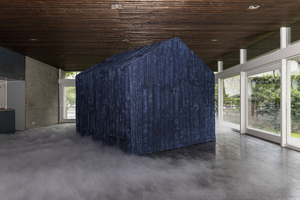
1. A wooden house crafted from smooth denim. Made by sanding the grain of wood
onto the denim fabric
2. Heavy fog covering the floor that could be perceived as dew, mixed with a light subtle
smoke of Incense burning.
The fragrance envokes sacred, holy feelings with its warm, resinous smell with peppery The fragrance envokes sacred, holy feelings with its warm, resinous smell with peppery
undertones.
3. 100 cherries made from a thick mixture of honey and almonds. The heavy sweetness
of the stoneless candy-imposter meant to linger in the visitors mouth as it is tasted. of the stoneless candy-imposter meant to linger in the visitors mouth as it is tasted.
A thin gelatine film – imitating the coolnes of cherry skin as it touches the lips A thin gelatine film – imitating the coolnes of cherry skin as it touches the lips
The installation is accompanied by a small reader containing the three part text to be taken The installation is accompanied by a small reader containing the three part text to be taken
home and serve as a keep sake or document of the fleeting spoken text.
The reader is bound with one simple staple. It does not have a beginning or end, but The reader is bound with one simple staple. It does not have a beginning or end, but
rather works like a gif. No cover or back. Just like wheels turning endlessly in a nonlinear rather works like a gif. No cover or back. Just like wheels turning endlessly in a nonlinear
storytelling.
- “I see” “with my voice” engages with themes of transformation,
- Kategorie
- Typ des Projekts/Werks
- Schlagworte
- Datierung
- 18.04.2024
- Sprache
- Ort: Institution
- Ort
- “I see” “with my voice” at ZKM Pavillon, Karlsruhe
- Stadt
- Land
- Titel
- “I see” “with my voice”
- Projektleiter/in
- Semester
- Studiengang
- Typ der Abschlussarbeit
- Importiert am
- 19.09.2024
- Übergeordnete Sets
- 0
- Set enthält
- 0 2
rOundabOut
Name that can easily go onto 2 lines
Author that can easily go onto 2 lines as well
- Titel
- rOundabOut
- Kategorie
- Titel
- rOundabOut
- Importiert am
- 15.01.2025
- Übergeordnete Sets
- 1
- Set enthält
- 1 0
20-rOundabOut-24
Name that can easily go onto 2 lines
Author that can easily go onto 2 lines as well
- Titel
- 20-rOundabOut-24
- Beschreibung (de)
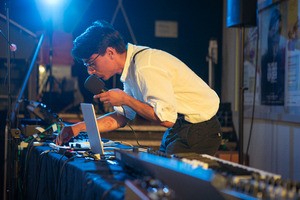
- Rundgangskonzert von Studierenden, Alumni und Freunden der HfG Karlsruhe mit Live-Elektronik, Fixed Media, Audiovisuellen Projektionen und Live Performances
- Kategorie
- Titel
- 20-rOundabOut-24
- Importiert am
- 15.01.2025
- Übergeordnete Sets
- 1
- Set enthält
- 0 12