Sets
234 Inhalte
- Seite 1 von 20
Shaking the Archive
Name that can easily go onto 2 lines
Author that can easily go onto 2 lines as well
- Titel
- Shaking the Archive
- Titel (en)
- Shaking the Archive
- Untertitel
- Towards future methodologies
- Autor/in
- Beschreibung (de)
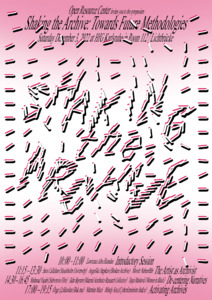
- Weltweit entstehen immer mehr „marginale“, „laterale" oder nicht-institutionelle, selbstinitiierte, informelle und kleine private Archive, die von der Politik öffentlicher Institutionen hinterlassene Lücken schließen und marginalisierten Personen und Realitäten eine Stimme geben. Dabei handelt es sich oft nicht um Archive im eigentlichen Sinne, sondern um Indizes oder kreative Projekte, die mit Materialien und Daten auf neuartige Weise umgehen. Parallel dazu und in Verbindung damit ist eine große Anzahl von forschungsbasierten kreativen Praktiken entstanden, die mit der Aneignung und Neuformulierung archivarischer Methoden arbeiten und damit auf eine Medienrealität im beschleunigten Wandel reagieren. Das Internet und die neuen Medien fordern dazu heraus, neue Sprachen und Methoden des Archivierens zu entwickeln, aber auch eine politisch-strategische, interdisziplinäre Debatte darüber zu führen, was es wirklich bedeutet, Archivmaterial zu teilen beziehungsweise zu kommerzialisieren. Die oben genannten Phänomene: subalterne Archive, forschungsbasierte künstlerische Praktiken und das Aufkommen neuer Medien erschüttern das Archiv – sowohl Inhalt als auch formal – auf unterschiedliche Weise. Gerade der Blick auf kleine und marginale Archivierungsinitiativen lässt uns die heutigen Herausforderungen im Feld der Archive verstehen: das kontinuierliche Aufzeichnen von Ereignissen, das dynamische und autonome Verwalten von Daten, das Dokumentieren und Bewahren möglichst aller Stimmen.
Das Thema des 30-jährigen Jubiläums der HfG Karlsruhe ist "The future of“. Die Zukunft können wir nicht gestalten, ohne uns den gegenwärtigen Fragen der Archivierung des Vergangenen zu stellen. Um unsere Sicht auf die Realität, auf konventionelle westliche Formen des Wissens, der Klassifizierung und der Bewertung in Frage zu stellen, um die jüngste Vergangenheit und ihre materiellen und „immateriellen“ Veränderungen zu dokumentieren, um die vielfältigen und miteinander verknüpften Dringlichkeiten der Gegenwart anzugehen, brauchen wir sowohl das Archiv als auch seine Erschütterungen. Anstatt den Begriff des Fortschritts in Bezug auf die Zukunft allgemein und insbesondere auf die Zukunft des Archivierens zu verwenden, möchten wir die Dimension der Zukunft unter dem Aspekt des Potenzials untersuchen.
Gastredner*innen sind u. a. der Künstler Lawrence Abu Hamdan, die Begründerin des Cyberfeminism Index Mindy Seu, die Direktorin der Villa Romana in Florenz Angelika Stepken und die Wissenschaftlerin Özge Çelikaslan. Das Programm wird in Kürze veröffentlicht werden.
- Weltweit entstehen immer mehr „marginale“, „laterale" oder nicht-institutionelle, selbstinitiierte, informelle und kleine private Archive, die von der Politik öffentlicher Institutionen hinterlassene Lücken schließen und marginalisierten Personen und Realitäten eine Stimme geben. Dabei handelt es sich oft nicht um Archive im eigentlichen Sinne, sondern um Indizes oder kreative Projekte, die mit Materialien und Daten auf neuartige Weise umgehen. Parallel dazu und in Verbindung damit ist eine große Anzahl von forschungsbasierten kreativen Praktiken entstanden, die mit der Aneignung und Neuformulierung archivarischer Methoden arbeiten und damit auf eine Medienrealität im beschleunigten Wandel reagieren. Das Internet und die neuen Medien fordern dazu heraus, neue Sprachen und Methoden des Archivierens zu entwickeln, aber auch eine politisch-strategische, interdisziplinäre Debatte darüber zu führen, was es wirklich bedeutet, Archivmaterial zu teilen beziehungsweise zu kommerzialisieren. Die oben genannten Phänomene: subalterne Archive, forschungsbasierte künstlerische Praktiken und das Aufkommen neuer Medien erschüttern das Archiv – sowohl Inhalt als auch formal – auf unterschiedliche Weise. Gerade der Blick auf kleine und marginale Archivierungsinitiativen lässt uns die heutigen Herausforderungen im Feld der Archive verstehen: das kontinuierliche Aufzeichnen von Ereignissen, das dynamische und autonome Verwalten von Daten, das Dokumentieren und Bewahren möglichst aller Stimmen.
- Beschreibung (en)
- 'Marginal/Lateral’ or non-institutional, self-initiated, informal and small private archives are cropping up across the globe to address gaps and offer a voice to marginalized bodies and realities. These are often not archives in the strict sense of the word, but come in the form of indexes or creative projects that reframe materials and data. Both in parallel and in conjunction, an unprecedented number of research based creative practices, which use appropriation and re-framing (by drawing from the archive or building it) as the basis for their work, and to make sense of a rapidly changing mediatic reality, have also emerged. The added context of the internet and the birth of new media have created the urgency to create a new language and method of archiving, as well for an ethical debate, across different disciplines, around what it really means to share (and often commodify) archival materials. The above fields of enquiry: subaltern archives, research based artistic practices and the emergence of new media are all shaking the archive—both in terms of content and container—in different ways. In order to re-shape our ways of keeping a dynamic record, of sorting and storing data, of preserving all voices, we cannot ignore small scale archival initiatives and attempts.
The theme of HfG’s 30 year anniversary is “the future of” and a future cannot be consciously built without facing a new set of questions around archiving present and past. In order to upend our learned assumptions about reality, about Western forms of knowledge, classification and value; in order to keep a record of the recent past and its material and immaterial transformations; in order to address the multiple, yet interconnected urgencies of the present, we need both the archive and the question, and neither of these ingredients can ever be static. Rather than adopting a notion of progress in relation to the future in general and the future of archiving more specifically, we would like to explore the idea of the future within the framework of potential.
Guests include artist Lawrence Abu Hamdan, Cyberfeminism Index Founder, Mindy Seu, director of Villa Romana in Florence, Angelika Stepken, researcher, Özge Çelikaslan and more. A detailed schedule will be released in the coming weeks.
- 'Marginal/Lateral’ or non-institutional, self-initiated, informal and small private archives are cropping up across the globe to address gaps and offer a voice to marginalized bodies and realities. These are often not archives in the strict sense of the word, but come in the form of indexes or creative projects that reframe materials and data. Both in parallel and in conjunction, an unprecedented number of research based creative practices, which use appropriation and re-framing (by drawing from the archive or building it) as the basis for their work, and to make sense of a rapidly changing mediatic reality, have also emerged. The added context of the internet and the birth of new media have created the urgency to create a new language and method of archiving, as well for an ethical debate, across different disciplines, around what it really means to share (and often commodify) archival materials. The above fields of enquiry: subaltern archives, research based artistic practices and the emergence of new media are all shaking the archive—both in terms of content and container—in different ways. In order to re-shape our ways of keeping a dynamic record, of sorting and storing data, of preserving all voices, we cannot ignore small scale archival initiatives and attempts.
- Typ des Projekts/Werks
- Schlagworte
- Datierung
- 03.12.2022
- Mitwirkende
- Sprache
- Ort: Institution
- Ort
- R. 112 und Lichthof
- Stadt
- Land
- Internetlinks
- Titel
- Shaking the Archive
- Importiert am
- 28.02.2023
- Übergeordnete Sets
- 0
- Set enthält
- 0 1
PRESENT TENSE Working in Critical Times
Name that can easily go onto 2 lines
Author that can easily go onto 2 lines as well
- Titel
- PRESENT TENSE Working in Critical Times
- Titel (en)
- PRESENT TENSE Working in Critical Times
- Untertitel
- Symposium des Kunstbüros der Kunststiftung Baden-Württemberg
- Autor/in
- Beschreibung (de)
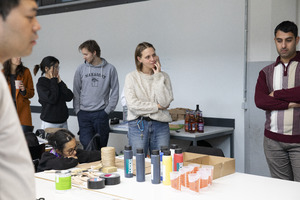
- „Present Tense” beschäftigt sich mit unserer unmittelbaren Gegenwart: Wir leben in einer komplexen, krisenhaften Zeit, in der die Überlagerung von Klima- und Energiekrise, Postpandemie, Prekarität und Konkurrenz, gesellschaftlicher Radikalisierung bis hin zu näher rückenden Kriegen bereits jetzt gravierende Auswirkungen auf unser Leben und Arbeiten hat. Die Anspannung steigt, wir stehen vor dringlichen gesamtgesellschaftlichen Aufgaben und bewegen uns zugleich in Richtung eines Zustands chronischer Erschöpfung. Das etablierte Kunstfeld und die künstlerische und kulturelle Produktion sind davon nicht ausgenommen. Mit Künstler:innen, Kurator:innen und anderen Expert:innen des kulturellen Feldes möchten wir den Blick auf die aktuelle künstlerische Produktion und Ausstellungspraxis richten und die Frage nach möglichen (Zukunfts-)perspektiven für das Kunstfeld diskutieren:
Welche gesellschaftliche Rolle können und müssen Kunst und ihre Produzent:innen in einer sich radikal verändernden Welt einnehmen? Wie können Kunst- und Kulturinstitutionen zu Orten aktiver gesellschaftlicher Transformation werden? Was bedeutet es, eine (ökologisch wie sozial) nachhaltige künstlerische und institutionelle Praxis in der digitalen Gegenwart zu entwickeln? Welche neuen Gemeinschaften brauchen wir, gerade im Hinblick auf die zunehmende gesellschaftliche Spaltung und Radikalisierung? Offensichtlich führt die krisenhafte Gegenwart u. a. dazu, dass sich Menschen nach autoritären Figuren und Programmen sehen – eine Aufgabe von Kunst und Kultur könnte es sein, andere, freiere Konzepte von Zukunft zu entwerfen.
Auch das Konzept der Fürsorge in der künstlerischen und kuratorischen Praxis wird Thema der Veranstaltung sein. Teil des Symposiums sind neben Vorträgen künstlerische Workshops, Interventionen und Performances, die wir als gleichwertige Formen der Wissensproduktion und -vermittlung begreifen.
Mit Beiträgen von Gin Bahc, Sascia Bailer, Constanze Fischbeck, Sina Hensel, Alistair Hudson, Anne Duk Hee Jordan, Valentina Karga, Matriarchale Volksküche, Jacob Ott und Dorothee Richter.
- „Present Tense” beschäftigt sich mit unserer unmittelbaren Gegenwart: Wir leben in einer komplexen, krisenhaften Zeit, in der die Überlagerung von Klima- und Energiekrise, Postpandemie, Prekarität und Konkurrenz, gesellschaftlicher Radikalisierung bis hin zu näher rückenden Kriegen bereits jetzt gravierende Auswirkungen auf unser Leben und Arbeiten hat. Die Anspannung steigt, wir stehen vor dringlichen gesamtgesellschaftlichen Aufgaben und bewegen uns zugleich in Richtung eines Zustands chronischer Erschöpfung. Das etablierte Kunstfeld und die künstlerische und kulturelle Produktion sind davon nicht ausgenommen. Mit Künstler:innen, Kurator:innen und anderen Expert:innen des kulturellen Feldes möchten wir den Blick auf die aktuelle künstlerische Produktion und Ausstellungspraxis richten und die Frage nach möglichen (Zukunfts-)perspektiven für das Kunstfeld diskutieren:
- Beschreibung (en)
- „Present Tense” concerns itself with our immediate present: We live in a complex, crisis-filled age in which the overlapping of climate and energy crisis, post-pandemic times, precarity, social radicalisation and even impending wars already govern our lives and work. Tension is rising, we are faced with imperative responsibilities for society as a whole and are, at the same time, moving towards a state of chronic exhaustion. There is no exception for the field of arts and artistic and cultural production.
Together with artists, curators and other experts from the cultural field, we would like to examine current artistic productions and exhibition practices and discuss possibilities for the (future) perspectives of the arts. Which roles within society can and must art and its producers embrace in a radically changing world? How can art and cultural institutions become venues of active social transformation? What does it mean to develop an (ecologically as well as socially) sustainable artistic and institutional practice in the digital present? The concept of care within artistic and curatorial practices will be a topic of the event as well.
What new relationships do we need, especially in view of intensifying social division and radicalisation? Obviously, the crisis-filled present among other things leads to people looking to authoritarian figures and programmes – one of the tasks for art and culture could be to design other, more independent and free concepts of the future.
In addition to lectures and panels, the symposium will include artistic workshops, interventions and performances, which are also forms of knowledge production and dissemination that we feel to be of equal importance.
With contributions from Gin Bahc, Sascia Bailer, Constanze Fischbeck, Sina Hensel, Alistair Hudson, Anne Duk Hee Jordan, Valentina Karga, Matriarchale Volksküche, Jacob Ott and Dorothee Richter
- „Present Tense” concerns itself with our immediate present: We live in a complex, crisis-filled age in which the overlapping of climate and energy crisis, post-pandemic times, precarity, social radicalisation and even impending wars already govern our lives and work. Tension is rising, we are faced with imperative responsibilities for society as a whole and are, at the same time, moving towards a state of chronic exhaustion. There is no exception for the field of arts and artistic and cultural production.
- Typ des Projekts/Werks
- Schlagworte
- Datierung
- 26.10.2023 - 28.10.2023
- Mitwirkende
- Sprache
- Ort: Institution
- Ort
- Lichthof, R.112
- Stadt
- Land
- Beteiligte Institution(en)
- Internetlinks
- Titel
- PRESENT TENSE Working in Critical Times
- Semester
- Importiert am
- 06.11.2023
- Übergeordnete Sets
- 1
- Set enthält
- 0 146
Bio Design Lab
Name that can easily go onto 2 lines
Author that can easily go onto 2 lines as well
- Titel
- Bio Design Lab
- Beschreibung (de)
- Das Bio Design Lab ist ein hybrider und evolutiver Ort, der sowohl im digitalen als auch im physischen Raum existiert. Konzipiert als wachsende Plattform, die die Fachbereiche der Staatlichen Hochschule für Gestaltung miteinander verbindet, wird das Labor als Raum für Präsentation, Bildung und Wissensvermittlung genutzt.
Das Bio Design Lab konzentriert sich auf die lokale Region, ihre Ressourcen und Möglichkeiten und zielt aktiv darauf ab, die Produktionsweisen in Karlsruhe und Süddeutschland umzugestalten und neu zu überdenken. Zur Interaktion mit diesen Themen und Materialien, sowohl im digitalen als auch im physischen Raum, lädt das Labor lokale ExpertInnen und BesucherInnen gleichermaßen ein an gemeinsamen Projekten zu arbeiten.
Spuren dieser Aktivitäten komplementieren ein ständig wachsenden Netzwerk.Das Wissen über diese Ressourcen wird durch die Erstellung eines Know-how-Glossars und einer Materialbibliothek destilliert, durch virtuelle und physische Workshops vermittelt, sowie durch die Präsentationen herausragender Projekte, die sich mit nachhaltigen Materialien befassen, kommuniziert.
Das Labor fungiert als Inkubator und Modell für Zusammenarbeit und Produktion, das im Einklang mit dem aktuellen Wandel der Staatlichen Hochschule für Gestaltung Karlsruhe steht.
- Das Bio Design Lab ist ein hybrider und evolutiver Ort, der sowohl im digitalen als auch im physischen Raum existiert. Konzipiert als wachsende Plattform, die die Fachbereiche der Staatlichen Hochschule für Gestaltung miteinander verbindet, wird das Labor als Raum für Präsentation, Bildung und Wissensvermittlung genutzt.
- Beschreibung (en)
- The Bio Design Lab is a hybrid and evolutive environment that exists in both the digital and physical space. Conceived as a platform for connection and collaboration with local partners and using local resources, the Lab hosts the presentation, education and transmission of knowledge. As students and experts are invited to work on bio-design related projects, visitors can explore and interact with the Lab’s production and lines of inquiry.
Projects within the Lab focus on the local region, its materials and possibilities, and actively aim to reshuffle and rethink modes of production in Karlsruhe and the south of Germany. Topics under exploration include Algae, Soil, Plants, Body, and Agriculture. To interact with these themes and related materials, both within the digital and physical space, the Lab invites local experts and visitors alike.
Within the Bio Design Lab, regional resources are collected by connecting with local partners; they are then distilled through the making of a know-how glossary and a material library, aiming to develop local materials. The knowledge around these resources is disseminated through virtual workshops and multimedia presentations of outstanding projects dealing with sustainable materials. Ultimately, traces of these activities will remain in a constantly growing network, both in the digital platform and in physical displays of existing and future objects.
The Lab works as an incubator and a model for collaboration and production that is in line with the current transformation of the Karlsruhe University of the Arts and Design Karlsruhe. It was first presented to the public in the context of Critical Zones, an exhibition at ZKM | Center for Art and Media.
- The Bio Design Lab is a hybrid and evolutive environment that exists in both the digital and physical space. Conceived as a platform for connection and collaboration with local partners and using local resources, the Lab hosts the presentation, education and transmission of knowledge. As students and experts are invited to work on bio-design related projects, visitors can explore and interact with the Lab’s production and lines of inquiry.
- Schlagworte
- Ort: Institution
- Ort
- Bio Design Lab
- Stadt
- Land
- Internetlinks
- Titel
- Bio Design Lab
- Projektleiter/in
- Importiert am
- 23.10.2023
- Übergeordnete Sets
- 1
- Set enthält
- 1 2
Photosymbiosen – On Co-Developing with Plant Accomplices
Name that can easily go onto 2 lines
Author that can easily go onto 2 lines as well
- Titel
- Photosymbiosen – On Co-Developing with Plant Accomplices
- Titel (en)
- Photosymbiosen – On Co-Developing with Plant Accomplices
- Untertitel
- Sustainable Photography
- Beschreibung (de)
- Wie können wir fotografische Verfahren entwickeln, die nicht auf einem Ausbeutungsverhältnis der Umwelt beruhen, sondern vielmehr mit nicht-menschlichen Akteuren in Kollaboration treten? Wenn auch ein solches Unterfangen aufgrund der anthropozentrischen Perspektive zu kurz kommen muss, so eröffnet jenes unmögliche Driften hin zum pflanzlicheren Denken ein Spannungsfeld der künstlerischen Auseinandersetzung. Vom Flanieren in den Wäldern, dem Sammeln von Kräutern bis hin zur Ambivalenz zwischen städtischem Raum, pflanzlicher Peripherie und Ruderaler Vegetation – all jene dynamischen Wechselverhältnisse eines geteilten Habitats stellen den gedanklichen Ausgangspunkt der Arbeiten von “Photosymbiosen – On Co-Developing with Plant Accomplices” dar. Neben dem Bemühen um einen Fotografischen Blick, der sich ins mutuale Beziehungsgeflecht jener Co-Existenzen einfügt, steht das Bildgebungsverfahren analoger, nachhaltiger Fotografie im Fokus der Recherche. Denn jene alte Technik, die in Zeiten digitaler Bilderflut zunehmend ein Comeback erfährt, stellt vor einige Herausforderungen:
So basiert jenes Verfahren der Bilderzeugung auf der Lichtempfindlichkeit von Silberhalogenidkristallen, die in einer Gelatineemulsion auf einem Filmträger (zur Herstellung des Negativs) und auf Papier (zur Herstellung des Fotos) aufgebracht sind. Um die Kristalle in metallisches Silber umzuwandeln und so ein (negatives) Bild auf Film zu erhalten, beziehungsweise es dann auf Papier zu verarbeiten und zu vergrößern (positives fotografisches Bild), ist es notwendig, verschiedene, hochgiftige chemische Lösungen zu verwenden. Diese Produkte sind nicht nur gesundheitsgefährdend für diejenigen, die mit ihnen umgehen, sondern stellen auch eine große Quelle für die Verschmutzung von Gewässern, Pipelines und ganz allgemein der Umwelt dar – und müssen daher in besonderer Weise entsorgt und behandelt werden. Darüber hinaus ist nicht nur die Giftigkeit dieser Bildentwicklungsmethode problematisch, sondern auch ihr Medium. Die auf Film und Papier aufgebrachte Gelatine ist tierischen Ursprungs – in der Regel eine Rindergelatine – und wird damit Teil der vielfältigen Probleme der Fleischindustrie. Letztlich macht die Industrialisierung der analogen Fotografie, von ihren chemischen Komponenten bis hin zur Entwicklung der Fotos in Labors, ihre Anwender abhängig von vorgefertigten, in der Regel teuren Produkten.
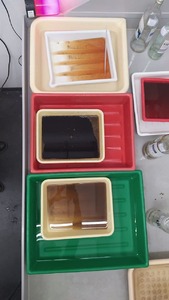
Getragen von dem Wunsch, neue experimentelle Formen der Kreation zu erforschen und die Umweltbelastung durch jene fotografische Technik zu reflektieren, wurden so verschiedene alternative Verfahren zur Reduktion von Chemikalieneinsatz entwickelt. Dabei gaben verschiedene internationale Initiativen aus dem Bereich der nachhaltigen Fotografie Inspirationen zur Herstellung eigener Schwarz-Weiß-Entwickler, die auf regionalen und saisonalen Pflanzen der städtischen Umgebung Karlsruhes basieren (Kräuter, Blätter, Blumen, Baumrinde, Moos, Gemüse, etc.). Die ausgestellten Werke geben Einblicke in die experimentelle Forschung, eine ergänzende Website gibt weitere Informationen zu Dokumentationen wie auch Herstellungsverfahren und Recherchen.
- Wie können wir fotografische Verfahren entwickeln, die nicht auf einem Ausbeutungsverhältnis der Umwelt beruhen, sondern vielmehr mit nicht-menschlichen Akteuren in Kollaboration treten? Wenn auch ein solches Unterfangen aufgrund der anthropozentrischen Perspektive zu kurz kommen muss, so eröffnet jenes unmögliche Driften hin zum pflanzlicheren Denken ein Spannungsfeld der künstlerischen Auseinandersetzung. Vom Flanieren in den Wäldern, dem Sammeln von Kräutern bis hin zur Ambivalenz zwischen städtischem Raum, pflanzlicher Peripherie und Ruderaler Vegetation – all jene dynamischen Wechselverhältnisse eines geteilten Habitats stellen den gedanklichen Ausgangspunkt der Arbeiten von “Photosymbiosen – On Co-Developing with Plant Accomplices” dar. Neben dem Bemühen um einen Fotografischen Blick, der sich ins mutuale Beziehungsgeflecht jener Co-Existenzen einfügt, steht das Bildgebungsverfahren analoger, nachhaltiger Fotografie im Fokus der Recherche. Denn jene alte Technik, die in Zeiten digitaler Bilderflut zunehmend ein Comeback erfährt, stellt vor einige Herausforderungen:
- Beschreibung (en)
- How can we develop photographic processes that are not based on a relationship of exploitation of the environment, but rather enter into collaboration with non-human actors? Even if such an endeavour must fall short due to the anthropocentric perspective, that impossible drift towards more plant-based thinking opens up a field of tension for artistic exploration. From strolling in the woods, collecting herbs to the ambivalence between urban space, plant periphery and ruderal vegetation – all those dynamic interrelationships of a shared habitat represent the intellectual starting point of the works of "Photosymbioses – On Co-Developing with Plant Accomplices". In addition to the effort to create a photographic gaze that fits into the mutual network of relationships of these co-existences, the research focuses on the imaging process of analogue, sustainable photography. This old technique, which is increasingly making a comeback in times of a flood of digital images, poses a number of challenges:
For example, this method of image creation is based on the light sensitivity of silver halide crystals, which are deposited in a gelatine emulsion on a film carrier (to produce the negative) and on paper (to produce the photograph). In order to convert the crystals into metallic silver and thus obtain a (negative) image on film, or then process and enlarge it on paper (positive photographic image), it is necessary to use various highly toxic chemical solutions. These products are not only hazardous to the health of those who handle them, but are also a major source of pollution of water, pipelines and the environment in general - and must therefore be disposed of and treated in a special way. Furthermore, it is not only the toxicity of this image development method that is problematic, but also its medium. The gelatine applied to film and paper is of animal origin - usually a bovine gelatine - and thus becomes part of the manifold problems of the meat industry. Ultimately, the industrialisation of analogue photography, from its chemical components to the development of the photos in laboratories, makes its users dependent on prefabricated, usually expensive products.
Driven by the desire to explore new experimental forms of creation and to reflect on the environmental impact of that photographic technique, various alternative methods for reducing chemical use were thus developed. In the process, various international initiatives from the field of sustainable photography provided inspiration for the production of own black-and-white developers based on regional and seasonal plants from Karlsruhe's urban environment (herbs, leaves, flowers, tree bark, moss, vegetables, etc.). The exhibited works provide insights into the experimental research, a complementary website gives further information on documentation as well as production processes and research.
- How can we develop photographic processes that are not based on a relationship of exploitation of the environment, but rather enter into collaboration with non-human actors? Even if such an endeavour must fall short due to the anthropocentric perspective, that impossible drift towards more plant-based thinking opens up a field of tension for artistic exploration. From strolling in the woods, collecting herbs to the ambivalence between urban space, plant periphery and ruderal vegetation – all those dynamic interrelationships of a shared habitat represent the intellectual starting point of the works of "Photosymbioses – On Co-Developing with Plant Accomplices". In addition to the effort to create a photographic gaze that fits into the mutual network of relationships of these co-existences, the research focuses on the imaging process of analogue, sustainable photography. This old technique, which is increasingly making a comeback in times of a flood of digital images, poses a number of challenges:
- Typ des Projekts/Werks
- Schlagworte
- Datierung
- Sommersemester 2021
- Mitwirkende
- Material
- Ort: Institution
- Stadt
- Land
- Internetlinks
- Titel
- Photosymbiosen – On Co-Developing with Plant Accomplices
- Semester
- Importiert am
- 30.10.2023
- Übergeordnete Sets
- 2
- Set enthält
- 0 33
Critical Zones: An open laboratory exhibition at HfG
Name that can easily go onto 2 lines
Author that can easily go onto 2 lines as well
- Titel
- Critical Zones: An open laboratory exhibition at HfG
- Autor/in
- Beschreibung (en)
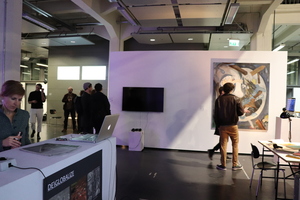
- “Critical Zones”: Developing concepts and approaches for grasping the New Climatic Regime (Bruno Latour), that is the transformations in the relations of humans to their “terrestrial” conditions of existence. – The seminar series of Bruno Latour at HfG analyses these transformations as epistemic breaks and shifts of knowledge by drawing an analogy to the scientific revolution in the 17th century, where, after a crisis of former sound knowledge, new epistemic systems, representations and narrations in art, science, and religion had to be constructed and reintegrated into new dispositifs of knowledge. The project tackles an important aesthetic question, which overpasses simple forms of illustration of knowledge: How central is the imaginary capacity of the arts in constructing representations and narrations that are depictions and “generators” of new knowledge systems and therefore vital means of cultural change?
The exhibition at HfG in November will display some preliminary results of the projects developed by the seminar participants. It presents an opportunity to discuss – in a mode of work-in-progress – research questions, aesthetic approaches and epistemic experiments with colleagues and students of HfG and ZKM.
Opening: Nov 7, 19:00; duration: Nov 8, 10:00-19:00, Nov 9, 10:00-15:00
HfG, mittlere Lichtbrücke
- “Critical Zones”: Developing concepts and approaches for grasping the New Climatic Regime (Bruno Latour), that is the transformations in the relations of humans to their “terrestrial” conditions of existence. – The seminar series of Bruno Latour at HfG analyses these transformations as epistemic breaks and shifts of knowledge by drawing an analogy to the scientific revolution in the 17th century, where, after a crisis of former sound knowledge, new epistemic systems, representations and narrations in art, science, and religion had to be constructed and reintegrated into new dispositifs of knowledge. The project tackles an important aesthetic question, which overpasses simple forms of illustration of knowledge: How central is the imaginary capacity of the arts in constructing representations and narrations that are depictions and “generators” of new knowledge systems and therefore vital means of cultural change?
- Typ des Projekts/Werks
- Schlagworte
- Datierung
- 07.11.2018 - 09.11.2018
- Mitwirkende
- Ort
- Hochschule für Gestaltung Karlsruhe
- Stadt
- Land
- Beteiligte Institution(en)
- Titel
- Critical Zones: An open laboratory exhibition at HfG
- Projektleiter/in
- Semester
- Importiert am
- 17.01.2019
- Übergeordnete Sets
- 0
- Set enthält
- 0 8
Oriaru
Name that can easily go onto 2 lines
Author that can easily go onto 2 lines as well
- Titel
- Oriaru
- Titel (en)
- Oriaru
- Untertitel
- Code For Culture
- Autor/in
- Beschreibung (de)
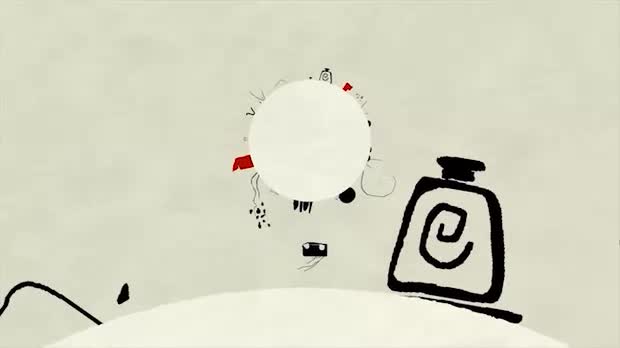
- Eine Runde Welt, auf welcher ein kleines schwarzes Wesen zu sehen ist. Es lässt sich nach Rechts und Links bewegen und mit fortschreitendem Spiel wird die Welt farbenfroher und füllt sich mit abstrakten, sich bewegenden Formen.
Hierbei handelt es sich um ein Serious Game, das im Rahmen des Code for Culture in Stuttgart entsatnden ist, ein Projekt der Open Culture BW der MFG Innovationsagentur Medien- und Kreativwirtschaft. Dabei wurde Oriaru mit dem Preis für bestes Design ausgezeichnet.
Das Kunstmuseum in Stuttgart hatte zu diesem Zeitpunkt eine Ausstellung des entarteten Künstlers Willi Baumeister, zu welcher das Serious Game Oriaru umgesetzt wurde.
Dabei wurde der Versuch unternommen ein Spiel zu entwickeln, das den Besucher selbst das Kreieren und Erleben dieser Kunst von Willi Baumeister ermöglichen sollte. Die (kindliche) Verspieltheit, die in seiner Kunst zu erleben ist, wurde versucht mit der Spielmechanik und der visuellen Umsetzung an den Besucher weiterzugeben.
Dieses serious Game ist in Zusammenarbeit mit Phuoc Thao Le (Graphic- und Level-Design), Eric Beckmann (Sound-Design und SFX), Andre Wruszczak (Code und Level-Design) und Vincent Peter (Level-Design und SFX) entstanden.
- Eine Runde Welt, auf welcher ein kleines schwarzes Wesen zu sehen ist. Es lässt sich nach Rechts und Links bewegen und mit fortschreitendem Spiel wird die Welt farbenfroher und füllt sich mit abstrakten, sich bewegenden Formen.
- Typ des Projekts/Werks
- Schlagworte
- Mitwirkende
- Material
- Land
- Beteiligte Institution(en)
- Internetlinks
- Titel
- Oriaru
- Urheberrechtshinweis
- Sebastian Finzenhagen
- Importiert am
- 19.12.2018
- Übergeordnete Sets
- 1
- Set enthält
- 0 2
weisse vernunft – siedlungsbau der 20er jahre
Name that can easily go onto 2 lines
Author that can easily go onto 2 lines as well
- Titel
- weisse vernunft – siedlungsbau der 20er jahre
- Untertitel
- architektur und lebensentwurf im neuen bauen
- Autor/in
- Beschreibung (de)
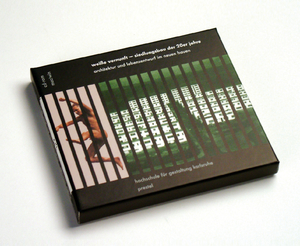
- Die CD-ROM thematisiert den modernen Siedlungsbau der 20er Jahre, der zwischen 1925 und 1931 im Rahmen des Neuen Bauens in Deutschland entstanden ist. Ausgangspunkt ist die 1929 in Karlsruhe-Rüppurr unter der künstlerischen Leitung von Walter Gropius und Otto Haesler errichtete Dammerstock-Siedlung. Sie wird hier zum Anlaß eines umfangreichen, interaktiv begehbaren und multimedial erschlossenen Rundgangs durch dieses wesentliche Kapitel der Architekturgeschichte des 20. Jahrhunderts. Die Errungenschaften und Modelle des modernen Siedlungsbaus werden nicht nur aus architektonischer und städtebaulicher Sichtweise präsentiert. Eine Reihe von Exkursionen führen darüber hinaus in das soziale, politische und kulturelle Umfeld: Aspekte wie beispielsweise der Neue Mensch und die Neue (Haus-)Frau, Architekturfotografie und Typografie, Wohnungsbaupolitik und Konstruktionsgeschichte bilden die Anknüpfungspunkte für weitgespannte thematische Bögen und inhaltliche Assoziationsketten.
- Typ des Projekts/Werks
- Schlagworte
- Datierung
- 1999
- Mitwirkende
- Sprache
- Material
- Beteiligte Institution(en)
- Titel
- weisse vernunft – siedlungsbau der 20er jahre
- Importiert am
- 24.02.2017
- Übergeordnete Sets
- 1
- Set enthält
- 1 44
23-01-25 Digitale Infrastruktur
Name that can easily go onto 2 lines
Author that can easily go onto 2 lines as well
- Titel
- 23-01-25 Digitale Infrastruktur
- Beschreibung (de)
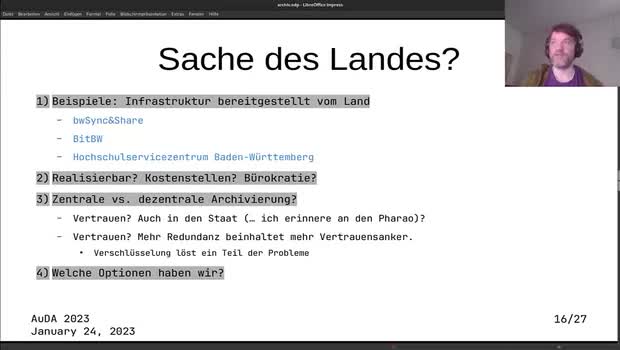
- AuDA Netzwerktreffen
- Datierung
- 25.01.2023
- Titel
- 23-01-25 Digitale Infrastruktur
- Importiert am
- 27.01.2023
- Übergeordnete Sets
- 0
- Set enthält
- 0 4
Excursion zu nextplay
Name that can easily go onto 2 lines
Author that can easily go onto 2 lines as well
- Titel
- Excursion zu nextplay
- Titel
- Excursion zu nextplay
- Importiert am
- 14.02.2019
- Übergeordnete Sets
- 1
- Set enthält
- 0 23
Game Jam 2019

Name that can easily go onto 2 lines
Author that can easily go onto 2 lines as well
- Titel
- Game Jam 2019
- Titel
- Game Jam 2019
- Importiert am
- 14.02.2019
- Übergeordnete Sets
- 1
- Set enthält
- 0 52
Gamelab
Name that can easily go onto 2 lines
Author that can easily go onto 2 lines as well
- Titel
- Gamelab
- Titel
- Gamelab
- Importiert am
- 14.02.2019
- Übergeordnete Sets
- 0
- Set enthält
- 2 0