Sets
234 Inhalte
- Seite 1 von 20
Sehenswerte Inhalte
Name that can easily go onto 2 lines
Author that can easily go onto 2 lines as well
- Titel
- Sehenswerte Inhalte
- Beschreibung (de)
- Gelungene Projekte, bemerkenswerte Dokumentationen und interessante Sammlungen - ein Querschnitt durch die Aktivitäten an der HfG.
- Gelungene Projekte, bemerkenswerte Dokumentationen und interessante Sammlungen - ein Querschnitt durch die Aktivitäten an der HfG.
- Titel
- Sehenswerte Inhalte
- Importiert am
- 25.11.2016
- Übergeordnete Sets
- 0
- Set enthält
- 35 0
AFTER FIRE -SCALE
Name that can easily go onto 2 lines
Author that can easily go onto 2 lines as well
- Titel
- AFTER FIRE -SCALE
- Titel (en)
- AFTER FIRE -SCALE
- Autor/in
- Beschreibung (de)
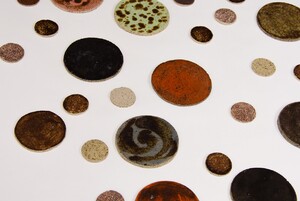
- Von der Geschichte des Feuers bis zur Untersuchung seiner Bedeutung für die menschliche Gesellschaft habe ich eine Verbindung zwischen Feuer und Farben entdeckt: Metalle erzeugen unter bestimmten Verbrennungsbedingungen verschiedene Farben, die auch als wichtige Farbstoffe in der Glasurenherstellung dienen. Ich habe Zusammenhänge zwischen Metallen, Flammen, Farben und Glasuren gefunden, die auf den ersten Blick unzusammenhängend erscheinen, aber sich tatsächlich gegenseitig ergänzen. Mein Fokus liegt nun auf dem Stahlwerk in Kehl. Ich bin neugierig auf die verschiedenen Prozesse, die bei der Stahlerzeugung verwendet werden, sowie auf die entstehenden industriellen Nebenprodukte. Während meiner Recherchen stieß ich auf ein Nebenprodukt namens Schrott, das während des Walzprozesses entsteht, wenn die Oberfläche des Stahls mit Luft reagiert und hauptsächlich aus Eisenoxid besteht. Es ist ungiftig, aber aufgrund des niedrigen Eisengehalts sind die Recyclingkosten zu hoch, weshalb es oft von Stahlwerken zu einem niedrigen Preis verkauft und als Material für Straßenbau verwendet wird. Ich habe Kontakt mit dem Stahlwerk aufgenommen und etwa zehn Kilogramm dieses Materials aus Kehl erhalten. Ich habe darüber nachgedacht, wie ich dieses industrielle Nebenprodukt wieder verwenden kann, indem ich es durch Design-Upcycling verbessere, anstatt es abzubauen. Basierend auf meiner früheren Forschung zeigt Eisen als relativ aktives Metall in oxidativen und reduktiven Reaktionen bei unterschiedlichen Temperaturen eine reiche Farbpalette. Daher ist Eisen ein wichtiger Farbstoff in der Glasurenherstellung. Ich habe begonnen, das Schrott als Rohstoff in verschiedenen Mischungsverhältnissen mit anderen chemischen Elementen für Glasurexperimente zu verwenden, in der Hoffnung, die Möglichkeit zu sehen, Industrieabfälle in einer anderen Branche als Rohstoffe wiederzuverwenden. Das Ergebnis war überraschend; selbst auf den Testmustern zeigte das Schrott als Farbstoff Potenzial. Wenn die Forschung fortgesetzt wird, ist es möglich, neue Glasuren unter Verwendung verschiedener Industrieabfälle zu entwickeln. Durch diese Forschung sehe ich die Möglichkeiten des Designs in der modernen Industrie. Wenn Menschen mit Ressourcenknappheit und Umweltkrise konfrontiert sind, ist es dringend erforderlich, die Produktionsschritte, die sich aufgrund der industriellen Revolution einst unabhängig voneinander entwickelt haben, neu zu überdenken und die Verbindungen zwischen ihnen wiederherzustellen. Dies ist eine wichtige Fragestellung, über die zeitgenössisches Design nachdenken sollte.
- Beschreibung (en)
- From understanding the history of fire to researching its significance for human society, I discovered a connection between fire and colors: under specific combustion conditions, metallic elements produce various colors, which also serve as important colorants in glaze production. I found correlations between metals, flames, colors, and glazes, seemingly unrelated clues that actually complement each other. My focus now lies on the steelworks located in Kehl. I am curious about the various processes used in steelmaking and the resulting industrial by-products. During my research, I came across an industrial by-product called slag, which is formed during the steel rolling process when the surface of the steel reacts with air, primarily consisting of iron oxide. It is non-toxic, but due to its low iron content, the cost of recycling is too high, so it is often sold by steelworks at a low price and used as material for road embankments. I contacted the steelworks and obtained nearly ten kilograms of this material from Kehl. I began to consider how to reuse this industrial by-product by designing upgrades rather than downgrading it for disposal. Based on my previous research, iron, as a relatively active metal, exhibits a rich range of colors in oxidative and reductive reactions at different temperatures, making it an important colorant in glaze formulation. I started experimenting with the slag as a raw material in glaze formulations, mixing it with other chemical elements in different proportions, hoping to explore the possibility of industrial waste redevelopment in another industry. The result was surprising; even on the test samples, the slag showed potential as a colorant. If the research continues, it is possible to develop new glazes using various industrial wastes. Through this research, I see the possibilities of design in modern industry. When faced with resource depletion and environmental crisis, it is imperative to rethink the production steps that once developed independently due to the industrial revolution and to rediscover the connections between them. This is a critical issue for contemporary design to consider.
- Typ des Projekts/Werks
- Titel
- AFTER FIRE -SCALE
- Importiert am
- 10.06.2024
- Übergeordnete Sets
- 1
- Set enthält
- 0 5
Bunte Nacht der Digitalisierung 2024
Name that can easily go onto 2 lines
Author that can easily go onto 2 lines as well
- Titel
- Bunte Nacht der Digitalisierung 2024
- Titel (en)
- Colourful Night of Digitalization 2024
- Beschreibung (de)
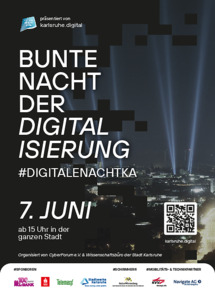
- Am 7. Juni findet die Bunte Nacht der Digitalisierung statt, ein Festival, das die Vielfalt der Perspektiven und Herausforderungen der Digitalisierung in Karlsruhe feiert. Diese Initiative öffnet den Karlsruher Bürgern die Türen von mehr als 60 Institutionen (Bibliotheken, Museen, Universitäten, Unternehmen, Bürgerinitiativen), um verschiedene Themen und Ansätze zur Digitalisierung zu zeigen und zu diskutieren.
- Beschreibung (en)
- On June 7th, the Colourful Night of Digitization, a festival to celebrate the diversity of perspectives and challenges on digitization that exists in Karlsruhe, will take place. This initiative opens the doors of more than 60 institutions (libraries, museums, universities, enterprises, civil initiatives) to the citizens of Karlsruhe to show and discuss diverse topics and approaches to digitality.
- Typ des Projekts/Werks
- Schlagworte
- Datierung
- 07.06.2024
- Mitwirkende
- Ort: Institution
- Ort
- Hochschule für Gestaltung: 112
Kronenplatz;
Werkstatt und Studio von Triangel
- Hochschule für Gestaltung: 112
- Stadt
- Land
- Beteiligte Institution(en)
- Internetlinks
- Titel
- Bunte Nacht der Digitalisierung 2024
- Importiert am
- 05.06.2024
- Übergeordnete Sets
- 0
- Set enthält
- 3 1
Schwarm Issue 1
Name that can easily go onto 2 lines
Author that can easily go onto 2 lines as well
- Titel
- Schwarm Issue 1
- Titel
- Schwarm Issue 1
- Importiert am
- 23.10.2023
- Übergeordnete Sets
- 0
- Set enthält
- 0 17
Roll a boulder
Name that can easily go onto 2 lines
Author that can easily go onto 2 lines as well
- Titel
- Roll a boulder
- Titel (en)
- Roll a boulder
- Autor/in
- Beschreibung (de)
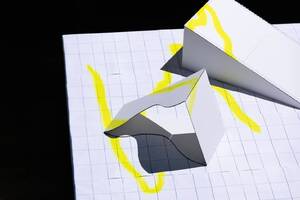
- In diesem Stück erkunde ich die Sinnlosigkeit des Lebens durch die Verschmelzung von Skateboarding und greife dabei auf das Bildnis des Sisyphos aus der griechischen Mythologie zurück, das den Felsen schiebt. Ich habe einen Raum von 8*5 Metern konstruiert, umgeben von Skateboard-Soundeffekten unten und Projektion Animationen oben. Die Trajektorie des Skateboards schreitet kontinuierlich voran, dreht sich und scheitert letztendlich auf dem Gelände, ähnlich wie Sisyphos, der endlos den Felsen schiebt und in einem unendlichen Zyklus von Anstrengung und Scheitern gefangen ist.
Die lebendigen animierten Skateboard-Spuren vermitteln Spannung und surreale visuelle Ausdrücke. Die Anstrengung des Skateboardens entspricht dem endlosen Rollen des Felsens und regt zur Reflexion über die Bedeutung des Lebens an. Zuschauer reflektieren in dieser Umgebung kontinuierlich über die Vergänglichkeit des Lebens und die Bedeutung von Anstrengung, was die widersprüchlichen Gefühle der Menschheit gegenüber dem Dasein widerspiegelt. Diese Szene ist nicht nur eine visuelle Freude, sondern dient auch als spirituelle Erleuchtung und Reflexion.
- In diesem Stück erkunde ich die Sinnlosigkeit des Lebens durch die Verschmelzung von Skateboarding und greife dabei auf das Bildnis des Sisyphos aus der griechischen Mythologie zurück, das den Felsen schiebt. Ich habe einen Raum von 8*5 Metern konstruiert, umgeben von Skateboard-Soundeffekten unten und Projektion Animationen oben. Die Trajektorie des Skateboards schreitet kontinuierlich voran, dreht sich und scheitert letztendlich auf dem Gelände, ähnlich wie Sisyphos, der endlos den Felsen schiebt und in einem unendlichen Zyklus von Anstrengung und Scheitern gefangen ist.
- Beschreibung (en)
- In this piece, drawing upon the imagery of Sisyphus from Greek mythology pushing the boulder, I explore the meaninglessness of life through the fusion of skateboarding. I constructed a space measuring 8*5 meters, enveloped in skateboard sound effects below and projection animations above. The skateboard's trajectory continually progresses, turns, and ultimately fails on the terrain, resembling Sisyphus endlessly pushing the boulder, caught in an infinite cycle of effort and failure.
The vibrant animated skateboard tracks convey tension and surreal visual expressions. The effort of skateboarding parallels the endless rolling of the boulder, prompting contemplation on the meaning of life. Spectators continually ponder the transience of life and the significance of effort in this setting, reflecting humanity's contradictory feelings towards existence. This scene is not just a visual delight but also serves as a spiritual enlightenment and reflection.
- In this piece, drawing upon the imagery of Sisyphus from Greek mythology pushing the boulder, I explore the meaninglessness of life through the fusion of skateboarding. I constructed a space measuring 8*5 meters, enveloped in skateboard sound effects below and projection animations above. The skateboard's trajectory continually progresses, turns, and ultimately fails on the terrain, resembling Sisyphus endlessly pushing the boulder, caught in an infinite cycle of effort and failure.
- Typ des Projekts/Werks
- Schlagworte
- Datierung
- 18.01.2024
- Mitwirkende
- Dank an
- Sprache
- Material
- Abmessungen
- 8m x 5m
- Dauer
- 1 Tag
- Ort: Institution
- Ort
- Lichthof
- Stadt
- Land
- Titel
- Roll a boulder
- Projektleiter/in
- Semester
- Studiengang
- Typ der Abschlussarbeit
- Importiert am
- 15.04.2024
- Übergeordnete Sets
- 3
- Set enthält
- 0 12
SCHWARM 1
Name that can easily go onto 2 lines
Author that can easily go onto 2 lines as well
- Titel
- SCHWARM 1
- Titel (en)
- SCHWARM 1
- Autor/in
- Typ des Projekts/Werks
- Datierung
- 2023
- Mitwirkende
- Sprache
- Ort: Institution
- Titel
- SCHWARM 1
- Importiert am
- 08.03.2024
- Übergeordnete Sets
- 2
- Set enthält
- 0 2
SCHWARM
Name that can easily go onto 2 lines
Author that can easily go onto 2 lines as well
- Titel
- SCHWARM
- Titel (en)
- SCHWARM
- Beschreibung (de)
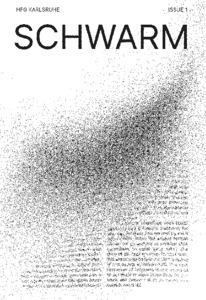
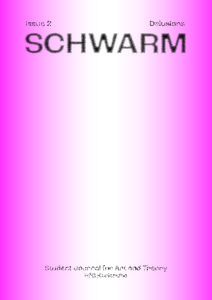
- SCHWARM ist eine HfG-Publikation, organisiert von Studierenden, die sich schriftlich und in anderen Formen der Kreativität ausdrücken wollen. Jede*r HfG-Studierende ist eingeladen, sich an unserem Vorhaben zu beteiligen und einen Beitrag zu diesem kollektiven zukunftsorientierten Experiment zu leisten.
- Beschreibung (en)
- SCHWARM is a HfG-publication organized by students seeking to express themselves in writing and other forms of creativity. Every HfG-student is invited to take part in our endeavor and contribute to this collective future-oriented experiment.
- Typ des Projekts/Werks
- Titel
- SCHWARM
- Importiert am
- 08.03.2024
- Übergeordnete Sets
- 0
- Set enthält
- 2 0
An atmosphere of usership
- Titel
- An atmosphere of usership
- Untertitel des Projekts/Werks (en)
- Vom Nutzen der Kunst
- Autor/in
- Beschreibung (de)
- Experts loathe them, spectators oppose them, owners belittle them, yet users abide… though not by the rules. Users and the use that they make — which together we refer to as usership — form a kind of atmosphere, in both the most literal and most figurative sense. Unlike ownership, usership is not a fiction bolstered and legitimated by institutions, but a collective subjectivity comprised of all the agents — human and other-than-human — who make use of a given territory or environment, ensuring the oxygen exchange of the atmosphere. Indeed, as users they are the artisans of that environment, the landscapers and artists of the atmosphere that sustains it. What would it mean, though, for public institutions to foster an atmosphere of usership?
- Beschreibung (en)
- Experts loathe them, spectators oppose them, owners belittle them, yet users abide… though not by the rules. Users and the use that they make — which together we refer to as usership — form a kind of atmosphere, in both the most literal and most figurative sense. Unlike ownership, usership is not a fiction bolstered and legitimated by institutions, but a collective subjectivity comprised of all the agents — human and other-than-human — who make use of a given territory or environment, ensuring the oxygen exchange of the atmosphere. Indeed, as users they are the artisans of that environment, the landscapers and artists of the atmosphere that sustains it. What would it mean, though, for public institutions to foster an atmosphere of usership?
- Typ des Projekts/Werks
- Schlagworte
- Datierung
- 08.02.2024
- Ort: Institution
- Ort
- Medialonge
- Stadt
- Land
- Internetlinks
- Titel
- An atmosphere of usership
- Importiert am
- 20.02.2024
- Übergeordnete Sets
- 1
- Set enthält
- 0 0
UMBAU Issue 3 Celebration
Name that can easily go onto 2 lines
Author that can easily go onto 2 lines as well
- Titel
- UMBAU Issue 3 Celebration
- Autor/in
- Beschreibung (de)
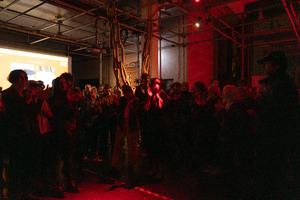
- Thursday our HfG online Journal UMBAU will celebrate it's 3rd Issue called CHAINING.
8pm / 18.01.24 / at HfG Forum
There will be a performance by the artist Elle Fierce at 20:30 They are a Trans Non-Binary, British born Jamaican-Irish artist and activist, classically trained in ballet and modern dance, and have performed on stages around the world, particularly in the UK and most recently as a Soloist at Oper Leipzig. Now a freelance artist, with a multi disciplinary approach to performance, combining their activism and life experience as a black trans body to create provocative works.
The event shows artworks by Lucia Mattes and Lars Pinkwart and hosts afterwards DJ sets by aswesome LaLa Tina and our very best Frankie Spiderweb.
Our first contributions feature Mascha Dilger, Matteo Pasquinelli and Ülkü Süngün.
With unchained hearts, your UMBAU Team // Paolo Caffoni, Charlotte Eifler, Yannick Fritz, Jule Köpke & Livia Lazzarini
- Thursday our HfG online Journal UMBAU will celebrate it's 3rd Issue called CHAINING.
- Beschreibung (en)
- Thursday our HfG online Journal UMBAU will celebrate it's 3rd Issue called CHAINING.
8pm / 18.01.24 / at HfG Forum
There will be a performance by the artist Elle Fierce at 20:30 They are a Trans Non-Binary, British born Jamaican-Irish artist and activist, classically trained in ballet and modern dance, and have performed on stages around the world, particularly in the UK and most recently as a Soloist at Oper Leipzig. Now a freelance artist, with a multi disciplinary approach to performance, combining their activism and life experience as a black trans body to create provocative works.
The event shows artworks by Lucia Mattes and Lars Pinkwart and hosts afterwards DJ sets by aswesome LaLa Tina and our very best Frankie Spiderweb.
Our first contributions feature Mascha Dilger, Matteo Pasquinelli and Ülkü Süngün.
With unchained hearts, your UMBAU Team // Paolo Caffoni, Charlotte Eifler, Yannick Fritz, Jule Köpke & Livia Lazzarini
- Thursday our HfG online Journal UMBAU will celebrate it's 3rd Issue called CHAINING.
- Schlagworte
- Datierung
- 18.01.2024
- Mitwirkende
- Ort: Institution
- Ort
- HfG Forum
- Stadt
- Land
- Internetlinks
- Titel
- UMBAU Issue 3 Celebration
- Importiert am
- 20.02.2024
- Übergeordnete Sets
- 0
- Set enthält
- 0 25
DNS
Name that can easily go onto 2 lines
Author that can easily go onto 2 lines as well
- Titel
- DNS
- Typ des Projekts/Werks
- Schlagworte
- Sprache
- Stadt
- Land
- Titel
- DNS
- Studiengang
- Importiert am
- 19.12.2023
- Übergeordnete Sets
- 0
- Set enthält
- 12 0
DNS #53
- Titel
- DNS #53
- Untertitel
- Sieben Geister
- Autor/in
- Beschreibung (de)
- Oma ist tot, es lebe Oma?! Anlässlich der Beerdigung der Großmutter brechen zwischen Kinder- und Enkelgeneration Familienkonflikte auf, in deren Nöten und Sehnsüchten sich 70 Jahre deutscher Geschichte spiegeln. Entlang dreier Generationen spannt Sören Hornungs, mit dem Chemnitzer Theaterpreis für junge Dramatik ausgezeichneter wie für den Autorenpreis des Heidelberger Stückemarkt nominierter, Text einen Bogen von 1945 bis heute.
- Beschreibung (en)
- Grandma is dead, long live grandma?! On the occasion of the grandmother's funeral, family conflicts break out between the children and grandchildren's generation, whose needs and longings reflect 70 years of German history. Spanning three generations, Sören Hornung's text, which was awarded the Chemnitz Theater Prize for Young Drama and nominated for the Heidelberg Stückemarkt Author's Prize, spans an arc from 1945 to the present day.
- Typ des Projekts/Werks
- Schlagworte
- Datierung
- 18.05.2018
- Mitwirkende
- Sprache
- Ort: Institution
- Ort
- Studio
- Stadt
- Land
- Beteiligte Institution(en)
- Bemerkungen
- EINRICHTUNG Dominik Jellen
BÜHNE & KOSTÜME Tiffany Erdwein, Yael Kolb
DRAMATURGIE Lena Fritschle MIT Annette Büschelberger, Marthe Lola Deutschmann, Lisa Schlegel – Klaus Cofalka Adami, Jannek Petri
- EINRICHTUNG Dominik Jellen
- Titel
- DNS #53
- Projektleiter/in
- Semester
- Studiengang
- Lehrveranstaltung
- Importiert am
- 20.12.2023
- Übergeordnete Sets
- 1
- Set enthält
- 0 0
DNS #52
- Titel
- DNS #52
- Untertitel
- Paradies spielen (Abendland. Ein Abgesang)
- Autor/in
- Beschreibung (de)
- Ungebremst rast ein Zug durch Europas Landschaften und Bahnhöfe. Ein chinesisches Paar wandert aus auf der Suche nach dem Paradies Europa, stößt dort aber auf die gleichen ausbeuterischen Arbeitsbedingungen wie in der Heimat. Und am Krankenbett seines Vaters schaut ein junger Mann dem Tod ins Gesicht. In paradies spielen, dem Abschluss seiner Klimatrilogie, erzählt der preisgekrönte Dramatiker Thomas Köck kraftvoll, kühn und mit leisem Humor von den globalen Erschütterungen des 21. Jahrhunderts. Im Rahmen seines Stipendiums der Akademie Schloss Solitude schreibt er für das STAATSTHEATER KARLSRUHE und das Theater Rampe mit Abfall der Welt außerdem mit Abfall der Welt außerdem einen vielstimmigen Monolog für fünf Spieler und zwei Tänzer, den Sie ab dem 22.2. im STUDIO erleben können.
- Beschreibung (en)
- A train races unchecked through Europe's landscapes and train stations. A Chinese couple emigrate in search of paradise in Europe, but encounter the same exploitative working conditions there as at home. And a young man looks death in the face at his father's sickbed. In paradies spielen, the conclusion of his climate trilogy, award-winning playwright Thomas Köck tells of the global upheavals of the 21st century with power, boldness and gentle humor. As part of his fellowship at Akademie Schloss Solitude, he is also writing a polyphonic monologue for five players and two dancers for STAATSTHEATER KARLSRUHE and Theater Rampe with Abfall der Welt, which you can experience from 22.2. at STUDIO.
- Typ des Projekts/Werks
- Schlagworte
- Datierung
- 16.02.2018
- Mitwirkende
- Sprache
- Ort: Institution
- Ort
- Studio
- Stadt
- Land
- Beteiligte Institution(en)
- Bemerkungen
- REGIE Jenny Regnet
BÜHNE & KOSTÜME Luisa Hentsch, Emily Ortlepp, Lisa Schächner, Victor van Wetten
DRAMATURGIE Judith Heese MIT Susanne Buchenberger, Lydia Fuchs, Florian Mania, Mona Müller, Luis Quintana
FOTOS: Isabelle Kaczmarek und Luisa Hentsch
- REGIE Jenny Regnet
- Titel
- DNS #52
- Projektleiter/in
- Semester
- Studiengang
- Lehrveranstaltung
- Importiert am
- 20.12.2023
- Übergeordnete Sets
- 1
- Set enthält
- 0 0