Sets
234 Inhalte
- Seite 1 von 20
Tag 4
Name that can easily go onto 2 lines
Author that can easily go onto 2 lines as well
- Titel
- Tag 4
- Autor/in
- Kategorie
- Schlagworte
- Titel
- Tag 4
- Semester
- Studiengang
- Typ der Abschlussarbeit
- Importiert am
- 26.09.2024
- Übergeordnete Sets
- 1
- Set enthält
- 0 11
Einzelansichten
Name that can easily go onto 2 lines
Author that can easily go onto 2 lines as well
- Titel
- Einzelansichten
- Autor/in
- Kategorie
- Schlagworte
- Titel
- Einzelansichten
- Semester
- Studiengang
- Typ der Abschlussarbeit
- Importiert am
- 26.09.2024
- Übergeordnete Sets
- 1
- Set enthält
- 0 11
Tag 5
Name that can easily go onto 2 lines
Author that can easily go onto 2 lines as well
- Titel
- Tag 5
- Autor/in
- Kategorie
- Schlagworte
- Titel
- Tag 5
- Semester
- Studiengang
- Typ der Abschlussarbeit
- Importiert am
- 26.09.2024
- Übergeordnete Sets
- 1
- Set enthält
- 0 8
Tag 2
Name that can easily go onto 2 lines
Author that can easily go onto 2 lines as well
- Titel
- Tag 2
- Autor/in
- Kategorie
- Schlagworte
- Titel
- Tag 2
- Semester
- Studiengang
- Typ der Abschlussarbeit
- Importiert am
- 26.09.2024
- Übergeordnete Sets
- 1
- Set enthält
- 0 10
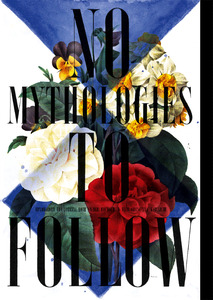
No Mythologies To Follow
Name that can easily go onto 2 lines
Author that can easily go onto 2 lines as well
- Titel
- No Mythologies To Follow
- Autor/in
- Beschreibung (de)
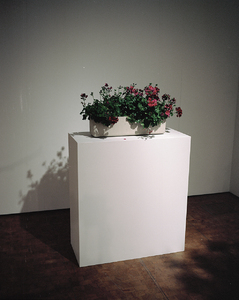
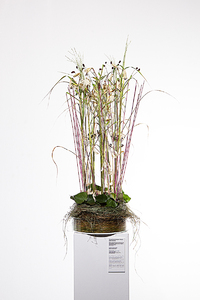
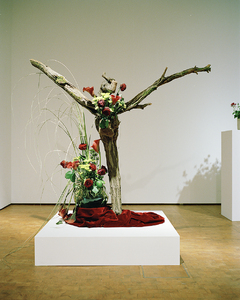
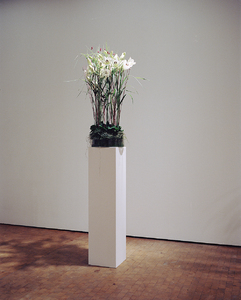
- "No Mythologies To Follow" zeigt Blumenarrangements für die neun Kulturgüter der Stadt Karlsruhe, die unter Schutz der Haager Konvention stehen.
Die Konvention ist ein völkerrechtlicher Vertrag, der auf Grund der Erfahrungen vorangegangener Weltkriege durch die UNESCO (United Nations Educational, Scientific and Cultural Organization) im Jahr 1954 ins Leben gerufen wurde. Sie stellt (un)bewegliche
Kulturgüter im bewaffneten Konfliktfall unter Schutz. Das heißt, die gelisteten Gebäude dürfen im Kriegsfall von Mitgliedsstaaten nicht geplündert oder attackiert werden, da „jede Schädigung von Kulturgut, gleichgültig welchem Volke es gehört, eine Schädigung des kulturellen Erbes der ganzen Menschheit bedeutet.“ Die Auswahlkriterien für schützenswertes Kulturgut sind dabei nicht immer klar nachzuvollziehen und zeigen, dass Kultur und ihre Bewertung stets an die jeweilige Gesellschaft und ihr Zeitverständnis gebunden ist. Nach der Haager Konvention gibt es Kulturgüter deren „Erhaltung (…) für alle Völker der Welt von großer Bedeutung ist.“
Die Blumenarrangements werden in der Ausstellung zu Akteuren, die für einen anderen Umgang mit Kulturgut stehen. Durch sie wird Vergänglichkeit artikuliert.
Zitate aus: Konvention zum Schutz von Kulturgut bei bewaffneten Konflikten – Haager Konvention vom 14. Mai 1954.
- "No Mythologies To Follow" zeigt Blumenarrangements für die neun Kulturgüter der Stadt Karlsruhe, die unter Schutz der Haager Konvention stehen.
- Beschreibung (en)
- “No Mythologies To Follow” shows flower arrangements for the nine cultural assets of the city of Karlsruhe that are protected by the Hague Convention.
The Convention is a treaty under international law that was brought into being by UNESCO (United Nations Educational, Scientific and Cultural Organization) in 1954 as a result of the experiences of previous world wars. It provides (in)movable
cultural property under protection in the event of armed conflict. This means that the listed buildings may not be looted or attacked by member states in the event of war, as “any damage to cultural property, regardless of the people to whom it belongs, means damage to the cultural heritage of all mankind.” The selection criteria for cultural property worthy of protection are not always clear and show that culture and its evaluation are always linked to the respective society and its understanding of the times.
is bound to the respective society and its understanding of time. According to the Hague Convention, there are cultural assets whose “preservation (...) is of great importance to all peoples of the world.”
In the exhibition, the flower arrangements become actors that stand for a different approach to cultural assets. They articulate transience.
Quotes from: Convention for the Protection of Cultural Property in the Event of Armed Conflict - Hague Convention of May 14, 1954.
- “No Mythologies To Follow” shows flower arrangements for the nine cultural assets of the city of Karlsruhe that are protected by the Hague Convention.
- Kategorie
- Typ des Projekts/Werks
- Schlagworte
- Mitwirkende
- Dank an
- Harald Bogdan
- Michael Clegg
- Anja Dorn
- Pham Minh Duc
- Friedemann Dupelius
- Lotte Effinger
- Susan Funk
- Hasan Halilovic
- Korbinian Herlein
- Burkhard Hoth
- Erika Hoth
- Katharina Hoth
- Achim Kaltwasser
- Wilfried Kuehn
- Barbara Kuon
- Gisbert Laaber
- Armin Linke
- Henrike Mall
- Isabel Mehl
- Nicolas Rauch
- Gerald Reinhardt
- Christiane Riedel
- Thomas Rustemeyer
- Martina Stern
- Felicitas Wetzel
- Tobias Wootton
- Emre Yilmaz
- Ort: Institution
- Ort
- Ausstellungsraum EG
- Stadt
- Beteiligte Institution(en)
- Titel
- No Mythologies To Follow
- Semester
- Studiengang
- Typ der Abschlussarbeit
- Importiert am
- 30.07.2024
- Übergeordnete Sets
- 3
- Set enthält
- 6 6
No Mythologies to Follow - Snapshots
Name that can easily go onto 2 lines
Author that can easily go onto 2 lines as well
- Titel
- No Mythologies to Follow - Snapshots
- Autor/in
- Beschreibung (de)
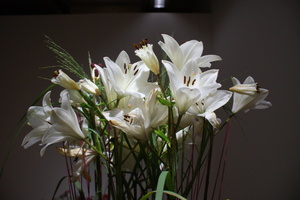
- Die Schnappschüsse gehören zum Diplomprojekt "No Mythologies to Follow":
https://madek.hfg-karlsruhe.de/sets/cceba5dd-8354-…
- Die Schnappschüsse gehören zum Diplomprojekt "No Mythologies to Follow":
- Titel
- No Mythologies to Follow - Snapshots
- Importiert am
- 30.07.2024
- Übergeordnete Sets
- 0
- Set enthält
- 0 117
Videoinstallation
Name that can easily go onto 2 lines
Author that can easily go onto 2 lines as well
- Titel
- Videoinstallation
- Titel
- Videoinstallation
- Importiert am
- 26.09.2024
- Übergeordnete Sets
- 1
- Set enthält
- 0 2
Ausstellung
Name that can easily go onto 2 lines
Author that can easily go onto 2 lines as well
- Titel
- Ausstellung
- Titel
- Ausstellung
- Importiert am
- 26.09.2024
- Übergeordnete Sets
- 1
- Set enthält
- 0 5
Ungeordnete Zustände
Name that can easily go onto 2 lines
Author that can easily go onto 2 lines as well
- Titel
- Ungeordnete Zustände
- Titel (en)
- Disorderly Conditions
- Untertitel
- Abtrag I Fragmentierung I Zerfall I Austrag I Verschwinden: Kleingärten an der Stuttgarter Straße Karlsruhe
- Untertitel des Projekts/Werks (en)
- Removal I Fragmentation I Decay I Dismantling I Disappearance: Allotment gardens on Stuttgarter Straße in Karlsruhe
- Autor/in
- Beschreibung (de)
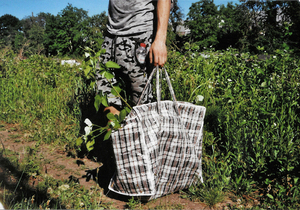
- Die Ausstellung "Ungeordnete Zustände" erzählt in unterschiedlichen Strängen von der Auflösung der Kleingärten an der Stuttgarter Straße in Karlsruhe. Leonie Mühlen beobachtete diese Bewegungen, dokumentierte sie und nahm selbst daran teil. Die gezeigte Sammlung ist ein Versuch den Ort zu begreifen und zu konservieren. Eben diesen Ort im Abbruch, der in seiner Unordnung und seinem Ungehorsam Refugium für viele Dinge und Wesen war.
- Beschreibung (en)
- The exhibition "Ungeordnete Zustände" tells the story of the dissolution of the allotment gardens on Stuttgarter Straße in Karlsruhe in various strands. Leonie Mühlen observed these movements, documented them and took part in them herself. The collection on display is an attempt to understand and preserve the place. Precisely this place in demolition, which in its disorder and disobedience was a refuge for many things and beings.
- Kategorie
- Schlagworte
- Datierung
- 09.06.2021 - 27.06.2021
- Mitwirkende
- Ort: Institution
- Ort
- Luisenstraße 32
- Stadt
- Land
- Titel
- Ungeordnete Zustände
- Projektleiter/in
- Semester
- Studiengang
- Typ der Abschlussarbeit
- Importiert am
- 17.06.2024
- Übergeordnete Sets
- 1
- Set enthält
- 2 17
Ghost Story
Name that can easily go onto 2 lines
Author that can easily go onto 2 lines as well
- Titel
- Ghost Story
- Autor/in
- Beschreibung (en)
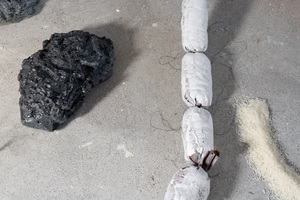
- The project was born in response to the passing of an unaccompanied homeless individual in 2018, a person without known family or friends. Her death was cataloged—reduced to data archived in newsrooms and on digital servers. Yet, if this data remains untouched, and her memory fades into obscurity, does her existence persist? She lingers and remains unseen—a paradoxical state of both presence and absence. Within the digital void, she exists as a spectral trace, haunting the silence, waiting to be rediscovered, forever closed in on herself.
Such is the nature of ghosts—the living create them. We resurrect the departed in our own ways, through rituals, texts, and the intangible recipes of memory. We read, we create, we consume, and through this, we invite the dead to inhabit us once more. This project is an assemblage of fragments—an exploration of the processes through which we become haunted by the past.
- The project was born in response to the passing of an unaccompanied homeless individual in 2018, a person without known family or friends. Her death was cataloged—reduced to data archived in newsrooms and on digital servers. Yet, if this data remains untouched, and her memory fades into obscurity, does her existence persist? She lingers and remains unseen—a paradoxical state of both presence and absence. Within the digital void, she exists as a spectral trace, haunting the silence, waiting to be rediscovered, forever closed in on herself.
- Kategorie
- Typ des Projekts/Werks
- Schlagworte
- Datierung
- 18.04.2024
- Dank an
- Sprache
- Material
- Ort
- Pförtnerhäuser, Alter Schlachthof
- Stadt
- Land
- Titel
- Ghost Story
- Projektleiter/in
- Semester
- Studiengang
- Typ der Abschlussarbeit
- Importiert am
- 25.09.2024
- Übergeordnete Sets
- 0
- Set enthält
- 0 9
Future Ruins
Name that can easily go onto 2 lines
Author that can easily go onto 2 lines as well
- Titel
- Future Ruins
- Titel (en)
- Future Ruins
- Untertitel des Projekts/Werks (en)
- Five Monuments for a Human Planet
- Autor/in
- Beschreibung (de)
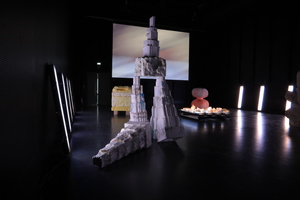
- "Future Ruins" besteht aus fünf spekulativen Monumenten. Diese Modelle im menschlichen Maßstab setzen sich mit aktuellen soziologischen und geologischen Entwicklungen, mit den Werten und Idealen unserer Zeit auseinander.
- Beschreibung (en)
- "Future Ruins" consists of five speculative monuments. These human-scaled models are dealing with current sociological and geological developments, the values and ideals of our time.
- Kategorie
- Schlagworte
- Datierung
- 28.-30.06.2019
- Mitwirkende
- Material
- Abmessungen
- verschiedene Maße der Modelle
- Ort: Institution
- Ort
- Großes Studio
- Bemerkungen
- HINWEIS
Es wurden alle Anstrengungen unternommen, um die Urheberrechtsinhaber ausfindig zu machen und ihre Erlaubnis für die Verwendung von urheberrechtlich geschütztem Material einzuholen. Ich entschuldige mich für etwaige Fehler oder Auslassungen und wäre dankbar, wenn mir Korrekturen mitgeteilt würden, die in zukünftige Nachdrucke dieser Dokumentation eingearbeitet werden sollten.
DANKE
HfG Karlsruhe: Sereina Rothenberger, Rebecca Stephany, Michael Kryenbühl, Ivan Weiss, James Langdon, Yannick Nuss, Katharina Wahl, Volker Albus, Matthias Bruhn, Sebastian Schäfer, Alexander Knoppig, Tobias Keilbach, Matthias Mai, Susanne Schmitt, Susanne Trautnitz, Zaur Ahlimanov, Waldemar Schwab
Für die großzügige Unterstützung: Lisa Ertel, Felix Plachtzik, Maxim Weirich, Phil Zumbruch, Lukas Marstaller, Oliver Boualam, Marcel Strauß, Anne-Sophie Oberkrome, Philipp Schell, Christoph Hauf, Christof Hierholzer, Massimiliano Audretsch, Ute Zell, Martin Zell
- HINWEIS
- Titel
- Future Ruins
- Projektleiter/in
- Semester
- Studiengang
- Typ der Abschlussarbeit
- Importiert am
- 31.07.2024
- Übergeordnete Sets
- 0
- Set enthält
- 0 17
Nichts, was uns passiert oder Genügend Anlass zur Erhebung der öffentlichen Klage
Name that can easily go onto 2 lines
Author that can easily go onto 2 lines as well
- Titel
- Nichts, was uns passiert oder Genügend Anlass zur Erhebung der öffentlichen Klage
- Titel (en)
- Nothing that happens to us or Sufficient reason to file a public complaint
- Untertitel
- Hörstück und (Körper-) Übung eines Dialogs
- Untertitel des Projekts/Werks (en)
- Audio piece and (physical) exercise of a dialog
- Autor/in
- Beschreibung (de)
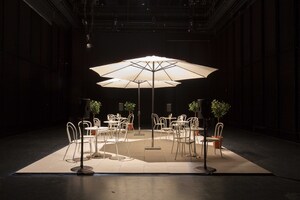
- Die Arbeit „Nichts, was uns passiert“ oder „Genügend Anlass zur Erhebung der öffentlichen Klage“ thematisiert den Umgang mit sexueller Gewalt in unserer Gesellschaft. Sie fragt, wie und vor allem ob wir durch unsere Sozialisierung gelernt haben, über sexuelle Gewalt zu sprechen. Sie fragt nach dem Vermögen, uns diese Art von Gewalt in unserem eigenen Umfeld (Familie, Freundeskreis, Arbeitsgemeinschaft, u.a.) vorzustellen und danach, warum Erzählungen über sexuelle Gewalt meist in der Ferne, im Abstrakten verortet werden.
- Beschreibung (en)
- The work "Nichts, was uns passiert" (Nothing that happens to us) or "Genügend Anlass zur Erhebung der öffentlichen Klage" (Sufficient reason to file a public complaint) addresses how we deal with sexual violence in our society. It asks how and, above all, whether we have learned to talk about sexual violence through our socialization. It asks about our ability to imagine this kind of violence in our own environment (family, circle of friends, work community, etc.) and why stories about sexual violence are usually located in the distance, in the abstract.
- Kategorie
- Schlagworte
- Mitwirkende
- Titel
- Nichts, was uns passiert oder Genügend Anlass zur Erhebung der öffentlichen Klage
- Projektleiter/in
- Semester
- Studiengang
- Typ der Abschlussarbeit
- Importiert am
- 24.06.2024
- Übergeordnete Sets
- 1
- Set enthält
- 0 4